


Understanding tide tables and tidal curves
No two coastal places have exactly the same tidal pattern. There are many factors that influence this, from the shape of the coastline, the funnelling effect of channels and estuaries, the depth of the sea and the proximity of oceans. The times and heights of tides...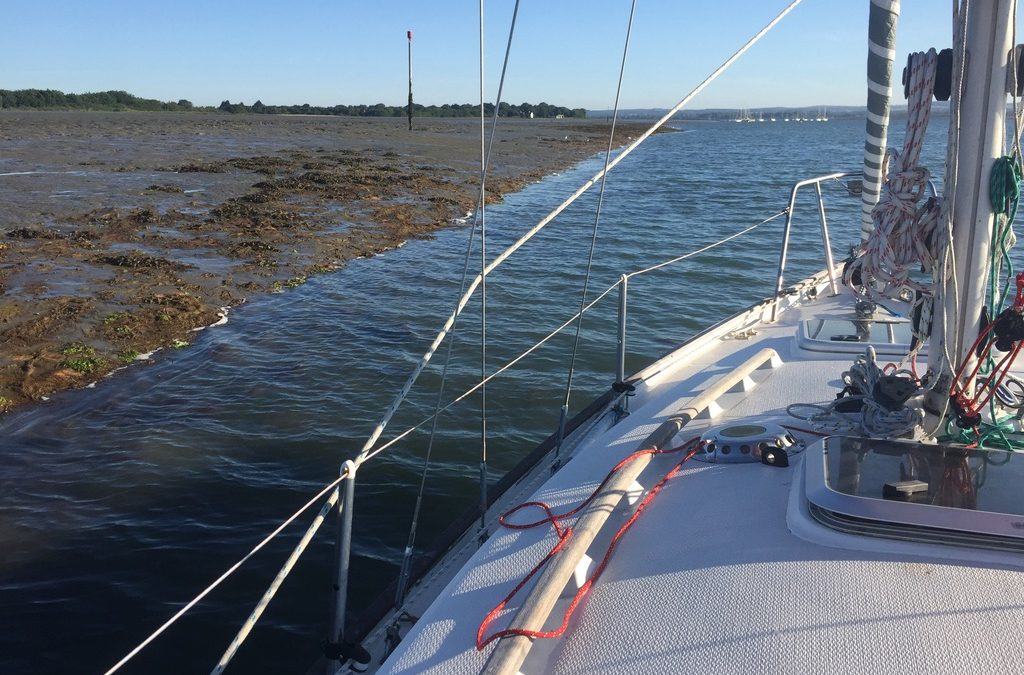
Tidal heights and the rule of twelfths
In our previous article we looked at tidal curves and how we can use them to find the time of a specific height of tide. Following on from this we now take a look at how we calculate a height of tide for a specific time. This is not a complex calculation but it helps...
Anchoring – getting it right
If you can set an anchor correctly with confidence and know your boat will be safe in a secure anchorage, then you can rest in comfort and will not need to rely on moorings and marinas when cruising. Anchoring is one of the most important boat handling skills. If you...
Top Tips For Learning The ColRegs Boating Rules Of The Road
Colregs Boating Rules Of The Road The International Regulations for Preventing Collisions at Sea (COLREGs) are a set of rules designed to prevent collisions between vessels. They are essentially the “rules of the road” for boats. Some key concepts within... Download from iTunes
Download from Google Play
 Download from iTunes
Download from Google Play
 Download from iTunes
Download from Google Play
 Download from iTunes
Download from Google Play
 Download from iTunes
Download from Google Play
 Download from iTunes
Download from Google Play
 Download from iTunes
Download from Google Play
 Download from iTunes
Download from Google Play

⚓️ Pre-start engine checks = fewer breakdowns at sea![]()
![]() Nearly 1 in 3 marine callouts are caused by mechanical failure - many avoidable with a simple routine before you start up!!
Nearly 1 in 3 marine callouts are caused by mechanical failure - many avoidable with a simple routine before you start up!!![]()
![]() 🔧 Key checks to run through:
🔧 Key checks to run through:![]() ❑ Cooling system clear & water flowing
❑ Cooling system clear & water flowing![]() ❑ Fuel level (plus reserve) & clean filters
❑ Fuel level (plus reserve) & clean filters![]() ❑ Engine & gearbox oil topped up
❑ Engine & gearbox oil topped up![]() ❑ Belts, hoses & leaks inspected
❑ Belts, hoses & leaks inspected![]() ❑ Battery switched on & electrics set
❑ Battery switched on & electrics set![]() ❑ Seacocks open & raw water filter clean
❑ Seacocks open & raw water filter clean![]() ❑ Bilge blower run (if fitted)
❑ Bilge blower run (if fitted)![]()
![]() 👍 Bottom line: a quick pre-start check can prevent costly breakdowns, improve safety, and give peace of mind before heading out.
👍 Bottom line: a quick pre-start check can prevent costly breakdowns, improve safety, and give peace of mind before heading out.![]() More tips here: safe-skipper.com/pre-start-engine-checks/
More tips here: safe-skipper.com/pre-start-engine-checks/![]()
![]() #BoatingSafety #Seamanship #PreDepartureChecks #Sailing #Yachting #SafetyAtSea #Boating #Watercraft #Sailboat #SafeSkipper
#BoatingSafety #Seamanship #PreDepartureChecks #Sailing #Yachting #SafetyAtSea #Boating #Watercraft #Sailboat #SafeSkipper
This content isn't available right now
When this happens, it's usually because the owner only shared it with a small group of people, changed who can see it or it's been deleted.
