


Understanding tide tables and tidal curves
No two coastal places have exactly the same tidal pattern. There are many factors that influence this, from the shape of the coastline, the funnelling effect of channels and estuaries, the depth of the sea and the proximity of oceans. The times and heights of tides...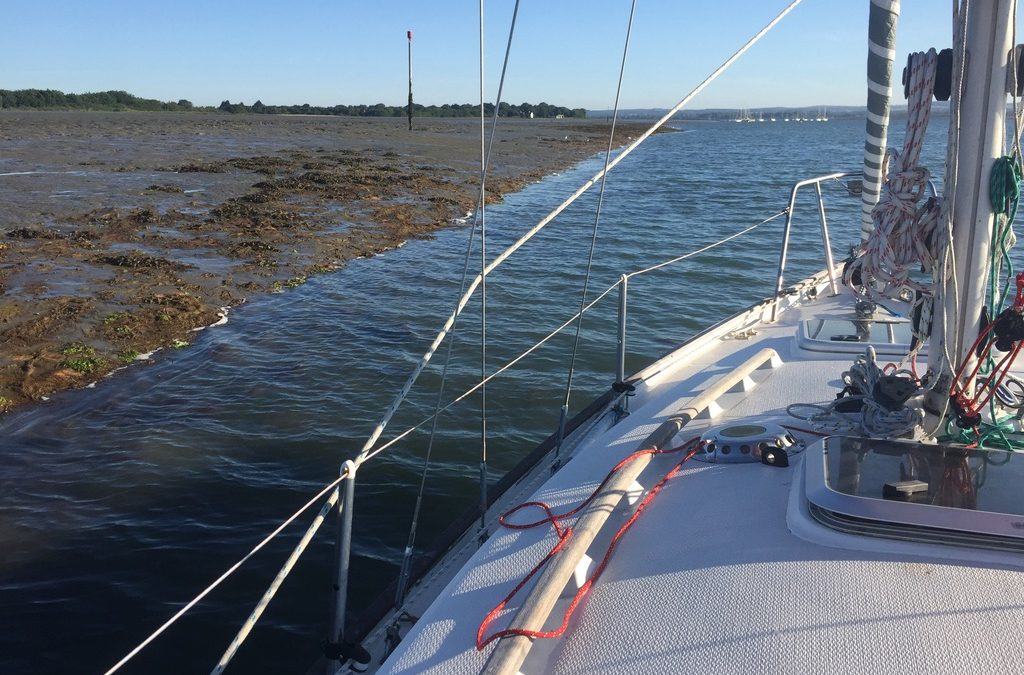
Tidal heights and the rule of twelfths
In our previous article we looked at tidal curves and how we can use them to find the time of a specific height of tide. Following on from this we now take a look at how we calculate a height of tide for a specific time. This is not a complex calculation but it helps...
2023 Rolex Fastnet Race – Part 3
This is our third and final article about the 2023 Rolex Fastnet Race. It is a first hand account by Simon Jollands who was one of the crew of Lancelot II, a Beneteau First 40 skippered by John Gillard. The Fastnet Race is named after the Fastnet Rock, which the...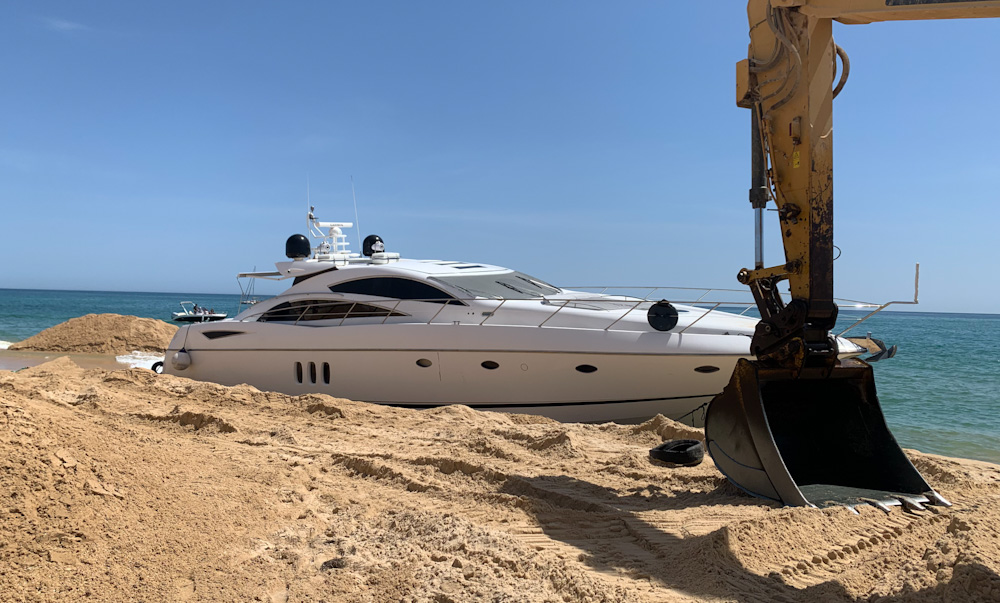
The dangers of running aground in a motor boat
Picture this: you’re out on a serene lake or cruising along a beautiful coastline in your motor boat, enjoying the wind in your hair and the gentle lapping of the water against your vessel. However, amidst the bliss of boating lies a lurking danger –... Download from iTunes
Download from Google Play
 Download from iTunes
Download from Google Play
 Download from iTunes
Download from Google Play
 Download from iTunes
Download from Google Play
 Download from iTunes
Download from Google Play
 Download from iTunes
Download from Google Play
 Download from iTunes
Download from Google Play
 Download from iTunes
Download from Google Play

🗺️ Nautical Chart Symbols - your complete quick reference app to the symbols used on Electronic (ECDIS) Nautical Charts, as specified by the International Hydrographic Organization (IHO). ![]()
![]() Nautical Chart Symbols: Your digital bridge companion.
Nautical Chart Symbols: Your digital bridge companion.![]()
![]() ✅ Complete reference for ECDIS symbols
✅ Complete reference for ECDIS symbols![]()
![]() ✅ Compliant with IHO specifications
✅ Compliant with IHO specifications![]()
![]() ✅ Fast, intuitive, and mobile-friendly
✅ Fast, intuitive, and mobile-friendly![]()
![]() ⚓️ Never second-guess a chart symbol again!
⚓️ Never second-guess a chart symbol again!![]()
![]() Take a look:
Take a look:![]() 🌐 bit.ly/SS_ECDIS
🌐 bit.ly/SS_ECDIS ![]()
![]() #sailing #yachting #boating #ECDIS #nauticalcharts #chartsymbols #watercraft #SafeSkipper #safetyatsea
#sailing #yachting #boating #ECDIS #nauticalcharts #chartsymbols #watercraft #SafeSkipper #safetyatsea
** 𝗡𝗘𝗪𝗟𝗬 𝗨𝗣𝗗𝗔𝗧𝗘𝗗**![]() Quick reference, essential first aid for all seafarers, that now includes:
Quick reference, essential first aid for all seafarers, that now includes: ![]()
![]() 🔎 Search function - by condition, emergency or keyword - jump straight to a section
🔎 Search function - by condition, emergency or keyword - jump straight to a section![]()
![]() 📍 Get location - one click provides current longitude & latitude, add a note, save log
📍 Get location - one click provides current longitude & latitude, add a note, save log![]()
![]() 🔄 Share location (with data connection)
🔄 Share location (with data connection)![]()
![]() 🔖 Save pages as Favorites for quick access
🔖 Save pages as Favorites for quick access![]()
![]() 📝 Crew Register page for Skippers - add crew members' details, vessel details and more to include:
📝 Crew Register page for Skippers - add crew members' details, vessel details and more to include:![]() - Full name
- Full name![]() - Medical conditions / illnesses
- Medical conditions / illnesses![]() - Allergies
- Allergies![]() - ICE contact name, relationship, phone, alternative phone
- ICE contact name, relationship, phone, alternative phone![]() - Additional notes
- Additional notes![]()
![]() ✅ Everything is saved locally on the device - no internet required, nothing leaves the device, all editable!
✅ Everything is saved locally on the device - no internet required, nothing leaves the device, all editable!![]()
![]() Check it out in the App Store ⤵️
Check it out in the App Store ⤵️![]() apple.co/3QE5bJ3
apple.co/3QE5bJ3![]()
![]() #FirstAidAtSea #BoatingFirstAid #FirstAidEssentials #SailingFirstAid #FirstAidAfloat #SafetyatSea #Sailing #Boating #Watercraft
#FirstAidAtSea #BoatingFirstAid #FirstAidEssentials #SailingFirstAid #FirstAidAfloat #SafetyatSea #Sailing #Boating #Watercraft

