Select Page

Keel maintenance and Repair – Part 2

If you have ever witnessed a boat colliding with a rock or other submerged obstacle you will know that there is an almighty thump and the whole boat shakes and judders. While such hard groundings seldom result in catastrophic keel failure, something has to give and even the sturdiest keels can easily be damaged by such an impact.

Sailing Boat Rig Care

The rig of a sailing boat is put under huge stresses and strains so it is important for inspections of a yacht’s spars and rigging to be carried out at regular intervals.

Navigating narrow channels

Navigating narrow channels can present challenges for boat operators due to limited space, restricted manoeuvrability, and potential hazards such as shallows, rocks, or other vessels. To ensure safe passage through narrow channels, it’s essential to follow specific strategies and techniques.

Tips and advice for staying safe on a sailboat at sea

Here we focus on how to stay safe on a sailboat at sea. We cover key things to ensure you have on board before you set sail as well as covering the most common cause of incidents on sailboats and how to deal with them.

How to improve a yacht’s upwind performance

There are several ways to improve the upwind performance of a sailing yacht. Read on for some useful tips including headsail reefing, heavy weather jibs and motor sailing.

A simple guide to understanding tides when passage planning

Understanding tides when passage planning When planning a trip in tidal waters, check the tides before going afloat. Use...

Fire safety advice at sea from the Marine & Coastguard Agency

Fire safety advice for boaters Top fire safety advice at sea: 1. Fit smoke alarms, carbon monoxide and gas detectors 2. Turn...

Wooden Hull Repairs

While wooden boat hull maintenance is mostly straightforward, it is always a good idea to take expert advice on any repair job needed doing to a wooden boat, unless you have done the job before and know what you are doing.

How a propeller works

Have a look around any boatyard and you will notice quite a variety of propellers – some have two blades, some have three and others have four or more. While most propellers are completely rigid some have blades that fold.

Essential Boat Buying Tips for First-Time Boat Owners

The first question that comes to mind when thinking about buying a boat is: what type of boat? There are more than 20 different kinds, of different sizes, for different purposes, and different pockets. So, your first step is to decide your boat type.

Gybing a sailing boat

Gybing is the sailing manoeuvre used to change a boat's direction through a following wind. As with the tacking manoeuvre,...

Hull inspection – the annual checks

With the boat ashore for the winter it is time to do a hull inspection - the annual checks. Are there any scratches and chips in the...

Sending distress signals

In an emergency situation at sea, it is a top priority is to know how to send and receive emergency radio calls and alert others of your predicament. Likewise, if you receive a distress signal, you must be ready to go to the help of others.

Wooden Hulls – Part 1

Traditional wooden boats have a plank on frame construction, a centuries old boat building method that is still in use today. Variations of the traditional method include carvel, clinker and strip planking, which all relate to the way the planking is attached to the frame.

2023 Rolex Fastnet Race – Part 3

This is our third and final article about the 2023 Rolex Fastnet Race. It is a first hand account by Simon Jollands who was one of the crew of Lancelot II, a Beneteau First 40 skippered by John Gillard.

Antifouling for leisure boats – Part 3

Antifouling is one of the least pleasant boat maintenance jobs to do, but it has to be done. The very worst job of all is removing the old antifouling as this can get seriously messy and is very hard work.

Estimating and plotting your position at sea

This post covers how we go about estimating and plotting our position using traditional methods, when out of sight of land – covering Dead Reckoning, Estimated Position, Tidal Streams, Leeway and more…

Boat ownership – some fundamentals

Owning a boat is a big commitment that should bring no end of satisfaction, but the costs of maintaining and keeping a boat are significant and should never be underestimated.

Nautical paper charts – a reminder of the basics

The nautical chart is an indispensable tool for navigation. A chart is a graphic representation of an area of the sea which might also include coastlines, estuaries and islands. All cruising leisure boats should carry up-to-date paper charts.

Estimating your position at sea

Navigators use a combination of techniques to estimate their position at sea. The primary method used today is GPS (Global Positioning System), a network of 24 satellites that became fully operational in the 1990s and was originally restricted for use by the United States military.

Fixing position at sea using traditional methods

This post looks at some traditional methods used for fixing a vessel’s position at sea, within sight of land. Electronic fixes using chart plotters are very straightforward to record, but if for some reason a vessel’s electronics are faulty it is essential that a skipper knows how to use traditional methods.

Jester Challenge 2022 – Sailing single handed from Plymouth UK to the Azores: Part 4 – Navigation

Jester Challenge – A modern experiment in old-fashioned self-reliance, self sufficiency, and personal responsibility. This is the fourth of a 10-part post where solo sailor, Bernie Branfield, shares his first hand account of his single-handed, 2022 Jester Challenge, from Plymouth, UK to the Azores, in his 26′ Invicta Mk2, Louisa.

Preparing for sailboat cruising

Preparing for a sailing trip entails a lot of planning. In this blog, we take a look at some of the many safety aspects that a skipper needs to consider before heading off on a cruise.

Boating emergency – how to broadcast a MAYDAY emergency call

How to broadcast a MAYDAY emergency call   How to broadcast a MAYDAY emergency call if a vessel or person is in grave...

Steel and Aluminium Hulls

The two metals used for hull construction are steel and aluminium. These are both very strong materials and will last a long time as long as they are cared for, which primarily means protecting steel boats from rust and aluminium boats from electrolytic action.

Welcome to the Safe Skipper website.


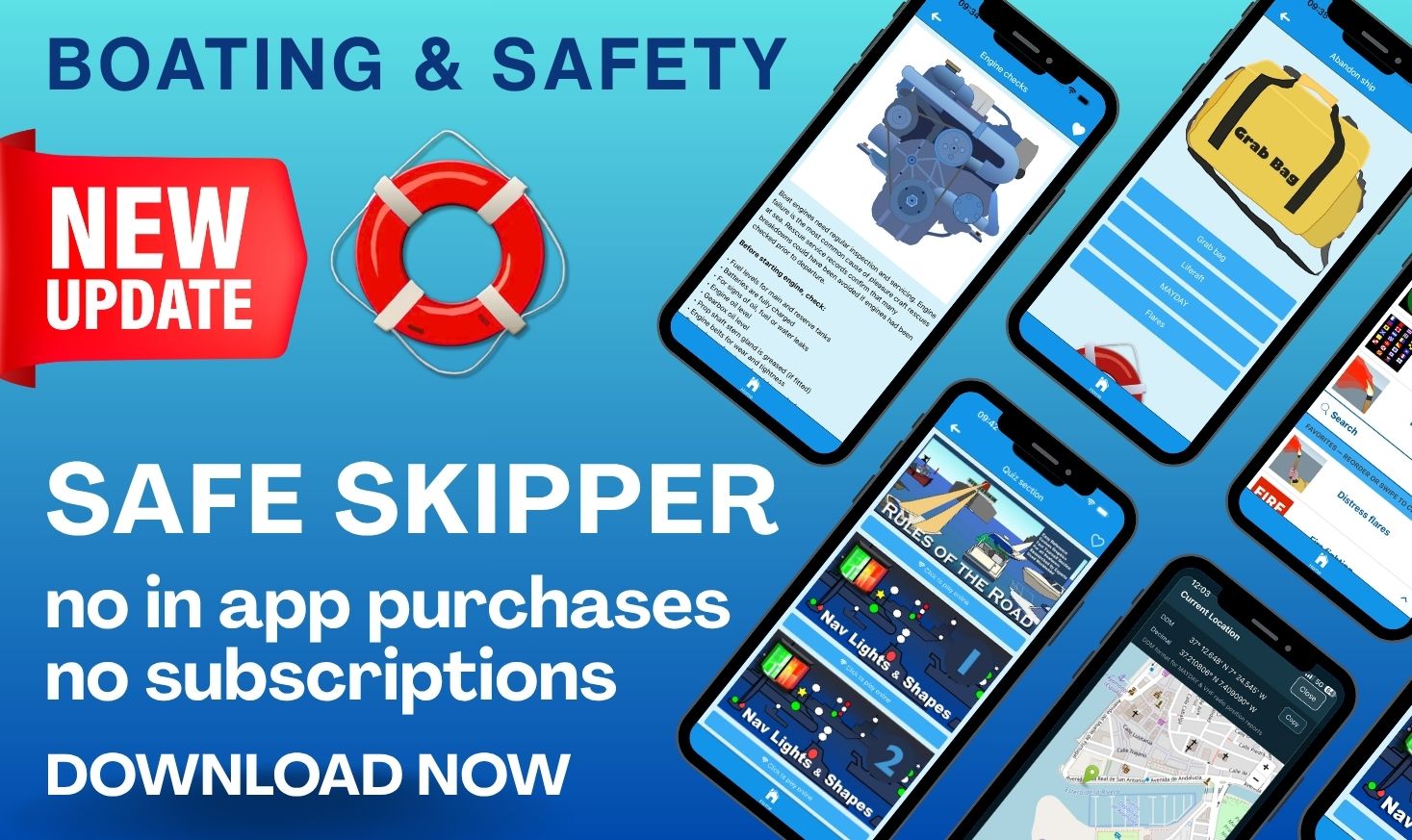
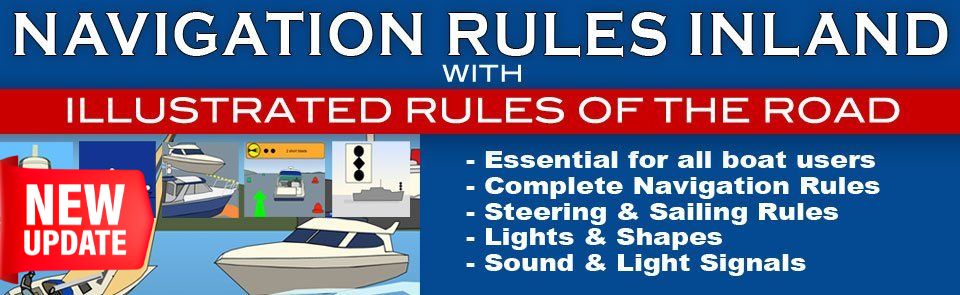
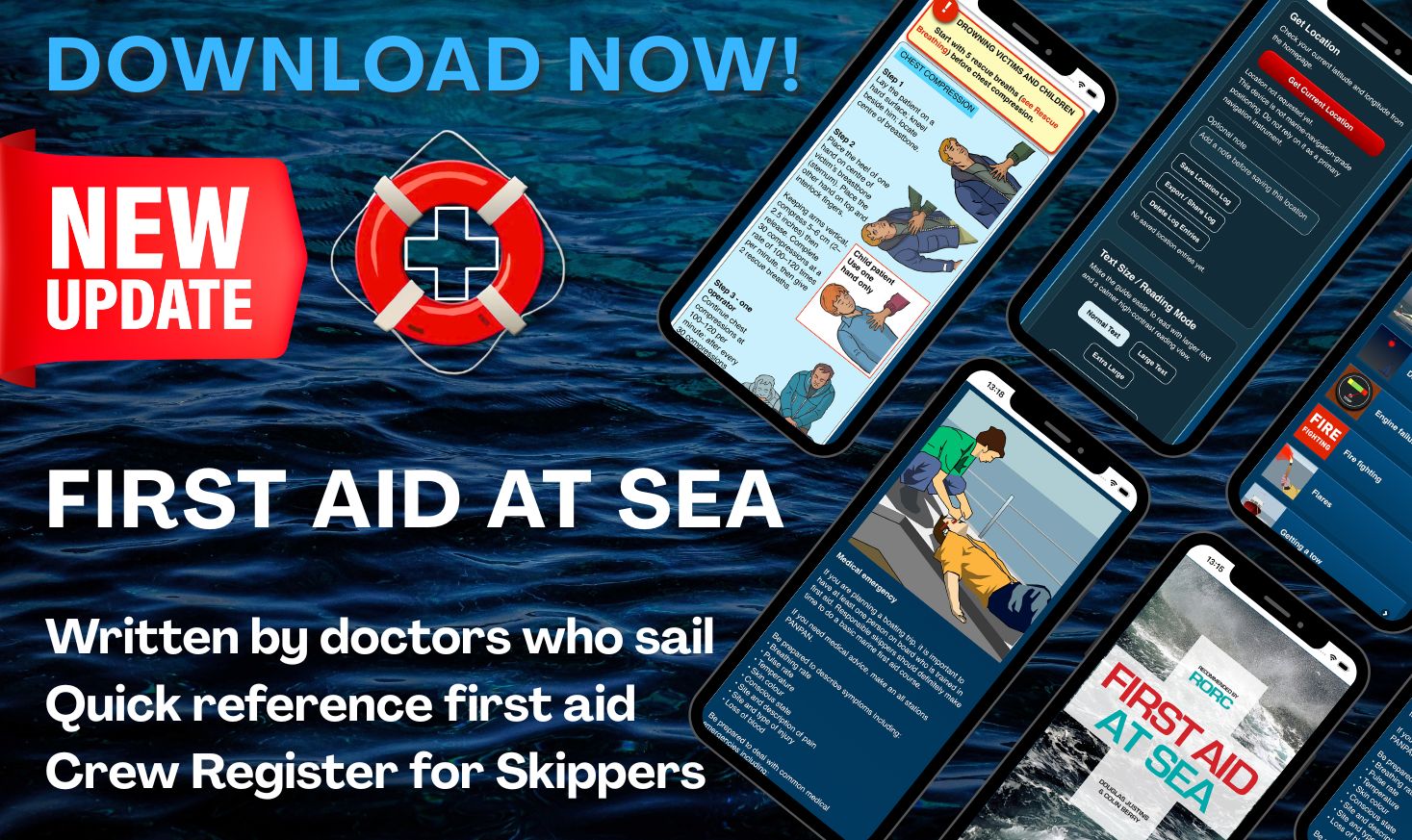
Safe Skipper is run by boating enthusiasts who also have a background in publishing and TV production, design and app development. As well as creating great content for the website, we’ve developed a range of popular boating apps that allow you to get safely out on the water whilst having essential information to hand, covering International ColRegs: Nav Lights & Shapes, Rules of the Road, Buoyage & Lights to knot tying, nautical chart symbols and first aid at sea – all information available to you when on the water, on your phone or tablet, when you need it.

We’re regularly adding new articles to the site, hope you’ll bookmark us and visit again soon.

Before you go, scroll down to our boating quizzes and check your boating knowledge!

Antifouling for leisure boats – Part 2

To prepare for antifouling, as soon as your boat has been lifted out and pressure washed, you need to check all the surfaces of the hull below the waterline, remove any remaining barnacles and check for blisters.

Marine toilets – care and maintenance

There are a number of different types of marine toilet, or heads. They fall into one of three categories – manual, electric and vacuum, the most common being the manual, hand pumped type. These have double acting piston-pumps which both discharge the waste and flush the toilet with sea water.

Distress flares – which flare, how & when to use?

How to use distress flares at sea To effectively use distress flares at sea, you need to understand the different types, their purpose, and the...

Tips and advice for staying safe on a sailboat at sea

Here we focus on how to stay safe on a sailboat at sea. We cover key things to ensure you have on board before you set sail as well as covering the most common cause of incidents on sailboats and how to deal with them.

How to cope with an emergency at sea

A safe skipper will be mentally prepared for all kinds of potential emergencies happening at sea, including medical emergencies, engine failure, fire, a holed hull, capsize and dismasting.

Passage planning and pilotage

Passage planning and pilotage help skippers navigate safely from one port to another. A passage plan takes into account all...

Boat Engine Failure – what to check

Engine failure If your engine fails or is overheating there are a number of things to check immediately: • Air filter...

Jester Challenge 2022 – Sailing single handed from Plymouth UK to the Azores: Part 3 – Preparations

Jester Challenge – A modern experiment in old-fashioned self-reliance, self sufficiency, and personal responsibility. This is the third of a 10-part post where solo sailor, Bernie Branfield, shares his first hand account of his single-handed, 2022 Jester Challenge, from Plymouth, UK to the Azores, in his 26′ Invicta Mk2, Louisa.

Competent crew skills: mooring lines

Mooring lines are used when arriving or leaving a berth. One of the most important competent crew skills is to know how to...

Essential Knots: Sheet bend

Essential Knots: Sheet bend Use: Joining two ropes together. A sheet bend is particularly useful for joining two ropes of different...

I have just downloaded and am using ColRegs Nav Lights & Shapes app, a brilliant training and reference device

Verified user

Instructor

Beautifully produced and very simple to use, a cool learning tool

Charlie

Sailor

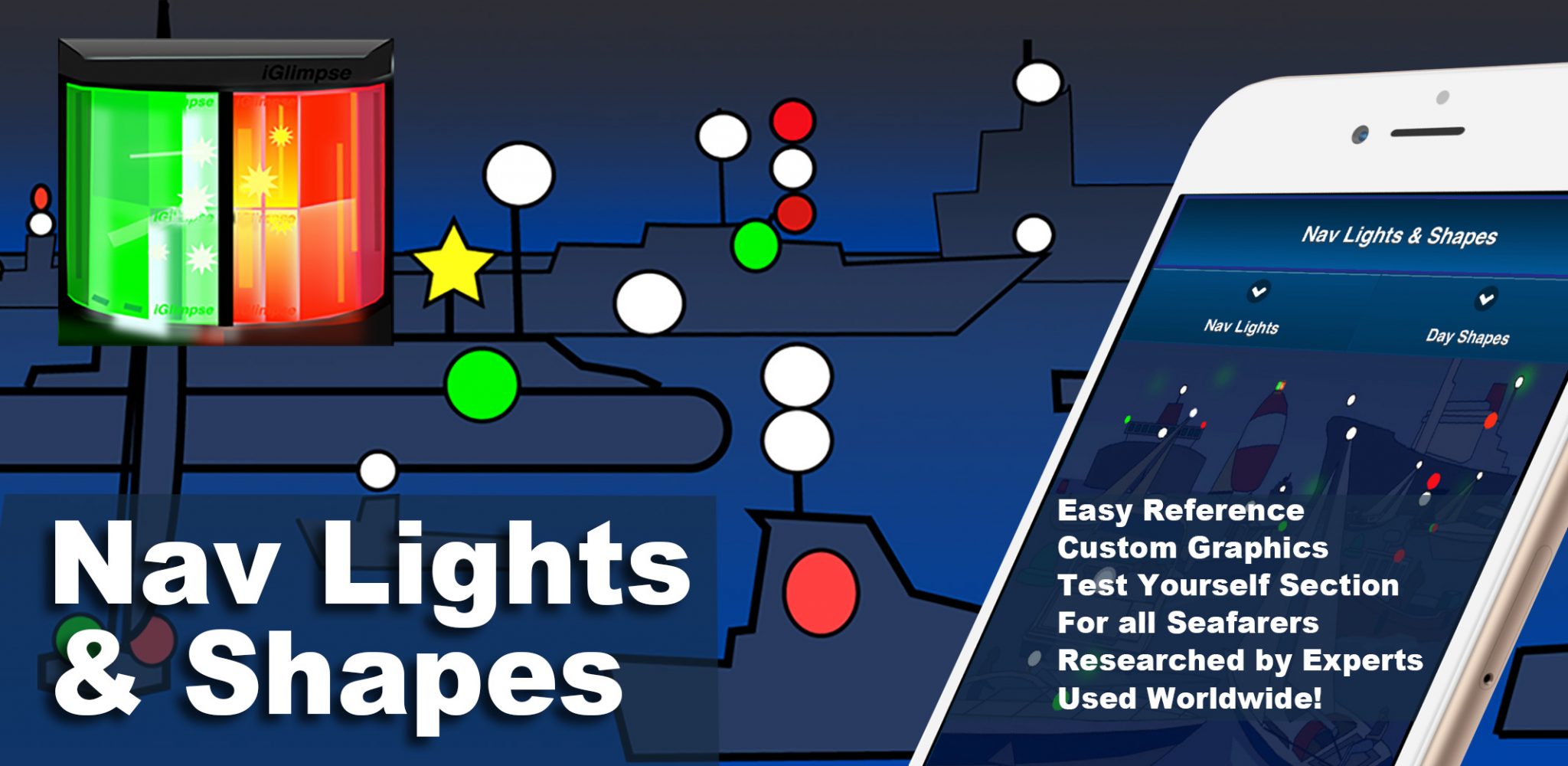
Nav Lights & Shapes app – downloaded by 1000s of seafarers worldwide. Just one of our popular boating apps to download from the appstores for Apple and Android devices.

Right boat vs Wrong boat – Over 30 Ways to Cut the Cost of Your Sailing and Cruising

Sailing and cruising offer unparalleled freedom and adventure, but they can quickly become costly. Fortunately, there are numerous strategies to help you enjoy the open water without breaking the bank. Here are over 30 practical ways to cut your sailing and cruising costs.

How to read nautical charts

Whilst most sailors today rely on GPS to find their way at sea, nautical charts are a crucial tool for any sailor to navigate safely and effectively. Here is a reminder of some of the basic steps involved in reading a nautical chart:

You Need To Understand The IRPCS ColRegs To Pass Your Yachtmaster, Master of Yachts and Coxswain Certificate of Competence

IRPCS ColRegs Rules of the Road at Sea and Yachtmaster Learning, understanding and remembering the International Regulations...

How to Avoid Collisions At Sea With The ColRegs

      Every Skipper Needs Accurate Knowledge of the IRPCS ColRegs As a responsible skipper it is every skipper’s duty to learn and apply the IRPCS...

Boat electrics inspection checklist

With the boat ashore, here are some recommendations for carrying out a boat owner electrics inspection. Safety is always paramount so remember to do the checks with the batteries off. Wearing a head torch helps, make notes as you go and only tackle a repair if you are 100% sure you know what you are doing:

Boat Improvements

My Boat - practical improvements Author - Mike Rossiter Most boat owners who have had their craft for any length of time will have made what they...

Boat engine fuel system

If engines are installed and serviced correctly then most marine engines are very reliable, but one of the most important parts of the engine to check and service is the fuel system.

Know your Navlights & Shapes – essential for all skippers

Know your Navlights & Shapes International Regulations for Preventing Collisions at Sea (ColRegs) Anyone who is...

Rudders and steering systems – Part 2

One thing all rudders have in common is that they have three main parts that need to be checked: the rudder, or a steerable drive leg in the case of many power boats; the system that joins the rudder to the steering; the steering control itself.

Essential yacht tender safety for skippers and crew

Essential yacht tender safety - the dangers inherent in using a dinghy to get ashore from a moored or anchored yacht are all too easily...

Passage Planning Advice & Safety for skippers

Passage planning helps you to: • Decide where to go • Calculate how long it will take to get there • Avoid bad weather •...

Winch Servicing

It is not essential to service the winches when a boat is ashore, but if time allows I prefer to do this maintenance job when the boat...

The give-way hierarchy at sea – who gives way to whom?

Whatever their size or type, all skippers have a responsibility to avoid collisions with other boats at sea.  It is...

DIY boat upgrades: Budget-friendly projects to enhance your (older!) boat

DIY projects that can enhance both the functionality and aesthetics of your boat. In this article, we’ll explore a variety of DIY boat upgrades that won’t break the bank but will significantly enhance your boating experience.

Steel hull maintenance

A steel boat owner’s biggest enemy is corrosion. You don’t have to worry about osmosis or rotting timbers, instead rust is the number one issue that will keep you awake at night.

Essential Boat Buying Tips for First-Time Boat Owners

The first question that comes to mind when thinking about buying a boat is: what type of boat? There are more than 20 different kinds, of different sizes, for different purposes, and different pockets. So, your first step is to decide your boat type.

VHF DSC radio – how best to communicate at sea

There are many ways to communicate with others at sea. What makes the VHF DSC radio the best form of short range...

Pre-start engine checks

According to the Royal National Lifeboat Institution (RNLI) almost one third of emergency call outs at sea are caused by mechanical failure. Many engine breakdowns are avoidable. The best way to avoid a breakdown is to carry out pre-start checks before heading out to sea.

First aid at sea – four common emergencies

In this blog we look at what to do in the event of a crew member choking, drowning, or suffering from hypothermia or fatigue. Knowing how to cope with them could well save a life, while not knowing could result in an avoidable tragedy.

Seasickness – how can you prevent it?

Seasickness is a common problem at sea and affects both seasoned sailors and novices. What are the causes and symptoms of seasickness?...

2026