


Rudders and steering systems – Part 2
Take a look around the average boatyard and you will see examples of all kinds of different rudders and steering systems. Some rudders hang off the transom, some hang beneath the stern, others are built into the back of the keel, some look fine and elegant, others are...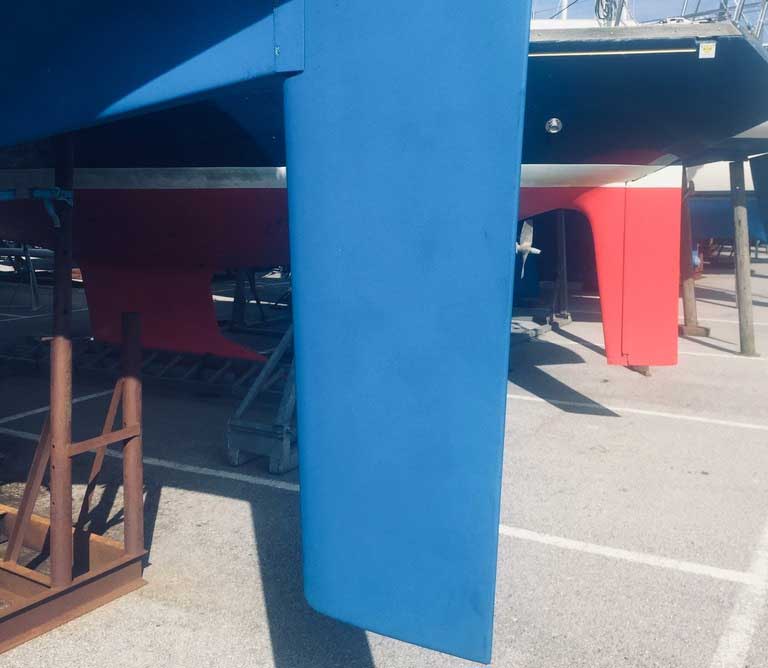
Rudders and steering systems – Part 1
A rudder is one of the most critical parts of a boat. Rudder failure is a common occurrence on neglected or overworked boats and a very unpleasant and potentially dangerous thing to happen when you are out at sea. It is important for a boat owner to fully understand...
Keel maintenance and Repair – Part 2
If you have ever witnessed a boat colliding with a rock or other submerged obstacle you will know that there is an almighty thump and the whole boat shakes and judders. While such hard groundings seldom result in catastrophic keel failure, something has to give and...
Keel maintenance and repair – Part 1
The job of a sailing boat’s keel is to control sideways movement through the water and to provide a counterweight to the sideways force of the wind on the sails, which causes a boat to heel over. Keels are designed to act as underwater foils that generate lift...
Antifouling for leisure boats – Part 4
Antifouling is best applied on a dry, calm day. It is best to apply the antifouling in the middle of the day to ensure the hull is dry and as warm as possible. If you have removed all the old antifouling layers back to the gelcoat, then it will be necessary to apply a... Download from iTunes
Download from Google Play
 Download from iTunes
Download from Google Play
 Download from iTunes
Download from Google Play
 Download from iTunes
Download from Google Play
 Download from iTunes
Download from Google Play
 Download from iTunes
Download from Google Play
 Download from iTunes
Download from Google Play
 Download from iTunes
Download from Google Play

⚓️ Pre-start engine checks = fewer breakdowns at sea![]()
![]() Nearly 1 in 3 marine callouts are caused by mechanical failure - many avoidable with a simple routine before you start up!!
Nearly 1 in 3 marine callouts are caused by mechanical failure - many avoidable with a simple routine before you start up!!![]()
![]() 🔧 Key checks to run through:
🔧 Key checks to run through:![]() ❑ Cooling system clear & water flowing
❑ Cooling system clear & water flowing![]() ❑ Fuel level (plus reserve) & clean filters
❑ Fuel level (plus reserve) & clean filters![]() ❑ Engine & gearbox oil topped up
❑ Engine & gearbox oil topped up![]() ❑ Belts, hoses & leaks inspected
❑ Belts, hoses & leaks inspected![]() ❑ Battery switched on & electrics set
❑ Battery switched on & electrics set![]() ❑ Seacocks open & raw water filter clean
❑ Seacocks open & raw water filter clean![]() ❑ Bilge blower run (if fitted)
❑ Bilge blower run (if fitted)![]()
![]() 👍 Bottom line: a quick pre-start check can prevent costly breakdowns, improve safety, and give peace of mind before heading out.
👍 Bottom line: a quick pre-start check can prevent costly breakdowns, improve safety, and give peace of mind before heading out.![]() More tips here: safe-skipper.com/pre-start-engine-checks/
More tips here: safe-skipper.com/pre-start-engine-checks/![]()
![]() #BoatingSafety #Seamanship #PreDepartureChecks #Sailing #Yachting #SafetyAtSea #Boating #Watercraft #Sailboat #SafeSkipper
#BoatingSafety #Seamanship #PreDepartureChecks #Sailing #Yachting #SafetyAtSea #Boating #Watercraft #Sailboat #SafeSkipper
This content isn't available right now
When this happens, it's usually because the owner only shared it with a small group of people, changed who can see it or it's been deleted.
