

Keel maintenance and Repair – Part 2
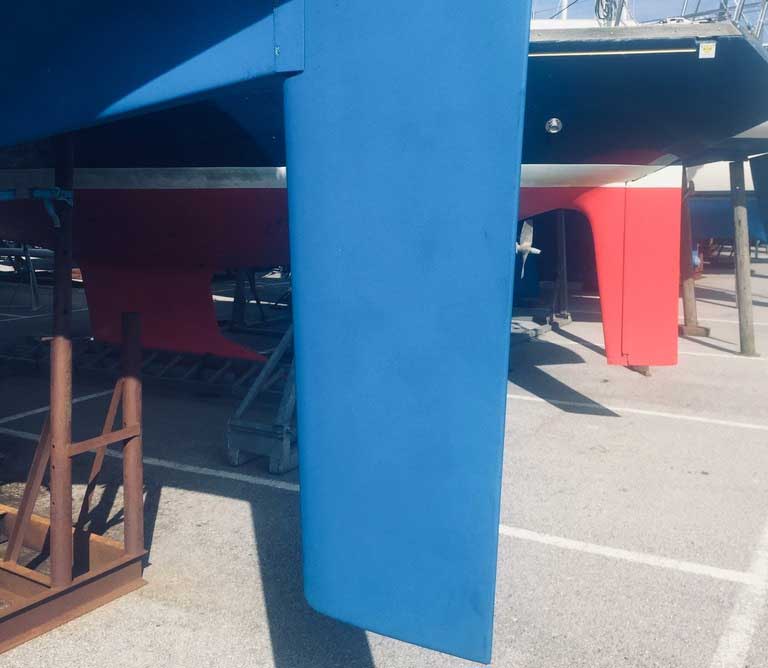
If you have ever witnessed a boat colliding with a rock or other submerged obstacle you will know that there is an almighty thump and the whole boat shakes and judders. While such hard groundings seldom result in catastrophic keel failure, something has to give and...
Keel maintenance and repair – Part 1
The job of a sailing boat’s keel is to control sideways movement through the water and to provide a counterweight to the sideways force of the wind on the sails, which causes a boat to heel over. Keels are designed to act as underwater foils that generate lift...
Antifouling for leisure boats – Part 4
Antifouling is best applied on a dry, calm day. It is best to apply the antifouling in the middle of the day to ensure the hull is dry and as warm as possible. If you have removed all the old antifouling layers back to the gelcoat, then it will be necessary to apply a...
Antifouling for leisure boats – Part 3
Antifouling is one of the least pleasant boat maintenance jobs to do, but it has to be done. The very worst job of all is removing the old antifouling as this can get seriously messy and is very hard work. The easiest way to reduce the build up of antifouling is by...
Antifouling for leisure boats – Part 2
It is a good idea to carry out an inspection of your boat’s hull condition as soon as possible after it has been lifted out and pressure washed. Check all the surfaces of the hull below the waterline and remove any signs of remaining barnacles using a scraper. A... Download from iTunes
Download from Google Play
 Download from iTunes
Download from Google Play
 Download from iTunes
Download from Google Play
 Download from iTunes
Download from Google Play
 Download from iTunes
Download from Google Play
 Download from iTunes
Download from Google Play
 Download from iTunes
Download from Google Play
 Download from iTunes
Download from Google Play

🛠️ 𝗠𝗮𝘀𝘁𝗲𝗿 𝘆𝗼𝘂𝗿 𝗺𝗮𝗿𝗶𝗻𝗲 𝗱𝗶𝗲𝘀𝗲𝗹 𝗲𝗻𝗴𝗶𝗻𝗲!![]()
![]() Gain the confidence to handle maintenance and make necessary repairs yourself. This essential skill is easier to acquire than you think.
Gain the confidence to handle maintenance and make necessary repairs yourself. This essential skill is easier to acquire than you think.![]()
![]() ➡️ Get the basics and next steps here: safe-skipper.com/learning-about-diesel-engine-maintenance
➡️ Get the basics and next steps here: safe-skipper.com/learning-about-diesel-engine-maintenance![]()
![]() #DieselEngineMaintenance #boating #yachting #sailing
#DieselEngineMaintenance #boating #yachting #sailing
This content isn't available right now
When this happens, it's usually because the owner only shared it with a small group of people, changed who can see it or it's been deleted.
