

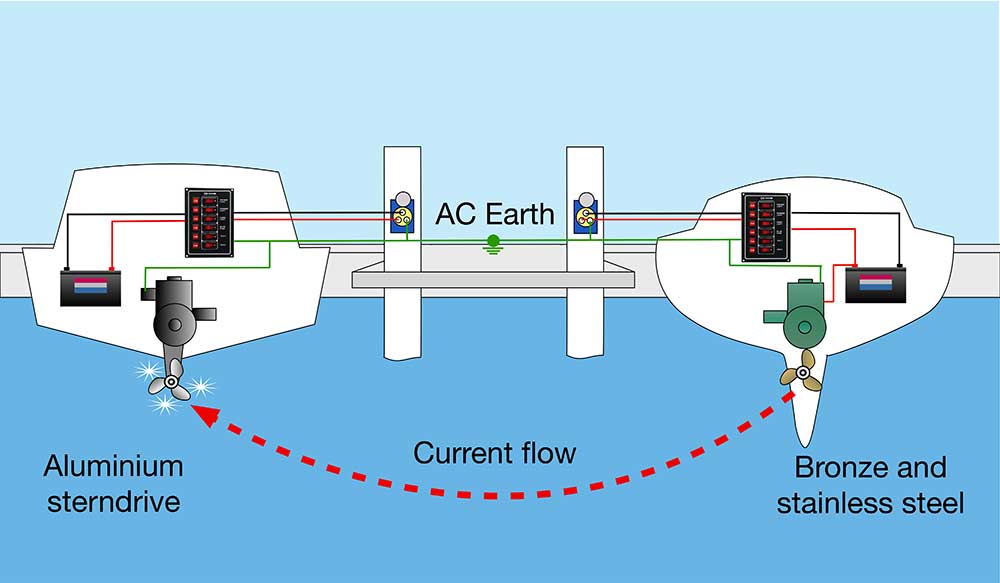
Galvanic and electrolytic corrosion
If sacrificial anodes are disappearing very quickly this can indicate there is a galvanic or electrolytic problem caused by electrical currents, which means an electrical circuit is being made for some reason. In order to understand what could be going on, it is worth...
Steel hull maintenance
A steel boat owner’s biggest enemy is corrosion. They don’t have to worry about osmosis or rotting timbers, instead rust is the number one issue that will keep them awake at night. Steel hull maintenance mainly involves checking inside and outside the hull...
Steel and Aluminium Hulls
The two metals used for hull construction are steel and aluminium. These are both very strong materials and will last a long time as long as they are cared for, which primarily means protecting steel boats from rust and aluminium boats from electrolytic action. Metal...
Cleaning & polishing painted topsides
Marine paints have to be designed to withstand a far harsher environment than automotive paints, for example, and have a limited lifespan. New paint jobs are expensive but with the right care, painted topsides can last for 10 years or longer. A boat’s paintwork...
Repairing chips and dings in gelcoat
Sooner or later a GRP boat will receive the odd knock, chip or ding in its gelcoat. Boat owners need to decide if this is a job for a professional or it is something they can tackle themselves. This article might help you decide which would be the best option for you.... Download from iTunes
Download from Google Play
 Download from iTunes
Download from Google Play
 Download from iTunes
Download from Google Play
 Download from iTunes
Download from Google Play
 Download from iTunes
Download from Google Play
 Download from iTunes
Download from Google Play
 Download from iTunes
Download from Google Play
 Download from iTunes
Download from Google Play

🛠️ 𝗠𝗮𝘀𝘁𝗲𝗿 𝘆𝗼𝘂𝗿 𝗺𝗮𝗿𝗶𝗻𝗲 𝗱𝗶𝗲𝘀𝗲𝗹 𝗲𝗻𝗴𝗶𝗻𝗲!![]()
![]() Gain the confidence to handle maintenance and make necessary repairs yourself. This essential skill is easier to acquire than you think.
Gain the confidence to handle maintenance and make necessary repairs yourself. This essential skill is easier to acquire than you think.![]()
![]() ➡️ Get the basics and next steps here: safe-skipper.com/learning-about-diesel-engine-maintenance
➡️ Get the basics and next steps here: safe-skipper.com/learning-about-diesel-engine-maintenance![]()
![]() #DieselEngineMaintenance #boating #yachting #sailing
#DieselEngineMaintenance #boating #yachting #sailing
This content isn't available right now
When this happens, it's usually because the owner only shared it with a small group of people, changed who can see it or it's been deleted.
