Select Page

Maintenance involves keeping something in good condition, as close to its manufactured state as possible. The maintenance of a boat involves things like cleaning, varnishing, painting, polishing, antifouling, servicing the engine, servicing the seacocks, and maintaining the gas and plumbing systems. It all amounts to a fairly considerable amount of work that can’t be ignored if you are to keep your boat in a safe and good condition.

Many boat maintenance jobs can be done by someone with basic skills, but even so there are inevitably right and wrong ways to do all these tasks. When maintenance work is done by a yard, you can expect to pay a significant hourly rate for their time. However, if you are prepared to do some or all of this comparatively low skilled work yourself and can do so to a high standard, then you can save yourself a good chunk of money, provided you have the time and inclination to do so.

If you don’t have the time or inclination to do the work yourself then you will need to arrange to pay for the routine maintenance to be done by others. Most yards will have people on site who are able to do this work for you. It is always best to check with a yard before lifting out what maintenance work they are able to arrange for you and what their rates are going to be. There is no harm in asking other boat owners about their experiences with the standards of workmanship of local yards.

Repairing and refurbishing

In the end, almost every part or piece of equipment on a boat either wears out or breaks and at some time will need to be replaced. Certain items, for example running rigging, engine hoses and interior fittings, are easy enough to replace while others, such as the standing rigging, cutless bearings or through hull fittings are not so straight forward, even when replacing like for like. While it may be tempting to carry out these more complex tasks yourself, for peace of mind most boat owners tend to have these more demanding types of job done by professionals.

Much will depend on your experience and DIY skills, plus whether you have the time available and in some cases access to specialist tools. Another issue that creeps in here is the matter of sourcing spares, especially those which are no longer manufactured. This can take a prohibitive amount of time, depending on the age and class of your boat.

Refit

A complete refit is usually a complex and lengthy process that requires a carefully planned project timeline, the drawing up of a realistic budget and experienced project management. Whether the project manager is the owner or a professional, their job is to ensure that both the project timeline and budget are kept on track. Some owners like to take on this role themselves, but in order to do this they need to have the time, resources and expertise to see the project through.


Some prospective boat owners go in search of old and neglected boats in need of complete refits in the hope that they will pick up a bargain. The boat market is swamped with such boats that can take years to sell. Many of these are virtually worthless as the costs of refitting them and making them seaworthy again will be likely to exceed the market value of the repaired boat. That said there are bargains out there for those who have the experience, resources and desire to renovate an old boat. This is good news for boatyards, as these boats often remain ashore indefinitely as they are painstakingly renovated.

Advice on refitting

There are plenty of trained shipwrights who have the experience to advise on whether a neglected boat is worth refitting or not. Some offer a service to help prospective buyers investigate a boat’s condition and to estimate what a refit would cost. While these services are not free, they are a safeguard against buying a boat that could turn into too big a project.

The rewards of boat ownership

It is no secret that the costs of running a boat soon mount up and these need to be factored in from the outset.

Not wanting to end this post on a downer (hard work, costs, more hard work, more costs) caring for your own boat brings a great deal of satisfaction. While being able to stand back and admire a well looked after boat in all its sparkling glory in the boatyard is one thing, I hope you will agree that the real rewards are to be enjoyed out on the water.

Distress flares – which flare, how & when to use?

How to use distress flares at sea To effectively use distress flares at sea, you need to understand the different types, their purpose, and the...

Marine engine electrical system

The typical basic electrical system associated with a marine engine includes a dedicated engine starting battery, a starter motor, a charger in the form of an alternator, a solenoid and some engine sensors and instruments.

Common medical emergencies at sea

A medical emergency aboard a boat at sea requires immediate attention to ensure the safety of the casualty and the crew in general. The skipper needs to know which crew members, if any, have had medical training or have a first aid qualification. All boats should carry first aid handbooks to help an untrained crew cope with a medical emergency.

Jester Challenge 2022 – Sailing single handed from Plymouth UK to the Azores: Part 9 – Around the Azores

Jester Challenge – A modern experiment in old-fashioned self-reliance, self sufficiency, and personal responsibility. This is the ninth of a 10-part post where solo sailor, Bernie Branfield, shares his first-hand account of his single-handed, 2022 Jester Challenge, from Plymouth, UK to the Azores, in his 26′ Invicta Mk2, Louisa.

Essential yacht tender safety for skippers and crew

Essential yacht tender safety - the dangers inherent in using a dinghy to get ashore from a moored or anchored yacht are all too easily...

Weather forecasting resources and tips

All competent sailors need to have a good basic understanding of how to interpret a weather forecast. They also need to be able to interpret the actual conditions they are experiencing.

Boat Improvements

My Boat - practical improvements Author - Mike Rossiter Most boat owners who have had their craft for any length of time will have made what they...

Boat ownership – some fundamentals

Owning a boat is a big commitment that should bring no end of satisfaction, but the costs of maintaining and keeping a boat are significant and should never be underestimated.

Jester Challenge 2022 – Sailing single handed from Plymouth UK to the Azores: Part 5 – Boat Management

Jester Challenge – A modern experiment in old-fashioned self-reliance, self sufficiency, and personal responsibility. This is the fifth of a 10-part post where solo sailor, Bernie Branfield, shares his first hand account of his single-handed, 2022 Jester Challenge, from Plymouth, UK to the Azores, in his 26′ Invicta Mk2, Louisa.

Boat Security: Protecting your vessel from theft & vandalism

Boats are susceptible to theft and vandalism. Protecting your vessel from these risks requires a proactive approach to boat security. In this comprehensive guide, we’ll explore the various threats to boat security and provide practical strategies and technologies to safeguard your investment and enjoy peace of mind on the water.

Wooden Hull Repairs

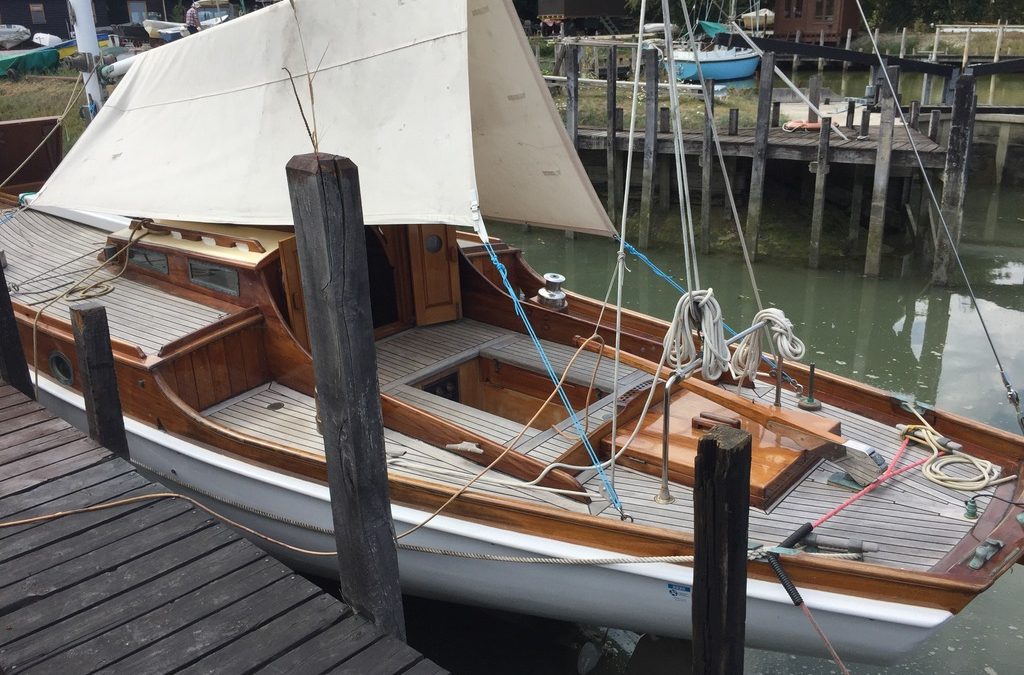
While wooden boat hull maintenance is mostly straightforward, it is always a good idea to take expert advice on any repair job needed doing to a wooden boat, unless you have done the job before and know what you are doing.

You Need To Understand The IRPCS ColRegs To Pass Your Yachtmaster, Master of Yachts and Coxswain Certificate of Competence

IRPCS ColRegs Rules of the Road at Sea and Yachtmaster Learning, understanding and remembering the International Regulations...

Jester Challenge 2022 – Sailing single handed from Plymouth UK to the Azores: Part 4 – Navigation

Jester Challenge – A modern experiment in old-fashioned self-reliance, self sufficiency, and personal responsibility. This is the fourth of a 10-part post where solo sailor, Bernie Branfield, shares his first hand account of his single-handed, 2022 Jester Challenge, from Plymouth, UK to the Azores, in his 26′ Invicta Mk2, Louisa.

Navigating narrow channels

Navigating narrow channels can present challenges for boat operators due to limited space, restricted manoeuvrability, and potential hazards such as shallows, rocks, or other vessels. To ensure safe passage through narrow channels, it’s essential to follow specific strategies and techniques.

Fire safety advice at sea from the Marine & Coastguard Agency

Fire safety advice for boaters Top fire safety advice at sea: 1. Fit smoke alarms, carbon monoxide and gas detectors 2. Turn...

Boat plumbing maintenance & troubleshooting

A boat’s fresh water system needs annual maintenance to keep it in good condition. Some boats have far more complex systems than others, with pressurised hot and cold water, associated pumps, an accumulator, calorifier and pressure valves, all to keep a boat owner busy.

Sailing & Motoring in Fog

Sailing & Motoring in Fog You can only measure the visibility accurately if sailing & motoring in fog when you have...

Safety Equipment Checklist for Boats

Safety Equipment Checklist for Boats   Liferaft line attached The liferaft will not work unless the trigger line is...

Sail trimming for cruisers

Sail trimming tips for cruisers. Whether racing or cruising, a well tuned boat will sail faster and tend to heel less than a boat with badly adjusted sails.

2023 Rolex Fastnet Race

Safe Skipper’s Simon Jollands took part in the 2023 Rolex Fastnet Race – a classic offshore sailing event. This is the first of several articles on the race and focuses on the start.

ColRegs when sailing single handed

  Don’t neglect the Colregs when sailing single handed Sailing single-handed represents several challenges for skippers, not least how to...

Estimating your position at sea

Navigators use a combination of techniques to estimate their position at sea. The primary method used today is GPS (Global Positioning System), a network of 24 satellites that became fully operational in the 1990s and was originally restricted for use by the United States military.

Boat Engine Safety Checks

  Boat Engine Safety Checks Every skipper needs to make regular essential boat engine safety checks. Below you will...

Marine toilets – care and maintenance

There are a number of different types of marine toilet, or heads. They fall into one of three categories – manual, electric and vacuum, the most common being the manual, hand pumped type. These have double acting piston-pumps which both discharge the waste and flush the toilet with sea water.

Sailboat rig checks – Part 1

Sailing boat rigs need to be checked regularly to reduce the risk of rig failure at sea. In part one of Sail boat rig checks we run through a series of useful checks that owners and skippers can carry out.