Select Page

It is wise to have a comprehensive and well-organised tool kit and a supply of spares for your boat. This is both for routine maintenance and to deal with unexpected breakages and equipment failure at sea. Read on for some tips and advice on what you need…

You can get by with very few tools aboard a boat, as long as nothing breaks and someone else does all the maintenance for you. The previous owner of my present boat used it mainly for inshore racing and in order to save weight made do with a small ratcheting screwdriver with six double-ended bits, a large rusty hammer and very little else.

For all boats heading offshore this is not such a good plan. The greater the distance you travel the more you need to be prepared for dealing with breakdowns and equipment failure at sea.

Tools should be kept as dry as possible and safely stowed in secure lockers as low in the boat as possible – overhead lockers are not the ideal place to stow heavy tools and spares for obvious safety reasons.

Good hand tools will last a lifetime with proper care. The marine environment shows no mercy on cheap tools which can corrode in next to no time, so it pays in the long run to buy good quality and to look after them. It is a good idea to build up a collection of specialist tool kits for rigging, sail repairs, engine and electrics.

Power tools

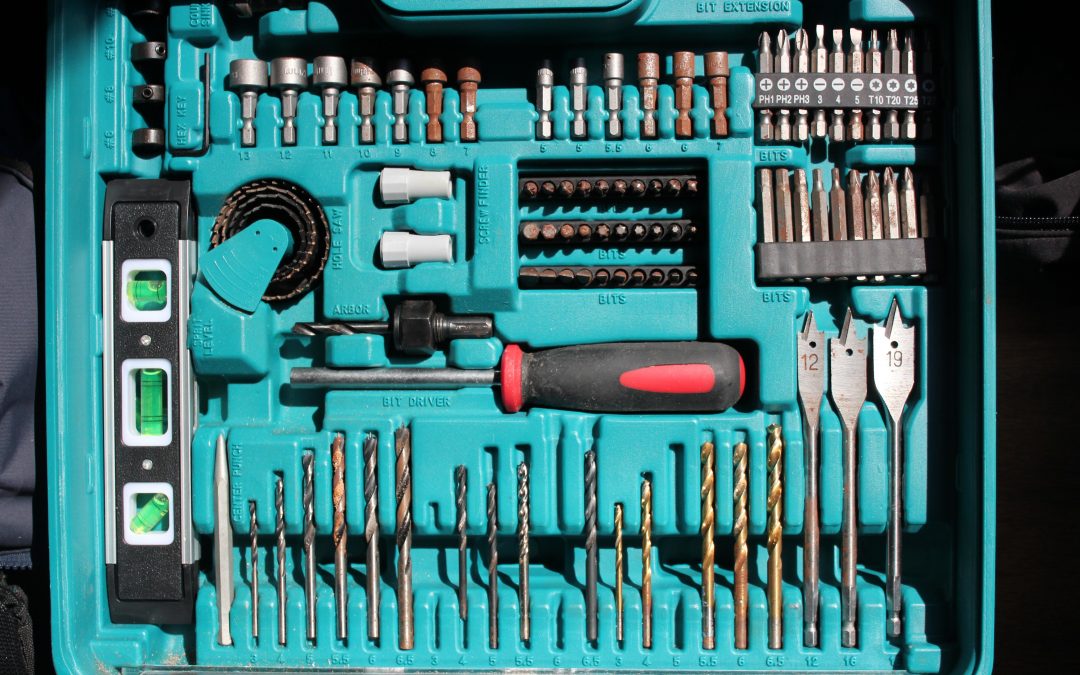
A selection of cordless power tools are also useful. Cordless tools with lithium-ion batteries are the best, as their batteries retain charge almost indefinitely when stored. Potentially useful items include drill/drivers, saws, soldering irons, Dremels and angle grinders.

Tips:

  • Only buy tools that will withstand the marine environment.
  • Organise the storage of your tools wisely and make sure you know where they are kept.
  • If you plan to head offshore and go cruising, take a comprehensive toolkit to cover every eventuality, plus plenty of spares.

Below are some lists of specific tools and spares to carry on a medium sized cruising yacht. Personally I find the Leatherman multi-tool the most useful single item – mine is more than 20 years old and still going strong!

General tools

  • Allen keys.
  • Bolt cutters.
  • Bradawl.
  • Centre punch.
  • Chisels.
  • Drills – hand and powered plus drill bits for wood and metal, including stainless steel.
  • Files – wood and metal.
  • Hacksaws – large, small + spare tungsten carbide blades.
  • Hammers – 2lb lump + plastic mallet.
  • Hole cutters.
  • Knives – craft, palette + spare blades.
  • Mallets – wooden mallets are kinder to a boat than hammers.
  • Mastic gun.
  • Mole wrench.
  • Multi-tool – eg Leatherman.
  • Oilstone for sharpening blades.
  • Paint scrapers.
  • Pliers – various sizes and types, including circlip pliers.
  • Screwdrivers, various sizes and types.
  • Screwdriver bits, various sizes and types included Torx bits.
  • Socket sets – both half inch and quarter inch drives with metric and imperial sockets as appropriate.
  • Spanners, open ended, ring and adjustable types.
  • Tap and die set.
  • Torches, including a head torch.
  • Vernier gauge.
  • Vice – the type designed to fit on top of a winch is ideal.
  • Wire brush.
  • Wood saws.

General spares

  • Adhesives.
  • Abrasive paper (in various grades).
  • Duct tape.
  • Hose clips in a range of sizes.
  • Marine grade sealant.
  • Masking tape.
  • Petroleum jelly (Vaseline).
  • PTFE tape.
  • Spray can of lubricant.
  • Stainless steel nuts, bolts and screws in a range of sizes.
  • Washers (including large penny washers).

Electrical tools

  • Crimping tool.
  • Electrical pliers.
  • Multimeter
  • Precision (small) screwdriver set.
  • Soldering iron.
  • Wire cutters.

Electrical spares

  • Cable ties.
  • Electrical tape.
  • Fuses.
  • Heat shrink tubing.
  • Light bulbs, including navigation lights.
  • Solder.
  • Spare battery terminals.
  • Torch batteries.
  • Wire terminals and connectors.
  • Wire of different sizes.

Engine tools

  • Feeler gauge.
  • Filter wrench.
  • Injector spanners.
  • Oil change pump.
  • Spark plug spanner for outboard motor.
  • Torque wrench.

Rigging and sail repair tools

  • Cutting board.
  • Hot knife.
  • Rigging cutters.
  • Sailmaker’s needles – it’s worth noting that many of these are sized for rope work and only the smallest sizes tend to be suitable for sail repairs.
  • Sailmaker’s palm.
  • Sharp knife – consider a ceramic one as these maintain an edge for longer.
  • Splicing fids.
  • Swedish fid.

Rigging and sail making supplies

  • Blocks, including a snatch block.
  • Dyneema line – 2mm and 4mm.
  • Electrical tape.
  • Sailmaker’s thread.
  • Self-adhesive sail repair patches.
  • Self-amalgamating tape.
  • Shackles in a range of sizes.
  • Spinnaker repair tape.
  • Whipping twine.

One final tip is that it helps to store tools and spares in transparent plastic boxes clearly labelled with magic markers. Finding a tool or spare in a hurry on a pitching and rolling boat can prove very frustrating and seriously affect your sense of humour!

Jester Challenge 2022 – Sailing single handed from Plymouth UK to the Azores: Part 4 – Navigation

Jester Challenge – A modern experiment in old-fashioned self-reliance, self sufficiency, and personal responsibility. This is the fourth of a 10-part post where solo sailor, Bernie Branfield, shares his first hand account of his single-handed, 2022 Jester Challenge, from Plymouth, UK to the Azores, in his 26′ Invicta Mk2, Louisa.

Repairing chips and dings in gelcoat

The gelcoat topsides of a GRP boat can be pampered and restored to their former glory relatively easily when it is ashore. Gelcoat is only a very thin outer layer of the hull, often less than 1mm thick, so you should avoid cleaning it with highly abrasive cleaners, or an-ything that could potentially damage its surface.

Seasickness – how can you prevent it?

Seasickness is a common problem at sea and affects both seasoned sailors and novices. What are the causes and symptoms of seasickness?...

Repairing a leaking hull-to-deck joint

If you suspect a hull-to-deck joint has failed, then being absolutely sure where the actual leak is occurring is of prime...

Boat batteries

Under-sized battery banks are one of the key factors behind power failure at sea, as well as the premature failure of batteries, so make sure that your boat battery measures up to the use you want to put it to.

Top five windvane self steering installation questions

Top five windvane self steering installation questions answered by Sarah Curry of Hydrovane International Marine, courtesy of Viki Moore from Island Cruising NZ

Narrowboating on the Kennet and Avon Canal

A recently cancelled sailing event I was due to take part in left us with a free weekend in the diary. Given that my wife and I were celebrating a bumper wedding anniversary and the weather forecast was for fine weather, we decided to hunt around for a last minute canal holiday.

Gybing a sailing boat

Gybing is the sailing manoeuvre used to change a boat's direction through a following wind. As with the tacking manoeuvre,...

Essential Knots: Figure of eight

Essential Knots: Figure of eight Use: Stopper knot, prevents a rope from being pulled through a hole e.g. through a block or...

Fixing position at sea using traditional methods

This post looks at some traditional methods used for fixing a vessel’s position at sea, within sight of land. Electronic fixes using chart plotters are very straightforward to record, but if for some reason a vessel’s electronics are faulty it is essential that a skipper knows how to use traditional methods.

The Round The Island Race 2023

This year’s Round the Island Race turned out to be a really thrilling and competitive event. 1100 boats entered the race, which took place on Saturday 1st July. The race started from the world famous Royal Yacht Squadron line in Cowes UK, with the largest and fastest boats starting first, leaving the rest of us to wait our turn.

Pleasure craft safety equipment recommendations

Safety equipment is an important part of boat preparation and it is advisable for all pleasure craft skippers to check their vessel is...

Competent crew skills: arriving and leaving a berth

Skilled boat handling is needed when entering or leaving harbour. Crew tasks include preparing the mooring lines and fenders before docking and...

ColRegs Nav Lights & Shapes, Rules Of The Road and IALA Buoys Apps

ColRegs Nav Lights & Shapes, Rules Of The Road and IALA Buoys Apps Make Learning Rules on iPhone, iPad, iPod and Android...

Boat maintenance – what does it involve?

The maintenance of a boat involves things like cleaning, varnishing, painting, polishing, antifouling, servicing the engine, servicing the seacocks, and maintaining the gas and plumbing systems. It all amounts to a fairly considerable amount of work that can’t be ignored if you are to keep your boat in a safe and good condition.

The Boatyard Book – a boat owner’s guide to yacht maintenance, repair and refitting

The Boatyard Book is a fully illustrated 224 page practical reference manual that provides advice for boat owners on planning and carrying out annual maintenance, repairs, upgrades and refits of sailing yachts and motorboats, up to 20 metres in length.

Boating emergency – how to broadcast a MAYDAY emergency call

How to broadcast a MAYDAY emergency call   How to broadcast a MAYDAY emergency call if a vessel or person is in grave...

Navigating narrow channels

Navigating narrow channels can present challenges for boat operators due to limited space, restricted manoeuvrability, and potential hazards such as shallows, rocks, or other vessels. To ensure safe passage through narrow channels, it’s essential to follow specific strategies and techniques.

Rudders and steering systems – Part 1

Rudders and steering systems. A rudder is one of the most critical parts of a boat. Rudder failure is a common occurrence on neglected or overworked boats and a very unpleasant and potentially dangerous thing to happen when you are out at sea.

Jester Challenge 2022 – Sailing single handed from Plymouth UK to the Azores: Part 7 – Motivation

Jester Challenge – A modern experiment in old-fashioned self-reliance, self sufficiency, and personal responsibility. This is the seventh of a 10-part post where solo sailor, Bernie Branfield, shares his first-hand account of his single-handed, 2022 Jester Challenge, from Plymouth, UK to the Azores, in his 26′ Invicta Mk2, Louisa.

Boat engine basics

Boat engines come in all shapes and sizes and include inboards, outboards, petrol, diesel, electric and hybrid systems. Some engines are...

Essential Yachting + Power Boat Safety Briefing

Yachting Safety Briefing   Down below Lifejackets and harnesses - fitting, when to wear, clipping on Gas - risks, precautions, gas bottles and...

Keel maintenance and Repair – Part 2

If you have ever witnessed a boat colliding with a rock or other submerged obstacle you will know that there is an almighty thump and the whole boat shakes and judders. While such hard groundings seldom result in catastrophic keel failure, something has to give and even the sturdiest keels can easily be damaged by such an impact.

Getting a tow for your sail or power boat at sea or on inland waterways

FREE tips from the Safe Skipper App for iPhone/iPad/Android: Getting a tow for your sail or power boat Plan how to secure a...

Keel maintenance and repair – Part 1

Keels are designed to act as underwater foils that generate lift as the boat moves through the water, counteracting the leeward force of the wind and enabling the boat to sail closer to the wind. Keel maintenance and repair is essential for the performance of your boat.