Select Page

A rudder is one of the most critical parts of a boat. Rudder failure is a common occurrence on neglected or overworked boats and a very unpleasant and potentially dangerous thing to happen when you are out at sea.

It is important for a boat owner to fully understand how their boat’s steering system works. For example, do you know whether your rudder stock is hollow or solid? Is it made from stainless steel or aluminium, or is it composite? More importantly, do you understand how the system can fail? It is always best with boats to leave nothing to chance and and to know how to spot early signs of trouble. This particularly applies to rudders.
Spade rudder

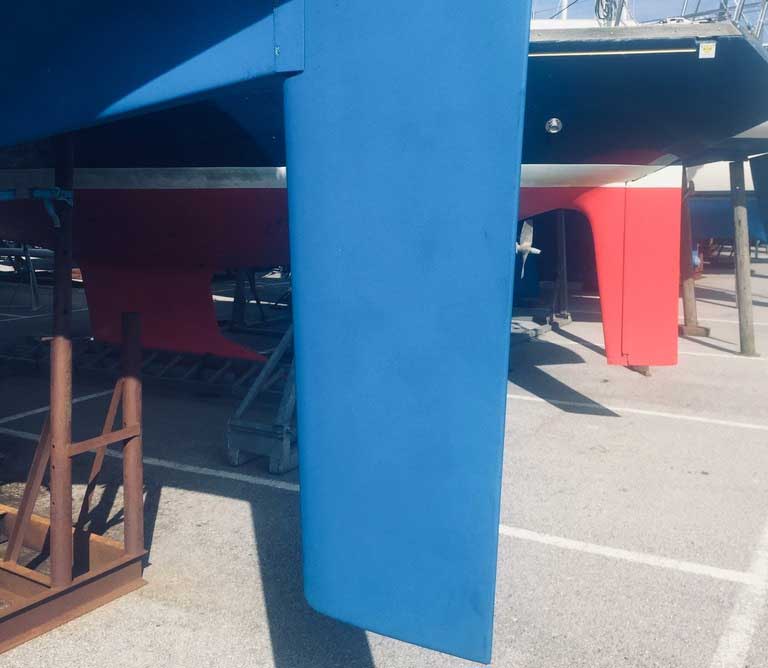
The spade rudder system is common on many modern designs of both sail and power boats. This type is known as a balanced rudder, meaning that it pivots at a point well back from its forward edge (whereas transom hung rudders are referred to as unbalanced rudders). This makes it easier to turn than a transom hung rudder. A spade rudder is suspended beneath the hull, well astern of a fin keel.

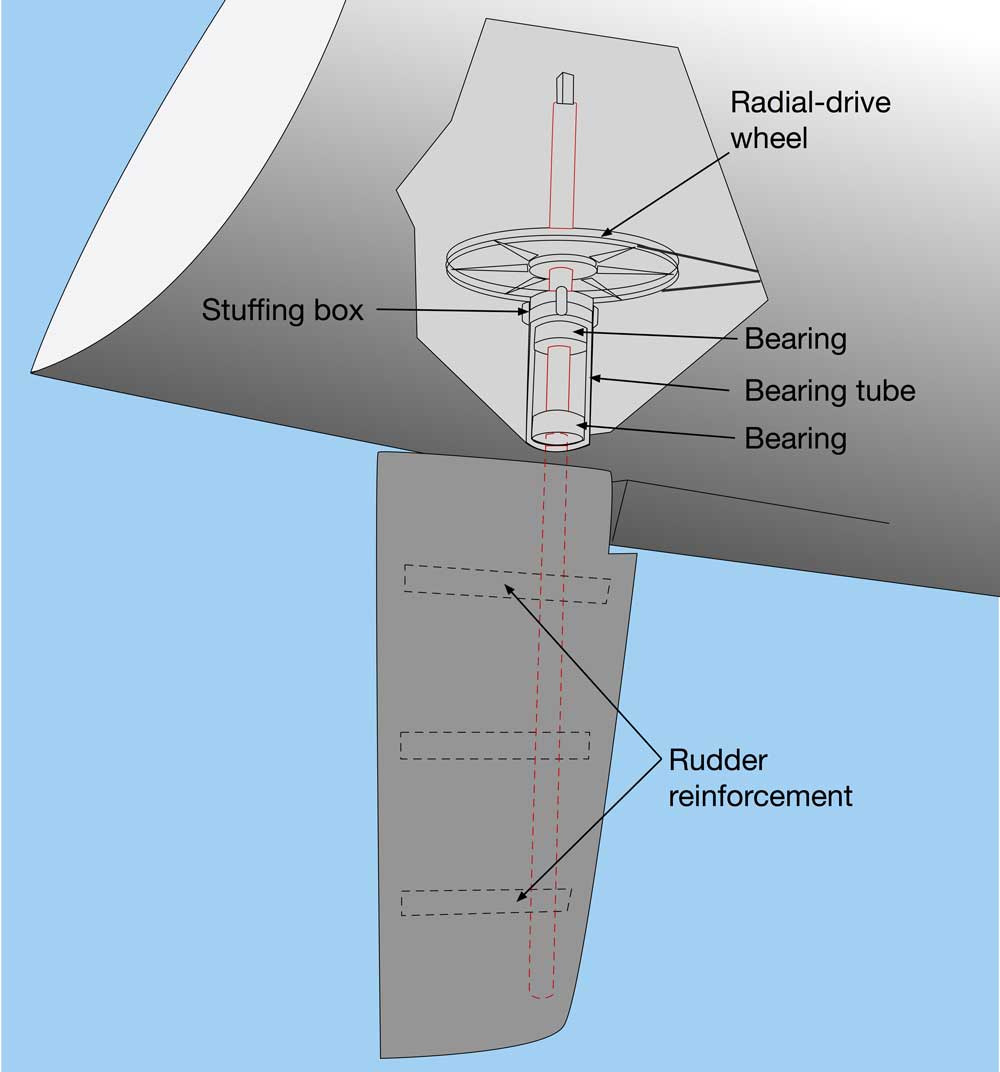
Spade rudders have a rudder stock which reaches from the bottom of the rudder up into the hull. The stock can be hollow or solid and made from stainless steel, aluminium or composite materials. The rudder blade is built around the stock and reinforced with a frame which is welded to the stock. So when the rudder stock is turned, the frame and blade turn as one. The blade itself is usually made in two halves of fibreglass which are bonded together. The core is usually filled either with foam or plywood and occasionally is a solid laminate.

On most spade rudders, there are two bearings contained in a bearing tube. One of these bearings is at the point where the rudder stock enters the hull and another one higher up at the top of the tube which may also have a seal.

Spade rudders are subjected to considerable stresses and some experts would say are more vulnerable to failure than the old fashioned transom hung varieties. This is partly because they are hidden from sight and therefore difficult to inspect when afloat and partly because there is more that can go wrong if a spade rudder isn’t inspected regularly. The big issue is that it is very difficult to prevent water from getting into the core, causing corrosion and eventually, rudder failure.

Spade rudder checks:

  • Check if water continues to drip from the rudder after the boat has been hauled out.
  • Check for any rust-like stains on the the rudder surface, which are an indicator of crevice corrosion.
  • Bearing failure – check bearings for excessive play when ashore by moving the bottom of the rudder blade from side to side. Up to 2mm play is acceptable.
  • Check bearing tube to hull joint for any signs of cracking.
  • Check the flexible rubber, bellows type of seal is in good order.
  • Stiff steering can be caused by plastic bearing failure. Roller bearings can fail suddenly.
  • Rudder stock failure – check seawater has not penetrated the bearing tube which will cause a stainless steel rudder stock to corrode and eventually fail. The rudder stock’s lower bearing where it enters the bearing tube should be inspected for excessive play or signs of crevice corrosion and galvanic corrosion. Check the shaft seal for signs of leaking. If it is leaking it needs to be replaced. Check the upper part of the bearing tube is well supported and not showing any signs of movement.
  • Framework failure – check for water penetration into the rudder blade. This can cause corrosion of the metal frame, resulting in the rudder stock breaking away and failing to turn the blade. Check if there is any movement between the rudder and the rudder stock. If so, the rudder will need to be repaired or replaced.
  • Delamination – check the rudder blade for bulges which indicates water has penetrated the rudder and is causing delamination. Check the edges of the blade for signs of cracking or splits which could allow water to penetrate the blade.


Wooden Hull Repairs

While wooden boat hull maintenance is mostly straightforward, it is always a good idea to take expert advice on any repair job needed doing to a wooden boat, unless you have done the job before and know what you are doing.

Boat engine fuel system

If engines are installed and serviced correctly then most marine engines are very reliable, but one of the most important parts of the engine to check and service is the fuel system.

Stern gear maintenance

The stern gear of a boat needs to be checked carefully when the boat is ashore as this is something that can only be done when it is out of the water. The same applies for any maintenance and repairs that may need doing, so it is best to check it all over as soon after an end of season lift out as possible.

Sailing Boat Rig Care

The rig of a sailing boat is put under huge stresses and strains so it is important for inspections of a yacht’s spars and rigging to be carried out at regular intervals.

First Aid Afloat – Jellyfish Stings

Jellyfish stings are a common occurrence when boating or swimming in many parts of the world. While most stings are not serious, some can cause...

Navigating the Unknown: Boating in Limited Visibility

Sailing or Motor Boating in limited visibility, whether due to darkness, fog, or other adverse weather conditions, presents unique challenges for mariners. It requires a combination of skill, experience, and adherence to safety protocols to ensure a safe and enjoyable journey. In this article we will delve into the intricacies of sailing in such conditions, providing insights into preparation, navigation, and collision avoidance.

You Need To Understand The IRPCS ColRegs To Pass Your Yachtmaster, Master of Yachts and Coxswain Certificate of Competence

IRPCS ColRegs Rules of the Road at Sea and Yachtmaster Learning, understanding and remembering the International Regulations...

Steel and Aluminium Hulls

The two metals used for hull construction are steel and aluminium. These are both very strong materials and will last a long time as long as they are cared for, which primarily means protecting steel boats from rust and aluminium boats from electrolytic action.

Essential Boat Spares for Safety

  Boats Spares Tool kit What you carry in the boats tool kit will be useful for many boat repairs, but you might want...

A simple guide to understanding tides when passage planning

Understanding tides when passage planning When planning a trip in tidal waters, check the tides before going afloat. Use...

Medical Emergency at Sea

How to deal with a medical emergency afloat   If you are planning a boating trip, it is important to have at least one...

ColRegs when sailing single handed

  Don’t neglect the Colregs when sailing single handed Sailing single-handed represents several challenges for skippers, not least how to...

Wooden Hulls – Part 1

Traditional wooden boats have a plank on frame construction, a centuries old boat building method that is still in use today. Variations of the traditional method include carvel, clinker and strip planking, which all relate to the way the planking is attached to the frame.

Know your Navlights & Shapes – essential for all skippers

Know your Navlights & Shapes International Regulations for Preventing Collisions at Sea (ColRegs) Anyone who is...

Boating Rules of the Road – International ColRegs

    International ColRegs Rule 7: Risk of Collision Anyone who is responsible for a vessel at sea, from the...

Understanding your mast and rigging

The rig of a sailing boat is put under huge stresses and strains so it is important for inspections of a yacht's spars and rigging to be...

Boat engine cooling systems

Some boat engine breakdowns are unavoidable but those caused by lack of maintenance or regular checks can be avoided. Failure to maintain an engine’s cooling system is a well known example of this, so it is well worth spending time checking over the cooling system both when the boat is ashore and afloat.

Top Tips For Learning The ColRegs Boating Rules Of The Road

Colregs Boating Rules Of The Road
The International Regulations for Preventing Collisions at Sea (COLREGs) are a set of rules designed to prevent collisions between vessels. They are essentially the “rules of the road” for boats. Some key concepts within the COLREGs include:

Boat Engine Failure – what to check

Engine failure If your engine fails or is overheating there are a number of things to check immediately: • Air filter...

Leaking decks

Leaking decks are perceived as a nuisance by some boat owners, but if leaks are ignored a much more serious situation may well be developing, especially in the case of boats with balsa or plywood deck cores. So deck leaks do need to be investigated and dealt with.

Tips and advice for staying safe on a sailboat at sea

Here we focus on how to stay safe on a sailboat at sea. We cover key things to ensure you have on board before you set sail as well as covering the most common cause of incidents on sailboats and how to deal with them.

Seasickness – how can you prevent it?

Seasickness is a common problem at sea and affects both seasoned sailors and novices. What are the causes and symptoms of seasickness?...

Pleasure craft safety equipment recommendations

Safety equipment is an important part of boat preparation and it is advisable for all pleasure craft skippers to check their vessel is...

2023 Rolex Fastnet Race

Safe Skipper’s Simon Jollands took part in the 2023 Rolex Fastnet Race – a classic offshore sailing event. This is the first of several articles on the race and focuses on the start.

Peer to Peer yacht charter – How can you monetize your boat?

There is a growing trend in peer to peer yacht charter. How does it work? People already rent rooms, cars and bikes from one...