
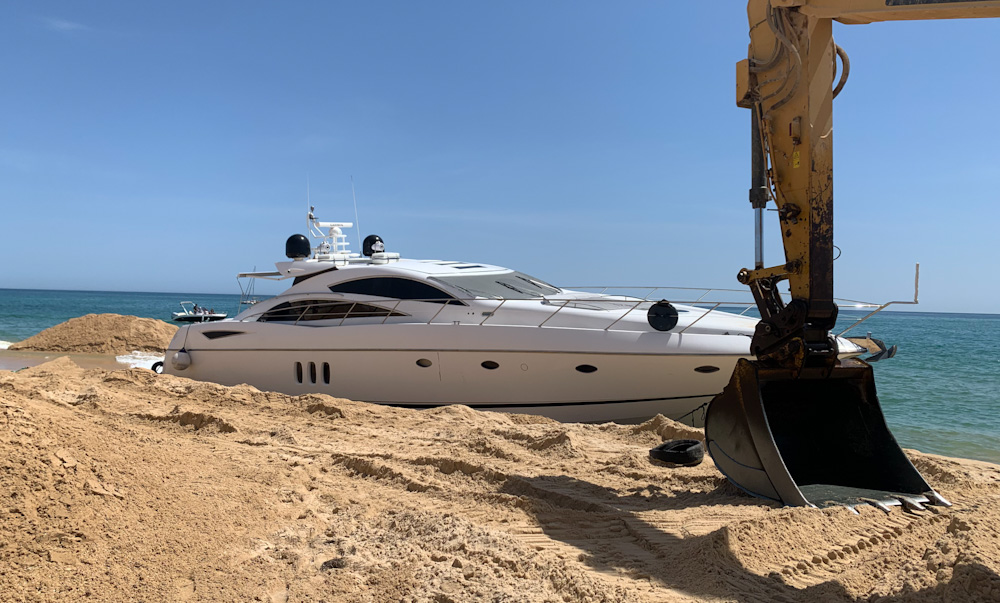

Going aground – what to do if it happens to you
It is one of those sailing facts of life that, however hard you try to avoid it, sooner or later you will most likely find yourself aground. It has happened to me twice. Once when I was on a RYA training vessel near the entrance to Beaulieu River in the Western...
Tidal terms and definitions
In a previous post, we looked at some of the basic principles involved with understanding tides, including what causes their rise and fall, the resulting tidal streams and the tidal range that varies according to coastal topography. For those who are learning or...
Fixing position at sea using traditional methods
Following on from previous posts concerning traditional navigation methods, this post looks at some traditional methods used for fixing a vessel’s position at sea, within sight of land. Electronic fixes using chart plotters are very straightforward to record,...
Estimating and plotting your position at sea
In a recent post we discussed the importance of being able to estimate your position at sea if the vessel’s GPS fails. In this post we go a little further with a reminder of how we go about estimating and plotting our position using traditional methods, when out... Download from iTunes
Download from Google Play
 Download from iTunes
Download from Google Play
 Download from iTunes
Download from Google Play
 Download from iTunes
Download from Google Play
 Download from iTunes
Download from Google Play
 Download from iTunes
Download from Google Play
 Download from iTunes
Download from Google Play
 Download from iTunes
Download from Google Play

⚓️ Pre-start engine checks = fewer breakdowns at sea![]()
![]() Nearly 1 in 3 marine callouts are caused by mechanical failure - many avoidable with a simple routine before you start up!!
Nearly 1 in 3 marine callouts are caused by mechanical failure - many avoidable with a simple routine before you start up!!![]()
![]() 🔧 Key checks to run through:
🔧 Key checks to run through:![]() ❑ Cooling system clear & water flowing
❑ Cooling system clear & water flowing![]() ❑ Fuel level (plus reserve) & clean filters
❑ Fuel level (plus reserve) & clean filters![]() ❑ Engine & gearbox oil topped up
❑ Engine & gearbox oil topped up![]() ❑ Belts, hoses & leaks inspected
❑ Belts, hoses & leaks inspected![]() ❑ Battery switched on & electrics set
❑ Battery switched on & electrics set![]() ❑ Seacocks open & raw water filter clean
❑ Seacocks open & raw water filter clean![]() ❑ Bilge blower run (if fitted)
❑ Bilge blower run (if fitted)![]()
![]() 👍 Bottom line: a quick pre-start check can prevent costly breakdowns, improve safety, and give peace of mind before heading out.
👍 Bottom line: a quick pre-start check can prevent costly breakdowns, improve safety, and give peace of mind before heading out.![]() More tips here: safe-skipper.com/pre-start-engine-checks/
More tips here: safe-skipper.com/pre-start-engine-checks/![]()
![]() #BoatingSafety #Seamanship #PreDepartureChecks #Sailing #Yachting #SafetyAtSea #Boating #Watercraft #Sailboat #SafeSkipper
#BoatingSafety #Seamanship #PreDepartureChecks #Sailing #Yachting #SafetyAtSea #Boating #Watercraft #Sailboat #SafeSkipper
This content isn't available right now
When this happens, it's usually because the owner only shared it with a small group of people, changed who can see it or it's been deleted.
