Select Page

It is wise to have a comprehensive and well-organised tool kit and a supply of spares for your boat. This is both for routine maintenance and to deal with unexpected breakages and equipment failure at sea. Read on for some tips and advice on what you need…

You can get by with very few tools aboard a boat, as long as nothing breaks and someone else does all the maintenance for you. The previous owner of my present boat used it mainly for inshore racing and in order to save weight made do with a small ratcheting screwdriver with six double-ended bits, a large rusty hammer and very little else.

For all boats heading offshore this is not such a good plan. The greater the distance you travel the more you need to be prepared for dealing with breakdowns and equipment failure at sea.

Tools should be kept as dry as possible and safely stowed in secure lockers as low in the boat as possible – overhead lockers are not the ideal place to stow heavy tools and spares for obvious safety reasons.

Good hand tools will last a lifetime with proper care. The marine environment shows no mercy on cheap tools which can corrode in next to no time, so it pays in the long run to buy good quality and to look after them. It is a good idea to build up a collection of specialist tool kits for rigging, sail repairs, engine and electrics.

Power tools

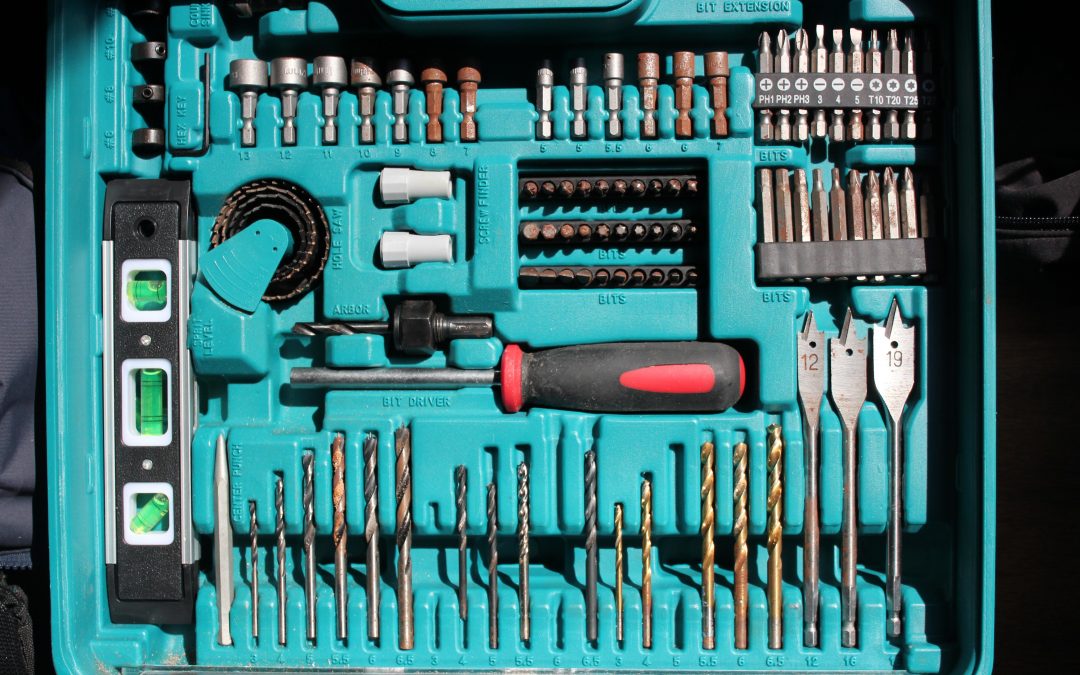
A selection of cordless power tools are also useful. Cordless tools with lithium-ion batteries are the best, as their batteries retain charge almost indefinitely when stored. Potentially useful items include drill/drivers, saws, soldering irons, Dremels and angle grinders.

Tips:

  • Only buy tools that will withstand the marine environment.
  • Organise the storage of your tools wisely and make sure you know where they are kept.
  • If you plan to head offshore and go cruising, take a comprehensive toolkit to cover every eventuality, plus plenty of spares.

Below are some lists of specific tools and spares to carry on a medium sized cruising yacht. Personally I find the Leatherman multi-tool the most useful single item – mine is more than 20 years old and still going strong!

General tools

  • Allen keys.
  • Bolt cutters.
  • Bradawl.
  • Centre punch.
  • Chisels.
  • Drills – hand and powered plus drill bits for wood and metal, including stainless steel.
  • Files – wood and metal.
  • Hacksaws – large, small + spare tungsten carbide blades.
  • Hammers – 2lb lump + plastic mallet.
  • Hole cutters.
  • Knives – craft, palette + spare blades.
  • Mallets – wooden mallets are kinder to a boat than hammers.
  • Mastic gun.
  • Mole wrench.
  • Multi-tool – eg Leatherman.
  • Oilstone for sharpening blades.
  • Paint scrapers.
  • Pliers – various sizes and types, including circlip pliers.
  • Screwdrivers, various sizes and types.
  • Screwdriver bits, various sizes and types included Torx bits.
  • Socket sets – both half inch and quarter inch drives with metric and imperial sockets as appropriate.
  • Spanners, open ended, ring and adjustable types.
  • Tap and die set.
  • Torches, including a head torch.
  • Vernier gauge.
  • Vice – the type designed to fit on top of a winch is ideal.
  • Wire brush.
  • Wood saws.

General spares

  • Adhesives.
  • Abrasive paper (in various grades).
  • Duct tape.
  • Hose clips in a range of sizes.
  • Marine grade sealant.
  • Masking tape.
  • Petroleum jelly (Vaseline).
  • PTFE tape.
  • Spray can of lubricant.
  • Stainless steel nuts, bolts and screws in a range of sizes.
  • Washers (including large penny washers).

Electrical tools

  • Crimping tool.
  • Electrical pliers.
  • Multimeter
  • Precision (small) screwdriver set.
  • Soldering iron.
  • Wire cutters.

Electrical spares

  • Cable ties.
  • Electrical tape.
  • Fuses.
  • Heat shrink tubing.
  • Light bulbs, including navigation lights.
  • Solder.
  • Spare battery terminals.
  • Torch batteries.
  • Wire terminals and connectors.
  • Wire of different sizes.

Engine tools

  • Feeler gauge.
  • Filter wrench.
  • Injector spanners.
  • Oil change pump.
  • Spark plug spanner for outboard motor.
  • Torque wrench.

Rigging and sail repair tools

  • Cutting board.
  • Hot knife.
  • Rigging cutters.
  • Sailmaker’s needles – it’s worth noting that many of these are sized for rope work and only the smallest sizes tend to be suitable for sail repairs.
  • Sailmaker’s palm.
  • Sharp knife – consider a ceramic one as these maintain an edge for longer.
  • Splicing fids.
  • Swedish fid.

Rigging and sail making supplies

  • Blocks, including a snatch block.
  • Dyneema line – 2mm and 4mm.
  • Electrical tape.
  • Sailmaker’s thread.
  • Self-adhesive sail repair patches.
  • Self-amalgamating tape.
  • Shackles in a range of sizes.
  • Spinnaker repair tape.
  • Whipping twine.

One final tip is that it helps to store tools and spares in transparent plastic boxes clearly labelled with magic markers. Finding a tool or spare in a hurry on a pitching and rolling boat can prove very frustrating and seriously affect your sense of humour!

The Round The Island Race 2023

This year’s Round the Island Race turned out to be a really thrilling and competitive event. 1100 boats entered the race, which took place on Saturday 1st July. The race started from the world famous Royal Yacht Squadron line in Cowes UK, with the largest and fastest boats starting first, leaving the rest of us to wait our turn.

How to predict wind direction and strength by reading a weather chart

Weather charts, also known as surface pressure or synoptic charts, contain a lot of information that helps weather...

The dangers of running aground in a motor boat

The peril of grounding a motor boat is not only an inconvenience; it can lead to substantial risks for both the vessel and its passengers. . In this article, we’ll explore the potential dangers of running aground and highlight the importance of proper navigation and preparedness to avoid these hazards!

Safety at sea principles

Safety at sea is not as simple as just spending money adding shiny new emergency equipment such as liferafts, danbuoys, distress flares, EPIRBs and so on.

Safe Skipper – crew management tips

Effective crew briefings are a vital part of the good on-board communication that helps everything to run smoothly on a sailing vessel at sea, whether it is cruising or racing.

Care of boat batteries

Boat batteries need to be kept properly charged, which means never allowing the batteries to discharge below 50 per cent of their total charge. As well as the batteries themselves, keeping a boat’s charging systems in good shape will also help to keep batteries topped up to a higher level of charge.

Stress cracks on GRP boats

It is quite common to find cracks in the gelcoat when inspecting the deck and superstructure of a GRP boat. It is important to differentiate between a gelcoat crack and a scratch.

Boat interior varnishing

Most boat interiors have a combination of varnished and painted surfaces including solid wooden joinery, plywood laminates with thin hardwood veneers and glass reinforced plastic. When making your assessment of what you are going to do, bear in mind that the varnishing process consumes a lot of time, especially if the existing surfaces are in poor shape.

You Need To Understand The IRPCS ColRegs To Pass Your Yachtmaster, Master of Yachts and Coxswain Certificate of Competence

IRPCS ColRegs Rules of the Road at Sea and Yachtmaster Learning, understanding and remembering the International Regulations...

Rewiring a boat – overcoming the challenges involved

Skippers need to have a basic knowledge of boat electrics, to avoid potential problems and to be able to solve them when they happen.

Sail care and maintenance – Part 2

At the end of the sailing season sails should be washed and inspected carefully for damage, including small tears, stitching failure, ultraviolet damage, stains and mildew.

Feeling anxious at sea

  Some people feel anxious at sea. Will they be seasick? What if they get caught in a violent storm? Could the boat...

Seasickness – how can you prevent it?

Seasickness is a common problem at sea and affects both seasoned sailors and novices. What are the causes and symptoms of seasickness?...

Boat ownership

Owning a boat is a big commitment that should bring no end of satisfaction for the owner as well as the owner's family and friends. In...

Understanding tides

If you are used to sailing in tidal waters, you will know that tides can be both a benefit and a hindrance to the sailor. In many ways,...

Tidal heights and the rule of twelfths

For those skippers who need to make a quick calculation or don’t have access to specific tidal curves for their location, it is possible to make an approximation using a system called the Rule of Twelfths. This is a simple method used to estimate the height of tide at any given time during the tidal cycle. It is based on the idea that the rise and fall of the tide is not constant, but follows a predictable pattern than can be divided into twelve parts.

Crew Overboard Drill – Updated

How to respond to crew overboard A Man Overboard (MOB) drill is a crucial safety procedure that every boater should practice regularly. It simulates...

Navigating the Unknown: Boating in Limited Visibility

Sailing or Motor Boating in limited visibility, whether due to darkness, fog, or other adverse weather conditions, presents unique challenges for mariners. It requires a combination of skill, experience, and adherence to safety protocols to ensure a safe and enjoyable journey. In this article we will delve into the intricacies of sailing in such conditions, providing insights into preparation, navigation, and collision avoidance.

Boat engine basics

Boat engines come in all shapes and sizes and include inboards, outboards, petrol, diesel, electric and hybrid systems. Some engines are...

Boatyard Health and Safety

Boat storage facilities are potentially hazardous environments and it is the responsibility of both boat owners and boatyards to ensure that the...

Propeller care and maintenance

Propellers are complicated and repairs should be done by specialists but owners can carry out checks and some routine maintenance themselves when the boat is in the boatyard. A propeller is critical to a boat’s performance, fuel consumption and ride, so it makes sense to keep a propeller in good working order.

Avoiding collisions at sea – how to stay safe on the water

Boats have many blind spots, including the headsails of sailing boats. Always keep a lookout, stay safe and remember that...

Rig check – how to prevent failure at sea

Regular rig checks prevent the risk of mast and rigging failure at sea. This includes regular rig inspections of the spars, ...

Boat Handling – anchoring

Anchoring your yacht or motorboat Anchoring is one of the most important boat handling skills. If you can set an anchor...

First Aid Afloat – fish spine injury

First Aid Afloat - Here is what to do if somebody stands on a fish spine: • Check for dangers. Is it safe for you to enter...