Select Page

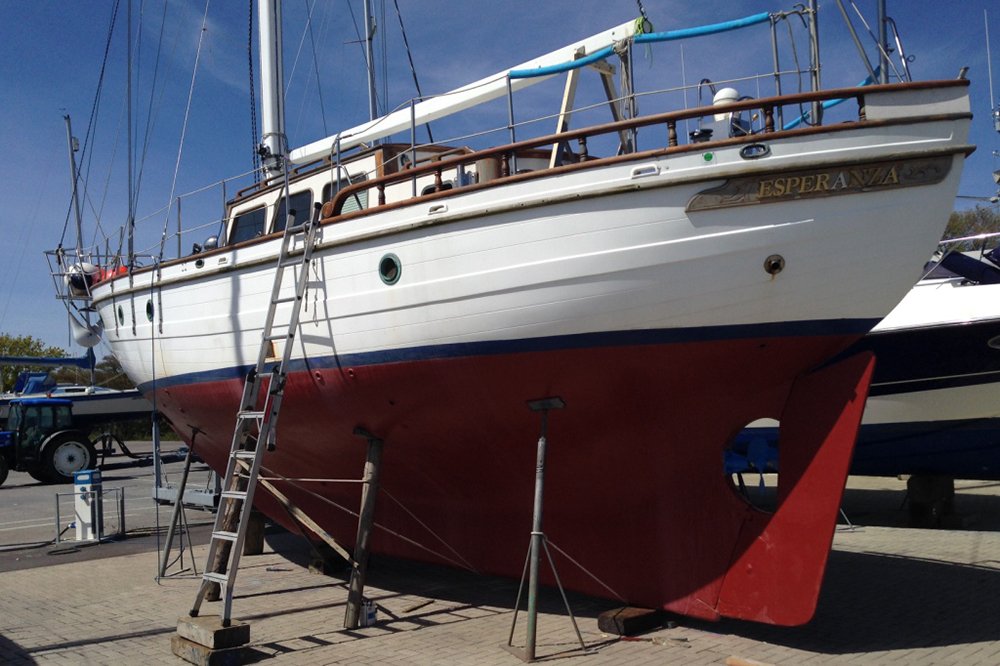
A full boat survey assesses the condition of the hull, mechanical gear and means of propulsion. The survey is carried out with the boat ashore in order to be able to properly inspect the hull and rudder.

A professional boat survey involves a thorough inspection that can take up to a day or longer. There are several types of survey that include a pre-purchase, condition and valuation survey; an insurance renewal and valuation survey; a damage assessment survey and a pre-sale survey.

While it is important to have professional surveys done when required, boat owners often carry out their own inspections or DIY surveys to ensure that any potential defects can be spotted early.

The following is an example of a typical pre-purchase survey of a GRP yacht:

  • The hull will be inspected for voids, de-lamination and damage. The surveyor will comment on the under hull condition, whether it has been gelshielded, antifouled and well maintained.
  • The surveyor will take moisture readings above and below the waterline and report whether these are acceptable level for the age and type of vessel.
  • All structural bulkheads and internal hull members will be checked.
  • The topsides will be checked and any repairs that need to be done will be listed.
  • The keel will be inspected for any defects and grounding damage.
  • The rudder and steering gear will be inspected, and the condition of the rudder mountings, bearings and pintles noted.
  • The stern gear will be inspected including the propeller, stern tube, stern gland and prop anode.
  • Deck hardware such as winches, cleats and stanchions, as well as the condition of the spars and rigging will also be recorded.
  • All skin fittings will be checked including the speed and depth transducers and the condition of the seacocks.
  • All seacock related pipework will be checked as will the condition of the sea toilet.
  • The shroud anchorage points will all be inspected, including the forestay fitting, inner forestay fitting and backstay fitting.
  • The engine beds and general condition of the engine will be checked.
  • The deck and superstructure will be examined by tapping with a small hammer over the outer surface. This is done to check for any voids or de-lamination.
  • Windows and hatches will be checked for any signs of leakage.
  • The stanchions, pushpit, pulpit and guardrails will be checked for the quality of fixings and whether they are all in a serviceable condition.
  • The deck gear will be checked.
  • The hull to deck joint will be checked for soundness.
  • The mast base will be checked.

Any defects will be recorded by the surveyor in their written report with recommendations given for any work that needs to be carried out.

Insurance renewal and valuation survey

It is normal practice to have a boat survey carried out every five years or so, possibly longer. Quite a bit can happen in the intervening years and this is where it can be very helpful for boat owners to learn how to inspect and troubleshoot defects and potential faults themselves.

Insurance companies will be particularly interested in knowing about any defects that could result in the loss of a vessel. They will also want a realistic assessment of the value of a vessel.

Damage assessment survey

A damage assessment survey determines the cause, nature and extent of an incident. This type of survey is usually required by insurance companies and the surveyors will often liaise with boat yards, engineers, insurance company and owner to determine the best option for carrying out repairs.

Pre-sale survey

A pre-sale survey allows the owner of a vessel to be in control of any issues that may be found when selling a vessel and avoid any nasty surprises. Potential issues can be resolved or discussed with potential buyers and brokers. 

DIY surveying

Doing your own boat inspections should not be considered a substitute for having a professional survey done every five years, which is a highly skilled process and a necessary part of your boat’s long term care. However, carrying out a DIY survey will help you identify and monitor potential problems at an early stage and to remedy them before they develop into a major issue.

For example, this might be knowing how to identify if there is excessive movement in the propeller shaft. How would you know if this is excessive movement if you had never checked the propeller shaft for movement in the past? If you are able to identify for yourself that this is excessive movement and has developed quite rapidly then you will know that this needs fixing and should be a high priority. If it has been the same for years then maybe it is not such a high priority but just needs regular monitoring.

DIY survey tools

Surveyors can often be found in boatyards tapping on the hulls and decks of boats with small hammers, listening carefully for sounds that indicate there could be a problem beneath the surface. While professional surveyors still do this, they also have all kinds of expensive, hi-tech moisture meters, ultrasound equipment, corrosion meters and various other testing gadgets. The good news is that carrying out a DIY survey requires little in the way of tools. These include:

  • Lightweight tack hammer – surveyors use hammers to search for signs of de-lamination in the hull. This is what they listen for:
    • As the hammer taps a GRP hull in good condition, a clear crisp sound should be heard and the hammer will bounce back.
    • A hammer tapping a GRP hull that has a wet core will make a dull, deeper sounding tone and will not bounce back.
  • Bradawl – a thin pointed tool like a bradawl is useful for prodding into cracks in a gelcoat and testing whether timbers might be rotten.
  • Scraper – a small scraper is handy for scraping away small areas of antifoul or flaking paint where necessary.
  • Duct tape – for marking spots or places that require attention.
  • Tape measure.
  • Notebook – for recording measurements and observations
  • Small mirror – an old dentist’s mirror is useful as it helps you to see into awkward places and around corners.
  • Magnifying glass – for taking a close look for hairline cracks
  • Head torch.
  • Smartphone – for taking photos. Also very useful as an additional torch.

Surveys are an important part of boat ownership, whether buying, selling or for insurance purposes. They are a safeguard that shouldn’t be avoided, don’t cost the earth and will prevent mishap at sea.

Tools and spares for your boat

Tools and Spares to take to sea!

You won’t regret taking a look at our essential tips and checklist to make sure you’re prepared for routine maintenance and those unexpected jobs that come up whilst you’re afloat!

Boat electrics inspection checklist

With the boat ashore, here are some recommendations for carrying out a boat owner electrics inspection. Safety is always paramount so remember to do the checks with the batteries off. Wearing a head torch helps, make notes as you go and only tackle a repair if you are 100% sure you know what you are doing:

Jester Challenge 2022 – Sailing single handed from Plymouth UK to the Azores: Part 10 – The Return Trip

Jester Challenge – A modern experiment in old-fashioned self-reliance, self sufficiency, and personal responsibility. This is the final instalment of a 10-part post where solo sailor, Bernie Branfield, shares his first-hand account of his single-handed, 2022 Jester Challenge, from Plymouth, UK to the Azores, in his 26′ Invicta Mk2, Louisa.

Finding your way at sea: waypoints

Any sea voyage needs a certain amount of planning before it is undertaken. It makes sense to think about where you are going, how you will get there and what factors might influence your plan. Planning the route itself is also critical. One of the essential parts of modern navigation is the use of waypoints.

An explanation of the IALA maritime buoyage systems – IALA A and IALA B

What are the differences between the two IALA buoyage systems, IALA Region A and IALA Region B, and where are they used?   As recently as the 1970s...

Boat maintenance below decks

While most interior maintenance work can be done when a boat is afloat, some jobs such as servicing the seacocks have to be done ashore. It makes sense to do any major interior repairs and improvements with the boat hauled out in the boatyard.

Boat ownership

Owning a boat is a big commitment that should bring no end of satisfaction for the owner as well as the owner's family and friends. In...

Crew Overboard Drill – Updated

How to respond to crew overboard A Man Overboard (MOB) drill is a crucial safety procedure that every boater should practice regularly. It simulates...

Marine engine electrical system

The typical basic electrical system associated with a marine engine includes a dedicated engine starting battery, a starter motor, a charger in the form of an alternator, a solenoid and some engine sensors and instruments.

Boat interior inspection and checks

While a boat is ashore, the most critical interior checks to carry out are those that concern the safety of the boat. This entails the integrity of all through-hull fittings and seacocks, the gas system and the electrical system.

VHF DSC radio – how best to communicate at sea

There are many ways to communicate with others at sea. What makes the VHF DSC radio the best form of short range...

Navigating Through Rough Waters: Tips for Handling Adverse Weather Conditions in a Sailboat

Navigating through rough waters in a sailboat requires skill, preparation, and a good understanding of both your vessel and the environment. Here are some tips for handling adverse weather conditions including Preparation, Techniques, Safety and much more..

Tidal heights and the rule of twelfths

For those skippers who need to make a quick calculation or don’t have access to specific tidal curves for their location, it is possible to make an approximation using a system called the Rule of Twelfths. This is a simple method used to estimate the height of tide at any given time during the tidal cycle. It is based on the idea that the rise and fall of the tide is not constant, but follows a predictable pattern than can be divided into twelve parts.

Essential Boat Safety Briefing

Skippers Responsibilities Skippers are obliged to give a safety briefing to the crew even if they are a regular crew. At...

Engine failure at sea – common causes and how to avoid them

Many engine failures are caused by lack of maintenance, resulting in fuel filter blockages, water pump failures, overheating and other breakdowns. Indeed, one of the most common reasons for marine rescue service call outs is for one of the most basic reasons possible – boats that have run out of fuel.

Distress flares – which flare, how & when to use?

How to use distress flares at sea To effectively use distress flares at sea, you need to understand the different types, their purpose, and the...

ColRegs when sailing single handed

  Don’t neglect the Colregs when sailing single handed Sailing single-handed represents several challenges for skippers, not least how to...

Getting a tow for your sail or power boat at sea or on inland waterways

FREE tips from the Safe Skipper App for iPhone/iPad/Android: Getting a tow for your sail or power boat Plan how to secure a...

Tips and advice for staying safe on a sailboat at sea

Here we focus on how to stay safe on a sailboat at sea. We cover key things to ensure you have on board before you set sail as well as covering the most common cause of incidents on sailboats and how to deal with them.

Top five windvane self steering installation questions

Top five windvane self steering installation questions answered by Sarah Curry of Hydrovane International Marine, courtesy of Viki Moore from Island Cruising NZ

How to ensure your boat is in proper working condition

In this article Eva Tucker from Volvo Penta presents a handy check list of all the things that you need to check regularly in order to make sure that your boat is in a seaworthy condition. Including maintenance, safety gear and electrical checks.

Antifouling for leisure boats – Part 2

To prepare for antifouling, as soon as your boat has been lifted out and pressure washed, you need to check all the surfaces of the hull below the waterline, remove any remaining barnacles and check for blisters.

Passage planning and pilotage

Passage planning and pilotage help skippers navigate safely from one port to another. A passage plan takes into account all...

Sailboat rig checks – Part 1

Sailing boat rigs need to be checked regularly to reduce the risk of rig failure at sea. In part one of Sail boat rig checks we run through a series of useful checks that owners and skippers can carry out.

Sailing to windward – how to take advantage of wind shifts

For most sailors, sailing upwind is the most exhilarating point of sail as you tack your way to your destination. Sailing to windward is a bit like zig-zagging your way up a mountain road through a series of hairpin bends – great fun but also calling for concentration and hard work.