Select Page
The whole structure of a boat at sea is rocked and twisted as it pitches, yaws and rolls through the waves. This motion exerts considerable stresses on the hull, decks and superstructure as anyone will appreciate who has experienced the continuous slamming of a boat through rough weather at sea.

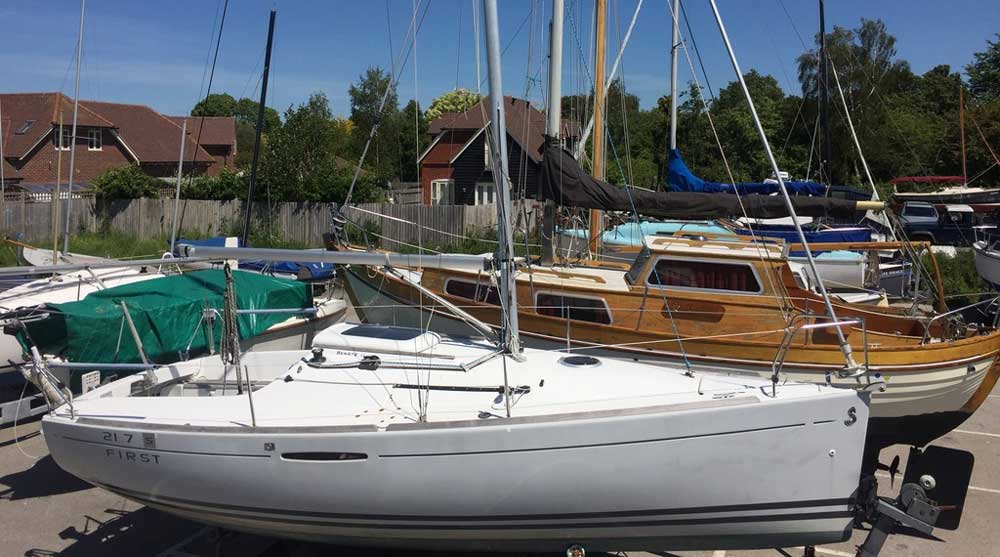
The deck and superstructure are often overlooked as structural components but they need to be checked over on a regular basis. When inspecting their boat’s deck it helps an owner if they are aware of how these parts of their boat have been designed and constructed. What goes on beneath the smooth flowing lines of their pride and joy? Does the deck have a foam core, or is it balsa or plywood? How is it supported, where has it been strengthened, how is it joined to the hull?

The deck and superstructure of a medium sized GRP yacht commonly consists of a deck, coachroof and cockpit in one moulding. The deck, coachroof walk area and cockpit seats are usually stiffened by glassed-in members and areas of load are backed with plywood plates. Down below, structural bulkheads are built in to provide strength and reduce flexing. The whole deck moulding is attached to the hull via a hull deck joint.

Not all boats are built to the same design standards. For example an inshore motor cruiser is not designed to cope with 10 metre waves while an ocean going tug most definitely will be. This may seem obvious, but it is important to be aware of a boat’s limitations and not to subject it to conditions it was not designed for.

If a boat owner is not sure how their boat is constructed, it will be a good idea to find out, so that nothing is left to guesswork. The first thing to do is try and get hold of plans, then get in touch with other owners of the same class of boat, join class associations and forums. If in doubt, then asking a surveyor should clarify things.

Deck and superstructure inspection

 A deck and superstructure inspection can be done at any time, but adding it to a to-do list of jobs to be done immediately the boat comes ashore for winter storage is a good plan. You don’t want to delay carrying out an inspection and then discover there are things that need fixing the week before the boat is due to be re-launched.

The deck of a boat is constantly exposed to the elements and should be inspected on an annual basis. Particular attention needs to be given to the overall condition of deck fittings such as the stanchions, cleats and chainplates.

Here are some checks to carry out:

Walk around the deck and test for any signs of flexing, which can indicate degradation of the core caused by rot. If the deck remains firm this is a good sign.

  • Look for stress cracks around the deck fittings.
  • Check for any loose fittings which could be the cause of deck leaks.
  • Check through-bolts for tightness. Note that fastenings are not always easy to inspect as they can be hidden behind cabin panelling or may be glassed in.
  • Inspect all the windows, checking them for secureness, signs of leaks, stress cracks and the condition of the seals.
  • Check the secureness of guardrails, stanchions and handrails. Also look out for stress cracks where they meet the deck.
  • Check that the lifelines are in good condition and well secured.
  • Look around the mast foot for any signs of cracking or damage.
  • Check all hatches are watertight. Also check the condition of their seals, hinges and fastenings.
  • Inspect for any holes left by old deck fittings or fastenings that have been removed.

Essential Knots: Round turn and two half hitches

Essential Knots: Round turn and two half hitches Use: Tying a rope to a pole or a ring. Step 1. Pass the end around the object. Step 2....

Competent crew skills: arriving and leaving a berth

Skilled boat handling is needed when entering or leaving harbour. Crew tasks include preparing the mooring lines and fenders before docking and...

The give-way hierarchy – sail boats and power boats

Who gives way to who at sea? Even seasoned sailors sometimes get this wrong and in a crowded harbour this can easily lead to a collision or at best considerable embarrassment for a boat that mistakenly thinks it has right of way over another.

How to trim a genoa sail

I recently had two new sails made by Sanders Sails, based in Lymington UK. The first to arrive was the new genoa and it took me a little while to get to know it and learn how to adjust it correctly. Here is an aide memoire for getting to know how to trim a genoa so that it will deliver the best performance.

Distress flares – which flare, how & when to use?

How to use distress flares at sea To effectively use distress flares at sea, you need to understand the different types, their purpose, and the...

ColRegs when sailing single handed

  Don’t neglect the Colregs when sailing single handed Sailing single-handed represents several challenges for skippers, not least how to...

Jester Challenge 2022 – Sailing single handed from Plymouth UK to the Azores: Part 2 – Weather

Jester Challenge – A modern experiment in old-fashioned self-reliance, self sufficiency, and personal responsibility. This is the second of a 10-part post where solo sailor, Bernie Branfield, shares his first hand account of his single-handed, 2022 Jester Challenge, from Plymouth, UK to the Azores, in his 26′ Invicta Mk2, Louisa.

Avoiding personal dangers at sea

In order to stay safe at sea, we need to know the risks we are facing and to be aware of any personal dangers we could possibly encounter. Here are six of the most common potential dangers individual crew members should be aware of.

Right boat vs Wrong boat – Over 30 Ways to Cut the Cost of Your Sailing and Cruising

Sailing and cruising offer unparalleled freedom and adventure, but they can quickly become costly. Fortunately, there are numerous strategies to help you enjoy the open water without breaking the bank. Here are over 30 practical ways to cut your sailing and cruising costs.

Nautical paper charts – a reminder of the basics

The nautical chart is an indispensable tool for navigation. A chart is a graphic representation of an area of the sea which might also include coastlines, estuaries and islands. All cruising leisure boats should carry up-to-date paper charts.

Tacking a sailing boat

Tacking is the sailing manoeuvre used to change a boat's direction through an oncoming wind. Tacking a sailing boat calls...

DIY boat upgrades: Budget-friendly projects to enhance your (older!) boat

DIY projects that can enhance both the functionality and aesthetics of your boat. In this article, we’ll explore a variety of DIY boat upgrades that won’t break the bank but will significantly enhance your boating experience.

Steel and Aluminium Hulls

The two metals used for hull construction are steel and aluminium. These are both very strong materials and will last a long time as long as they are cared for, which primarily means protecting steel boats from rust and aluminium boats from electrolytic action.

Boat gas system maintenance

There are correct types of hose for marine plumbing, sewerage, exhaust, cooling and gas and all hoses should be checked regularly for wear and deterioration.

Getting a tow for your sail or power boat at sea or on inland waterways

FREE tips from the Safe Skipper App for iPhone/iPad/Android: Getting a tow for your sail or power boat Plan how to secure a...

Crew Overboard Drill – Updated

How to respond to crew overboard A Man Overboard (MOB) drill is a crucial safety procedure that every boater should practice regularly. It simulates...

Boat batteries

Under-sized battery banks are one of the key factors behind power failure at sea, as well as the premature failure of batteries, so make sure that your boat battery measures up to the use you want to put it to.

Fire prevention on boats

  Fire prevention on boats - common causes of fire: • Smoking below decks • Galley cookers • Build-up of butane or...

ColRegs Nav Lights & Shapes, Rules Of The Road and IALA Buoys Apps

ColRegs Nav Lights & Shapes, Rules Of The Road and IALA Buoys Apps Make Learning Rules on iPhone, iPad, iPod and Android...

What boating skills should you have before you buy a yacht?

Many people dream of owning a yacht and sailing off into the blue yonder. What boating skills should you have before you buy...

Boating emergency – how to broadcast a MAYDAY emergency call

How to broadcast a MAYDAY emergency call   How to broadcast a MAYDAY emergency call if a vessel or person is in grave...

Boat surveys

A full boat survey assesses the condition of the hull, mechanical gear and means of propulsion. The survey is carried out with the boat...

Liferafts

Liferafts should be stowed where they are ready for immediate launching. All crew should know the location of the liferaft and know how to launch, inflate and board it. They should also know what equipment it contains.

Sector lights, directional lights, leading lights – how do they differ?

Sector lights, directional lights and leading lights guide vessels safely through hazardous waters or narrow channels at...

Jester Challenge 2022 – Sailing single handed from Plymouth UK to the Azores: Part 3 – Preparations

Jester Challenge – A modern experiment in old-fashioned self-reliance, self sufficiency, and personal responsibility. This is the third of a 10-part post where solo sailor, Bernie Branfield, shares his first hand account of his single-handed, 2022 Jester Challenge, from Plymouth, UK to the Azores, in his 26′ Invicta Mk2, Louisa.