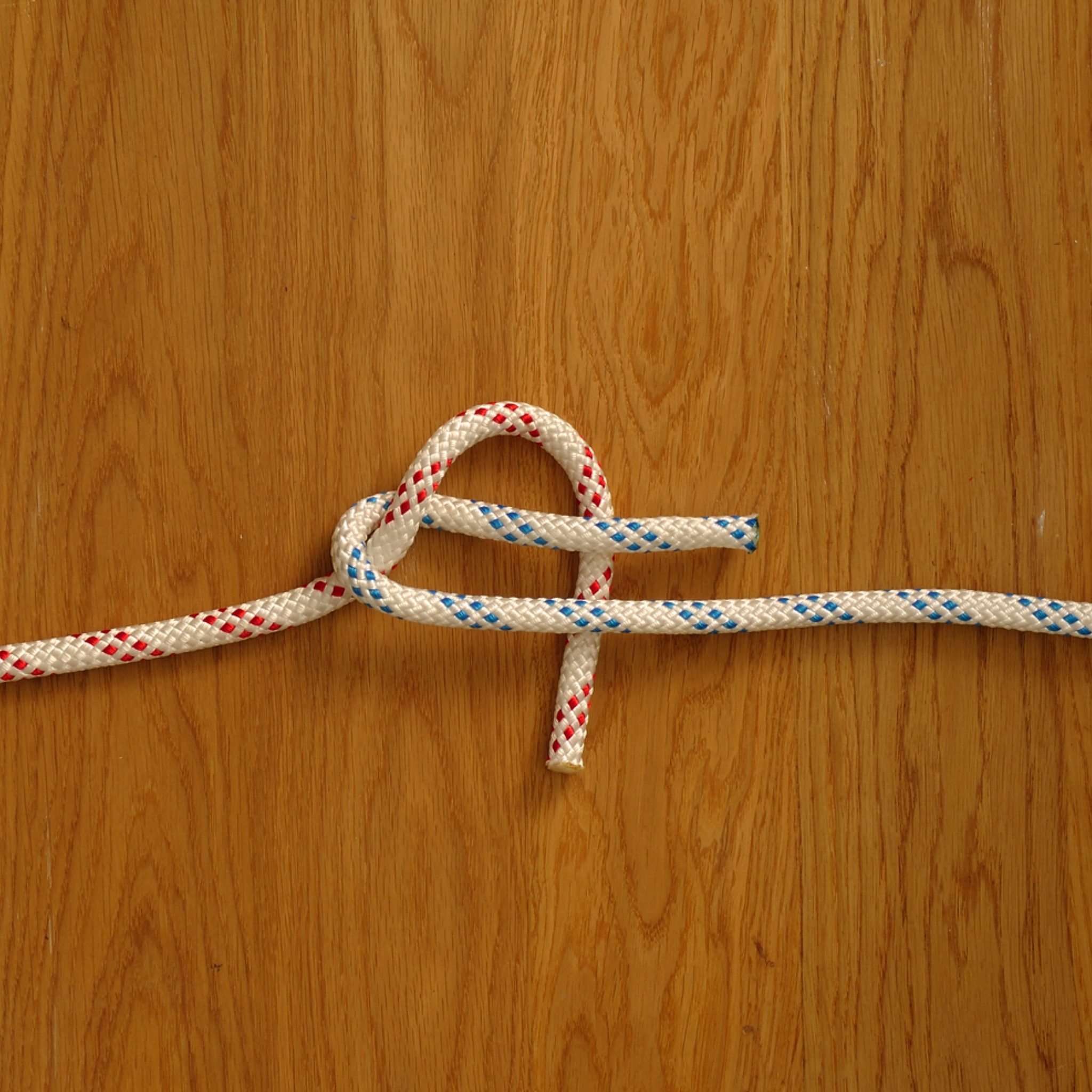
Essential Knots: Sheet bend

Use: Joining two ropes together. A sheet bend is particularly useful for joining two ropes of different thicknesses together and is very secure.

Step 1. Make a bight in the end of one rope (the thicker one if the two are different thicknesses).

Step 2. Pass the other rope through the bight…

Step 3 .…then around and under, leaving both ends on the same side.
Step 4. Pass the end of the second (thinner) rope under its own standing part. Pull tight.
Tip: Make sure that the two free ends end up on the same side of the knot. If they are on opposite sides then the knot is more likely to come undone.
A one stop guide to tying and understanding all of the 50 most useful nautical knots!


Fire safety advice at sea from the Marine & Coastguard Agency
Sailing Boat Rig Care
The rig of a sailing boat is put under huge stresses and strains so it is important for inspections of a yacht’s spars and rigging to be carried out at regular intervals.
Top Tips For Learning The ColRegs Boating Rules Of The Road
Colregs Boating Rules Of The Road
The International Regulations for Preventing Collisions at Sea (COLREGs) are a set of rules designed to prevent collisions between vessels. They are essentially the “rules of the road” for boats. Some key concepts within the COLREGs include:
Antifouling for leisure boats – Part 1
Boats that are kept afloat can very quickly become a home for small marine organisms such as barnacles, weed and slime. Applying an antifouling paint to your hull is necessary to protect it from these micro-organisms, as a fouled hull can cause problems and will slow down a boat’s maximum speed considerably if left unchecked.
Jester Challenge 2022 – Sailing single handed from Plymouth UK to the Azores: Part 9 – Around the Azores
Jester Challenge – A modern experiment in old-fashioned self-reliance, self sufficiency, and personal responsibility. This is the ninth of a 10-part post where solo sailor, Bernie Branfield, shares his first-hand account of his single-handed, 2022 Jester Challenge, from Plymouth, UK to the Azores, in his 26′ Invicta Mk2, Louisa.
2023 Rolex Fastnet Race – Part 2
Simon Jollands took part in the 2023 Rolex Fastnet Race. This is the second of his articles on the race aboard Lancelot II, a Beneteau First 40.
Boat electrics
All boat owners should have a basic knowledge of electrics, both to avoid encountering electrical problems at sea and to stand a chance of solving them should they occur.
DIY boat upgrades: Budget-friendly projects to enhance your (older!) boat
DIY projects that can enhance both the functionality and aesthetics of your boat. In this article, we’ll explore a variety of DIY boat upgrades that won’t break the bank but will significantly enhance your boating experience.
Rig check – how to prevent failure at sea
Boat maintenance below decks
While most interior maintenance work can be done when a boat is afloat, some jobs such as servicing the seacocks have to be done ashore. It makes sense to do any major interior repairs and improvements with the boat hauled out in the boatyard.
Man Overboard Drill
Boat plumbing maintenance & troubleshooting
A boat’s fresh water system needs annual maintenance to keep it in good condition. Some boats have far more complex systems than others, with pressurised hot and cold water, associated pumps, an accumulator, calorifier and pressure valves, all to keep a boat owner busy.
How to trim a genoa sail
I recently had two new sails made by Sanders Sails, based in Lymington UK. The first to arrive was the new genoa and it took me a little while to get to know it and learn how to adjust it correctly. Here is an aide memoire for getting to know how to trim a genoa so that it will deliver the best performance.
Dripless shaft seals
Dripless shaft seals are designed to completely stop water from entering a boat’s hull via the stern tube. There are two main types of dripless seals known as face seals and lip seals which many boat manufacturers now fit to production boats.
Navigation safety: a quick-reference mobile app to learn the ColRegs NavLights and Shapes
Sailing Safely at Night – Best Practice
Sailing at night can be a magical experience – the peaceful solitude, starry skies, and gentle lapping of waves create an unforgettable atmosphere. However, nighttime sailing also presents unique challenges and risks that require careful preparation and vigilance. This comprehensive guide will cover essential safety practices to ensure your nocturnal nautical adventures are both enjoyable and secure.
Sector lights, directional lights, leading lights – how do they differ?
Safety at sea principles
Safety at sea is not as simple as just spending money adding shiny new emergency equipment such as liferafts, danbuoys, distress flares, EPIRBs and so on.
Safe Skipper – crew management tips
Effective crew briefings are a vital part of the good on-board communication that helps everything to run smoothly on a sailing vessel at sea, whether it is cruising or racing.
The give-way hierarchy – sail boats and power boats
Who gives way to who at sea? Even seasoned sailors sometimes get this wrong and in a crowded harbour this can easily lead to a collision or at best considerable embarrassment for a boat that mistakenly thinks it has right of way over another.
Fractures, sprains and dislocations at sea
Moving about a boat at sea often results in a few knocks and bruises, but if a crew member has a fall or major bump and is in serious pain, they should be examined and treated accordingly.
Passage planning and pilotage
Pleasure craft safety equipment recommendations
Understanding tides
Boat interior varnishing
Most boat interiors have a combination of varnished and painted surfaces including solid wooden joinery, plywood laminates with thin hardwood veneers and glass reinforced plastic. When making your assessment of what you are going to do, bear in mind that the varnishing process consumes a lot of time, especially if the existing surfaces are in poor shape.