Select Page

Wooden hull care and maintenance

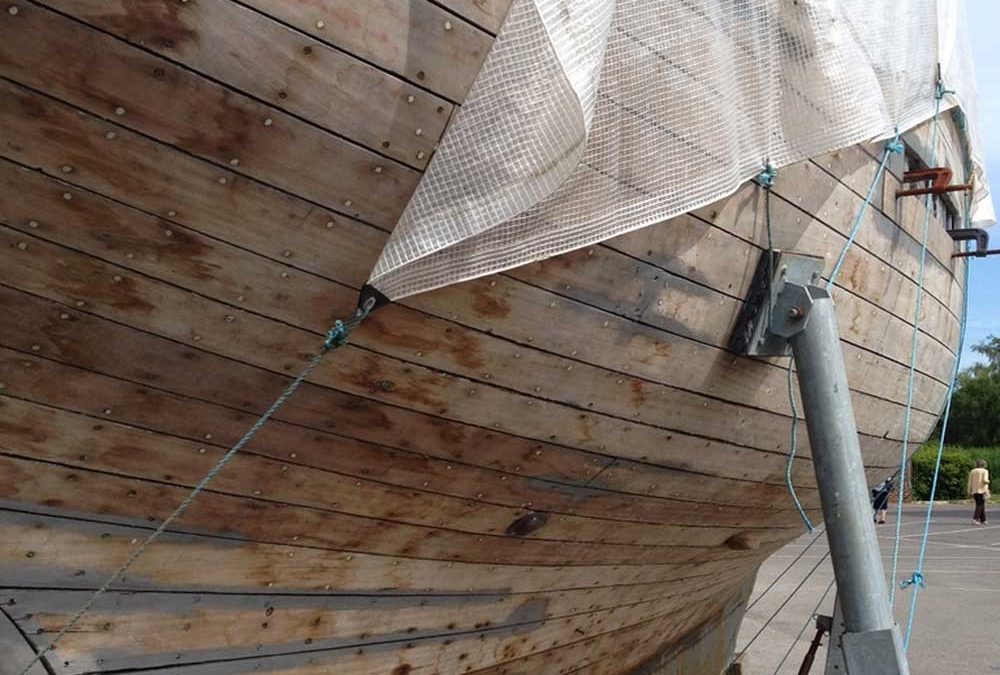
It is important to ensure the essential hull maintenance of a wooden boat is done, even if you are paying others to look after your boat for you. The priority is to prevent rot from taking hold. The protective layers of paint and varnish over wood are far more critical than on GRP boats, where the topsides are painted more for cosmetic reasons.

One of the fundamental things to understand is the nature of wood itself. If wood becomes soaking wet, it swells. As it dries, it shrinks. The proper care of a wooden hull is down to keeping a balance between the cycle of wet (i.e. afloat) and dry (i.e. ashore) periods. Dry weather dries out wood causing it to shrink. Salt water is good for wood as it not only protects the wood from fungus but also moistens the wood which stops it from shrinking.

Wooden hull inspection

  • Check the condition of the paintwork. If there is any cracking of the paint along the grain of the wood then this indicates there might be rot developing beneath. To be sure, cracks need to be scraped out to check for rot.
  • To check for rot, tap along the hull using a small wooden mallet, or the wooden handle of a tool will do. Listen out for the sounds the tapping makes. A high, metallic or slight ringing sound indicates the planking is in good condition. If there is a dull, soft sound, this indicates there is rot. Mark the area and if in doubt have it checked thoroughly by a surveyor. Note the tapping will sound different as you pass over the ribs.
  • If the timbers themselves show signs of splitting along the grain then this indicates the hull has dried out.
  • Check the plank edges and seams are in good condition. If these are proud in places then this can indicate the planking has moved.
  • Check the caulking is in good condition and remains well bedded in the seams.
  • Inspect the plank fastenings for signs of corrosion – green coloured stains indicate corrosion of copper fastenings, rust stains indicate corrosion of steel fastenings and white stains indicate corrosion of galvanised fastenings.
  • Pay particular attention to the fastenings where the planks attach to the transom. Also check for splits in the ends of the planking where it joins the transom.
  • Likewise, check the fastenings of the planking at the stem. This is where the planking is under considerable stress.
  • Make sure none of the frame ribs are broken, especially near the tops where most damage can occur.
  • Check there is no gap or signs of corrosion along the joint between the keel and the hull.
  • Check the keel band of motor boats is in good condition.
  • Check the keel bolts are in good condition.

If your boat passes the hull inspection with flying colours, then the care and  maintenance of the hull when it is hauled out entails the following:

  • Fitting a cover that comes down to the waterline.
  • Priming any bare timber that may have been exposed by the pressure washer.
  • Rubbing down the topsides, patching with undercoat as necessary, applying topcoat as required.
  • Below the waterline, rubbing back, patching undercoat where required and then applying antifouling.

Hull stripping

For wooden hulls, the two main methods to consider for removing paint are either using a chemical paint stripper or a heat gun. The heat gun is generally recommended as it will be cheaper and less messy to use.

These are the steps involved in stripping the paint from a wooden hull:

  1. Heat gun – use a heat shrink gun and a putty knife to scrape the old paint layers off. Take special care not to scorch the wood. If you have not used a heat gun before then practice on some scrap of painted wood, an old painted wooden door for example, until you are confident you can work the machine correctly. Wet the bare wood using salt water to make a wet barrier to protect it from the heat gun.
  2. Electric plane – when you have removed as much paint as possible with the heat gun and putty knife, use an electric planer to take off any remaining paint, being careful only to remove a tiny bit of the wood if necessary at the same time. Again, practice using this machine before diving into planing your hull.
  3. Rotary sander – go over the surface of the wood with 40 grit paper using a rotary sander at low speed. Keep the sander flat against the hull with an even pressure, moving at all times in order not to leave sanding marks. Never stop the machine when it is against the wood as it will leave a nasty mark.

Saildrive maintenance

There are less maintenance tasks to carry out on a saildrive transmission than on a traditional inboard shaft drive system with its associated stern gear. However, there are a few critical things that require maintenance, as recommended in detail by the engine manufacturers, and should be adhered to.

Peer to Peer yacht charter – How can you monetize your boat?

There is a growing trend in peer to peer yacht charter. How does it work? People already rent rooms, cars and bikes from one...

Boat engine basics

Boat engines come in all shapes and sizes and include inboards, outboards, petrol, diesel, electric and hybrid systems. Some engines are...

Getting a tow for your sail or power boat at sea or on inland waterways

FREE tips from the Safe Skipper App for iPhone/iPad/Android: Getting a tow for your sail or power boat Plan how to secure a...

Top Tips For Learning: ColRegs Boating Rules Of The Road

Colregs Boating Rules Of The Road
The International Regulations for Preventing Collisions at Sea (COLREGs) are a set of rules designed to prevent collisions between vessels. They are essentially the “rules of the road” for boats. Some key concepts within the COLREGs include:

Distress flares – which flare, how & when to use?

How to use distress flares at sea To effectively use distress flares at sea, you need to understand the different types, their purpose, and the...

Cleaning & polishing painted topsides

The gelcoat topsides of a GRP boat can be pampered and restored to their former glory relatively easily when it is ashore. Gelcoat is only a very thin outer layer of the hull, often less than 1mm thick, so you should avoid cleaning it with highly abrasive cleaners, or an-ything that could potentially damage its surface.

Jester Challenge 2022 – Sailing single handed from Plymouth UK to the Azores: Part 5 – Boat Management

Jester Challenge – A modern experiment in old-fashioned self-reliance, self sufficiency, and personal responsibility. This is the fifth of a 10-part post where solo sailor, Bernie Branfield, shares his first hand account of his single-handed, 2022 Jester Challenge, from Plymouth, UK to the Azores, in his 26′ Invicta Mk2, Louisa.

Jester Challenge 2022 – Sailing single handed from Plymouth UK to the Azores: Part 6 – Communications

Jester Challenge – A modern experiment in old-fashioned self-reliance, self sufficiency, and personal responsibility. This is the sixth of a 10-part post where solo sailor, Bernie Branfield, shares his first-hand account of his single-handed, 2022 Jester Challenge, from Plymouth, UK to the Azores, in his 26′ Invicta Mk2, Louisa.

Essential Knots: Round turn and two half hitches

Essential Knots: Round turn and two half hitches Use: Tying a rope to a pole or a ring. Step 1. Pass the end around the object. Step 2....

Galvanic and electrolytic corrosion

Galvanic corrosion is an electrochemical reaction between two or more different metals, in the presence of an electrolyte (note salt water is a good electrolyte).

Essential Yachting + Power Boat Safety Briefing

Yachting Safety Briefing   Down below Lifejackets and harnesses - fitting, when to wear, clipping on Gas - risks, precautions, gas bottles and...

Estimating and plotting your position at sea

This post covers how we go about estimating and plotting our position using traditional methods, when out of sight of land – covering Dead Reckoning, Estimated Position, Tidal Streams, Leeway and more…

How to operate a winch

Winches are drum shaped mechanical devices used to handle halyards, sheets and control lines. One of the important crew...

Leaking decks

Leaking decks are perceived as a nuisance by some boat owners, but if leaks are ignored a much more serious situation may well be developing, especially in the case of boats with balsa or plywood deck cores. So deck leaks do need to be investigated and dealt with.

How to use tides and currents to your advantage

If you are contemplating a cruise through tidal waters and strong currents, then planning your trip carefully in advance is essential to enable you to take advantage of favourable tides rather than constantly fighting against them.

Top 5 Reasons Why an Inflatable SUP Should Be Your Next Yacht Accessory

In this article, inflatable paddle board expert Jason Paul gives the top 5 reasons why an inflatable SUP should be your next...

Passage planning and pilotage

Passage planning and pilotage help skippers navigate safely from one port to another. A passage plan takes into account all...

Rudders and steering systems – Part 1

Rudders and steering systems. A rudder is one of the most critical parts of a boat. Rudder failure is a common occurrence on neglected or overworked boats and a very unpleasant and potentially dangerous thing to happen when you are out at sea.

Know your Navlights & Shapes – essential for all skippers

Know your Navlights & Shapes International Regulations for Preventing Collisions at Sea (ColRegs) Anyone who is...

Navigating the Unknown: Boating in Limited Visibility

Sailing or Motor Boating in limited visibility, whether due to darkness, fog, or other adverse weather conditions, presents unique challenges for mariners. It requires a combination of skill, experience, and adherence to safety protocols to ensure a safe and enjoyable journey. In this article we will delve into the intricacies of sailing in such conditions, providing insights into preparation, navigation, and collision avoidance.

Understanding marine sealants & adhesives

Sealants, adhesives and adhesive sealantsThere is a bewildering variety of sealants, adhesives and even adhesive sealants available for...

Engine failure at sea – common causes and how to avoid them

Many engine failures are caused by lack of maintenance, resulting in fuel filter blockages, water pump failures, overheating and other breakdowns. Indeed, one of the most common reasons for marine rescue service call outs is for one of the most basic reasons possible – boats that have run out of fuel.

Jester Challenge 2022 – Sailing single handed from Plymouth UK to the Azores: Part 2 – Weather

Jester Challenge – A modern experiment in old-fashioned self-reliance, self sufficiency, and personal responsibility. This is the second of a 10-part post where solo sailor, Bernie Branfield, shares his first hand account of his single-handed, 2022 Jester Challenge, from Plymouth, UK to the Azores, in his 26′ Invicta Mk2, Louisa.

Understanding your mast and rigging

The rig of a sailing boat is put under huge stresses and strains so it is important for inspections of a yacht's spars and rigging to be...