Select Page

There are less maintenance tasks to carry out on a saildrive transmission than on a traditional inboard shaft drive system with its associated stern gear. For example, you don’t have to worry about engine alignment, cutless bearings and stern glands. I owned a boat for seven years that had a Volvo Penta saildrive transmission system and this caused no problems during my ownership. The same applies to Yanmar saildrive systems.

However, there are a few critical things that require maintenance. These are as recommended in detail by the engine manufacturers and should be adhered to.

Corrosion

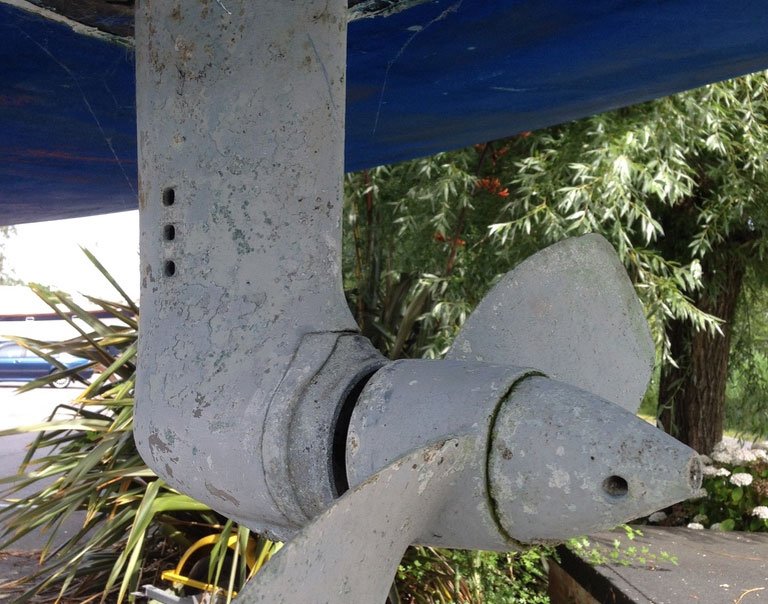
  • Drive leg housings are made from aluminium and they must therefore be well protected from corrosion, requiring a special copper-free antifouling paint, plus undercoats. The housings also need dedicated sacrificial zinc anodes to prevent them from galvanic corrosion.
  • Carefully inspect the drive leg for any damage to the paintwork. Any exposed aluminium will quickly corrode in salt water. Look for any white corrosion beginning to form on places where paint may have been chipped off. If any such damage is found it will need to be ground back before the unit becomes seriously damaged.
  • Anodes are designed to protect saildrives from electric currents generated while in sea water.
  • The electrical system of the engine will need to be an isolated system and not one which is grounded to the battery negative.
  • When a non-aluminium propeller is fitted, additional anodes are required.

Oil change

  • Regular checks of saildrive transmission oil are important. Any signs of milky coloured oil indicate water has found its way into the system. This could occur because of a shaft seal failure or defective drain plug seal.
  • Manufacturers usually recommend that the transmission oil is changed annually, which can only be done ashore by draining the oil from the base of the leg. On some systems the oil can be removed using a hand pump operated from the engine bay. In order for the oil to drain completely, remove the filler cap on top to allow air in.
  • Always use the manufacturer’s recommend oil and be careful not to overfill the system.
  • Be aware that some manufacturers recommend a torque setting for the oil drain plug and also advise that the seal is replaced regularly, because if there is the smallest crack in the rubber seal it will leak.

seal saildrive maintenance

Rubber seal

  • The saildrive leg passes through a thick rubber seal that attaches to the base of the hull. Yanmar sail drives differ from Volvo Penta so it is worth checking with the manufacturer’s recommendations. Volvo recommending replacing seals after 7 years while Yanmar recommend replacing their sail drive seals every two years, which is quite a difference. Replacing sail drive seals is a fairly major job which has to be done ashore and entails lifting the engine. The part itself is pricey but significant additional cost needs to be factored in for the engine lift and labour involved.

Light characteristics – how do navigators identify lights at night?

How do navigators identify the different types of light around our coasts at night and what are their characteristics?Navigating at...

Boating emergency – how to broadcast a MAYDAY emergency call

How to broadcast a MAYDAY emergency call   How to broadcast a MAYDAY emergency call if a vessel or person is in grave...

Essential Knots: Reef knot

Essential Knots: Reef knot Use: Tying two ends of rope together, often used for tying up a bundle of loose sail around the boom. Step...

Essential yacht tender safety for skippers and crew

Essential yacht tender safety - the dangers inherent in using a dinghy to get ashore from a moored or anchored yacht are all too easily...

The Boatyard Book – a boat owner’s guide to yacht maintenance, repair and refitting

The Boatyard Book is a fully illustrated 224 page practical reference manual that provides advice for boat owners on planning and carrying out annual maintenance, repairs, upgrades and refits of sailing yachts and motorboats, up to 20 metres in length.

Marine engine electrical system

The typical basic electrical system associated with a marine engine includes a dedicated engine starting battery, a starter motor, a charger in the form of an alternator, a solenoid and some engine sensors and instruments.

Passage Planning Advice & Safety for skippers

Passage planning helps you to: • Decide where to go • Calculate how long it will take to get there • Avoid bad weather •...

Sterndrive maintenance

Sterndrives are a popular form of propulsion in the powerboat market, but require a fair amount of care and maintenance. The main factors to be aware of are salt water corrosion, lubrication and regular inspection of the bellows, the condition of which is vital to prevent water from entering into the hull.

Preparing for sailboat cruising

Preparing for a sailing trip entails a lot of planning. In this blog, we take a look at some of the many safety aspects that a skipper needs to consider before heading off on a cruise.

Care of boat batteries

Boat batteries need to be kept properly charged, which means never allowing the batteries to discharge below 50 per cent of their total charge. As well as the batteries themselves, keeping a boat’s charging systems in good shape will also help to keep batteries topped up to a higher level of charge.

Sail care and maintenance – Part 1

When thinking about the care, maintenance and repair of sails it helps to have some understanding of the properties of the ever growing range of modern sailcloth and the fibres they are made from, as opposed to the traditional canvas sails of the past.

Sailing into a storm

Weather forecasting has become increasingly accurate, but despite this, I was caught out recently by a forecast that considerably underestimated the wind strengths and consequently was sailing single handed in to a Force 8 gale, which proved to be challenging!

Five dangers a vessel may encounter at sea

What are the main dangers a vessel may face at sea and what should skippers do to reduce the risk of these happening?

Boat engine cooling systems

Some boat engine breakdowns are unavoidable but those caused by lack of maintenance or regular checks can be avoided. Failure to maintain an engine’s cooling system is a well known example of this, so it is well worth spending time checking over the cooling system both when the boat is ashore and afloat.

Boat surveys

A full boat survey assesses the condition of the hull, mechanical gear and means of propulsion. The survey is carried out with the boat...

Essential Knots: Bowline

Essential Knots: Bowline Use: Making a secure eye or loop in the end of a rope. Bowlines have many uses on a boat, for example to make a...

Jester Challenge 2022 – Sailing single handed from Plymouth UK to the Azores: Part 10 – The Return Trip

Jester Challenge – A modern experiment in old-fashioned self-reliance, self sufficiency, and personal responsibility. This is the final instalment of a 10-part post where solo sailor, Bernie Branfield, shares his first-hand account of his single-handed, 2022 Jester Challenge, from Plymouth, UK to the Azores, in his 26′ Invicta Mk2, Louisa.

Rig check – how to prevent failure at sea

Regular rig checks prevent the risk of mast and rigging failure at sea. This includes regular rig inspections of the spars, ...

Sailing at the touch of a button

Easier and more controlled sail handling can also be achieved by powering up a furling mast. I came across some interesting solutions at the Southampton Boat Show this week on the Selden Mast stand, where they were running demos of their E40i electric winch and SMF furling system.

Boat plumbing maintenance & troubleshooting

A boat’s fresh water system needs annual maintenance to keep it in good condition. Some boats have far more complex systems than others, with pressurised hot and cold water, associated pumps, an accumulator, calorifier and pressure valves, all to keep a boat owner busy.

Man Overboard Drill

How to respond to crew overboard under sail • Keep the MOB in sight • Tack into the heave-to position, do not adjust the...

Avoiding personal dangers at sea

In order to stay safe at sea, we need to know the risks we are facing and to be aware of any personal dangers we could possibly encounter. Here are six of the most common potential dangers individual crew members should be aware of.

Sailing Boat Rig Care

The rig of a sailing boat is put under huge stresses and strains so it is important for inspections of a yacht’s spars and rigging to be carried out at regular intervals.

How to ensure your boat is in proper working condition

In this article Eva Tucker from Volvo Penta presents a handy check list of all the things that you need to check regularly in order to make sure that your boat is in a seaworthy condition. Including maintenance, safety gear and electrical checks.

ColRegs Rule 14 – Head-on Situation

  ColRegs Rule 14: Head-on Situation (a) When two power-driven vessels are meeting on reciprocal or nearly reciprocal...