Select Page

While a boat is ashore, the most critical interior checks to carry out are those that concern the safety of the boat. This entails the integrity of all through-hull fittings and seacocks, the gas system and the electrical system.

Critical checks

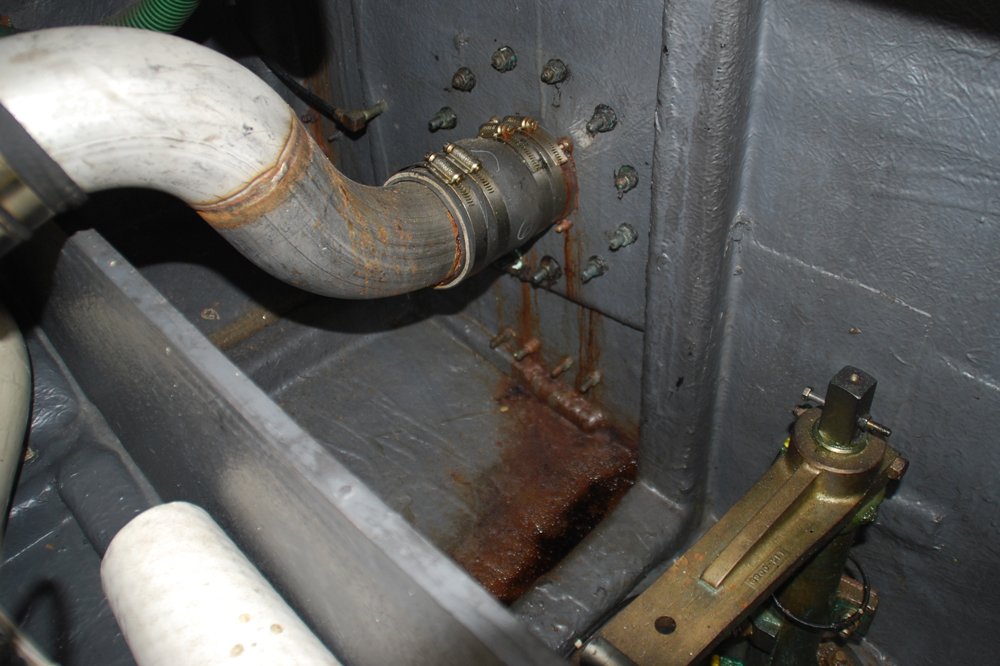
  • Check all the through-hull fittings and seacocks are sound and that there are no signs of leakage such as salt crystals around the fitting. They should all be free of corrosion. If they are in good order and the seacocks open and close without problem then a routine service is all that is required. Make a note of any that are seized or in poor condition as they will require extra work and may need replacing.
  • Check the raw water intakes are not clogged with debris.
  • Check hose connections fit well and jubilee clips are in good condition. Remember that poorly fitting hose can easily come lose and potentially sink a boat.
  • Check the condition of the hoses leading to and from the seacocks. If these show signs of cracking, distortion or general deterioration, then they will need to be replaced.
  • Check the transducer and log skin fittings are in good condition and there are no stains around the fittings which could be caused by a leaking seal.
  • Check the gas system for leaks, following all the hoses carefully from the gas bottles to the appliances. Turn the gas on and brush the pipes and valves with soapy water – any bubbles will indicate there is a leak. Remember that gas is heavier than air and even a small gas leak can build up in the bilges and lead to a catastrophic explosion – all boats should be fitted with gas detectors for this reason.
  • Check the gas detector is working.
  • Check the condition of the gas regulator and replace if it shows signs of corrosion.
  • Check that flexible gas hose is in date and replace if it is out of date.

Top tips

  • Always ensure two jubilee clips are used to connect any seacock to its corresponding pipe.
  • Check the four mounting bolts on older Blake seacocks. If these are showing signs of corrosion, it may be worth re-mounting the seacock.
  • Through-hull depth and speed fittings normally have a rubber seal. These can dry out and perish if the vessel is out of the water for a long period of time. Its always worth checking these fittings as soon as the vessel is lifted back into the water for leaks.
  • Flexible orange gas hose should not be used behind a gas cooker. Marine gas engineers will recommend a braided hose instead, as this is better protected from chafing and damage.

Other interior checks

Other problems that are less critical but nonetheless important to sort out are any issues with bilge pumps, plumbing, heads, leaks and more cosmetic things like paintwork, varnishing and furnishing.

  • Check for leaks in the water system before draining down the system for the winter. Water leaks can be difficult to detect and may be due to a badly joined fitting or pipe.
  • Check the condition of both electric and manual bilge pumps. Check float switches are working correctly and that the outlet hoses are clear of debris that could cause a blockage. An outlet hose can be cleaned by back-flushing – you cannot always rely on the strainer preventing debris getting into the outlet hose and causing a blockage. Also check manually operated bilge pumps are working and that their bellows are in good condition and don’t need replacing.
  • Check for leaks that may be staining woodwork, upholstery or head linings. These may be coming from poorly sealed fittings, windows, hatches or hull to deck joints. You need to ascertain how serious these leaks are and if you are unable to trace what is causing them, this may be time to ask your surveyor for advice.
  • Check the condition of the bulkheads and make sure there is no de-lamination of veneer panels or moulding, which could be early signs of rot beginning beneath. This may not appear too serious at first sight but left unchecked could develop into a nasty problem. Make a note that this will need sorting out in due course. The issue here is that if nothing is done and the problem gets steadily worse then you could be looking at a major interior re-build which will be both time consuming and expensive.

Boating Rules of the Road – International ColRegs

    International ColRegs Rule 7: Risk of Collision Anyone who is responsible for a vessel at sea, from the...

Tips and advice for staying safe on a sailboat at sea

Here we focus on how to stay safe on a sailboat at sea. We cover key things to ensure you have on board before you set sail as well as covering the most common cause of incidents on sailboats and how to deal with them.

Common marine electrical problems

Most problems with marine electrical systems arise from four possible sources, a lack of maintenance, a poor standard of initial installation, insufficient battery capacity, or ineffective charging systems.
Water ingress is a frequent issue – salt water can corrode contacts very quickly. If connections are not scrupulously clean – or are loose – resistance will be increased, resulting in progressively reduced power.

Essential boat engine checklist

Boat engine checklist Engine oil level check Even if you have checked it previously, confirming the engine oil level is up...

Jester Challenge 2022 – Sailing single handed from Plymouth UK to the Azores: Part 4 – Navigation

Jester Challenge – A modern experiment in old-fashioned self-reliance, self sufficiency, and personal responsibility. This is the fourth of a 10-part post where solo sailor, Bernie Branfield, shares his first hand account of his single-handed, 2022 Jester Challenge, from Plymouth, UK to the Azores, in his 26′ Invicta Mk2, Louisa.

2023 Rolex Fastnet Race

Safe Skipper’s Simon Jollands took part in the 2023 Rolex Fastnet Race – a classic offshore sailing event. This is the first of several articles on the race and focuses on the start.

Is Boating Good for Your Health and Happiness?

Absolutely! Boating offers a wealth of benefits for both your physical and mental well-being, making it a fantastic activity for overall health and...

Boat engine fuel system

If engines are installed and serviced correctly then most marine engines are very reliable, but one of the most important parts of the engine to check and service is the fuel system.

Seasickness – how can you prevent it?

Seasickness is a common problem at sea and affects both seasoned sailors and novices. What are the causes and symptoms of seasickness?...

2023 Rolex Fastnet Race – Part 2

Simon Jollands took part in the 2023 Rolex Fastnet Race. This is the second of his articles on the race aboard Lancelot II, a Beneteau First 40.

ColRegs – avoiding collisions at sea

ColRegs - avoiding collisions at sea ColRegs Rule 8: Action to avoid collision (a) Any action taken to avoid collision shall...

Jester Challenge 2022 – Sailing single handed from Plymouth UK to the Azores: Part 6 – Communications

Jester Challenge – A modern experiment in old-fashioned self-reliance, self sufficiency, and personal responsibility. This is the sixth of a 10-part post where solo sailor, Bernie Branfield, shares his first-hand account of his single-handed, 2022 Jester Challenge, from Plymouth, UK to the Azores, in his 26′ Invicta Mk2, Louisa.

DIY boat upgrades: Budget-friendly projects to enhance your (older!) boat

DIY projects that can enhance both the functionality and aesthetics of your boat. In this article, we’ll explore a variety of DIY boat upgrades that won’t break the bank but will significantly enhance your boating experience.

First aid at sea basics

At least one person on board should be trained in first aid and know how to administer the contents of the first aid kit, ensuring there are adequate supplies for the planned duration of the trip.

Essential Knots: Figure of eight

Essential Knots: Figure of eight Use: Stopper knot, prevents a rope from being pulled through a hole e.g. through a block or...

Weather forecasting resources and tips

All competent sailors need to have a good basic understanding of how to interpret a weather forecast. They also need to be able to interpret the actual conditions they are experiencing.

Rewiring a boat – overcoming the challenges involved

Skippers need to have a basic knowledge of boat electrics, to avoid potential problems and to be able to solve them when they happen.

Wooden Hulls – Part 1

Traditional wooden boats have a plank on frame construction, a centuries old boat building method that is still in use today. Variations of the traditional method include carvel, clinker and strip planking, which all relate to the way the planking is attached to the frame.

Know your Navlights & Shapes – essential for all skippers

Know your Navlights & Shapes International Regulations for Preventing Collisions at Sea (ColRegs) Anyone who is...

Tidal heights and the rule of twelfths

For those skippers who need to make a quick calculation or don’t have access to specific tidal curves for their location, it is possible to make an approximation using a system called the Rule of Twelfths. This is a simple method used to estimate the height of tide at any given time during the tidal cycle. It is based on the idea that the rise and fall of the tide is not constant, but follows a predictable pattern than can be divided into twelve parts.

Fire prevention on boats

  Fire prevention on boats - common causes of fire: • Smoking below decks • Galley cookers • Build-up of butane or...

Top 5 Reasons Why an Inflatable SUP Should Be Your Next Yacht Accessory

In this article, inflatable paddle board expert Jason Paul gives the top 5 reasons why an inflatable SUP should be your next...

Boat Handling – anchoring

Anchoring your yacht or motorboat Anchoring is one of the most important boat handling skills. If you can set an anchor...

Capsize – understanding the risks

A skipper should know how their boat will cope with rough seas. By working within known limits and understanding the risks,...

Marine engine oil system maintenance

The regular maintenance of a marine diesel is key to preventing engine failure at sea. This means doing regular checks of the fuel, cooling, electrical and oil systems.