Select Page

Boats have many blind spots, including the headsails of sailing boats. Always keep a lookout, stay safe and remember that whatever their size or type, all boats have a responsibility to avoid collisions with others at sea.

If you are heading out on the water for the first time after many months, it would be wise to remind yourself about some of the collision rules, just to be on the safe side. Anyone in charge of a boat needs to know what to do in a potentially dangerous close quarters situation and how to act accordingly. It is important to know the ‘who gives way to whom’ hierarchy and this should be learnt by all boat operators. As well as this:

  • Always be alert for other vessels which could be out of control or at risk of going aground.
  • If another vessel of any size is out of control it is up to you to get out of its way, even if you have right of way.
  • Always be prepared to take avoiding action before it is too late.

Learn all of the nautical ColRegs Rules of the Road for power boating and sailing, in our comprehensive reference app, which includes a quiz to test yourself!

Keeping a lookout

Keep a proper lookout at all times, whether inside a harbour or out at sea. Keeping a lookout includes monitoring radar – AIS and GPS chart plotters should also be checked regularly. Look out for lobster pots and other floating obstacles.

  • Check all around you, not just ahead. 
  • Monitor all vessels in your vicinity. 
  • Check the bearings of boats that could be on a collision course with you.
  • Use sight, hearing and instruments.
  • Listen for sound signals and engine noise, especially in poor visibility. 
  • Checks for lobster pots, channel markers and natural obstacles.

Safe speed

Keeping to a safe speed will help reduce the risk of colliding with others, but what exactly is meant by a safe speed? Remember that fast boats should respect other water users and check their wash is not disturbing others.

With so many types and sizes of vessel out on the water, a safe speed will vary according to the design and capabilities of a particular boat and the specific conditions and circumstances it finds itself in.

Here are some reminders about what keeping to a safe speed means in practice:

  • State of visibility – slow down in fog, rain, mist or excessive glare from the sun.
  • Traffic density – take particular note of fishing vessels and when navigating in narrow channels.
  • Manoeuvrability – travel at a speed that will allow you to either manoeuvre out of the way or stop in order to avoid a potential collision.
  • At night – slow down if background light from the shore or from your own lights interferes with your night vision.
  • Sea state – reduce speed in rough conditions, especially those caused by wind against tide.
  • Remember that a safe speed can often be less than a harbour speed limit.
  • A yacht entering a crowded harbour under full sail is most likely sailing too fast.
  • Slow down in poor visibility, even if you have radar on.
Risk of collision

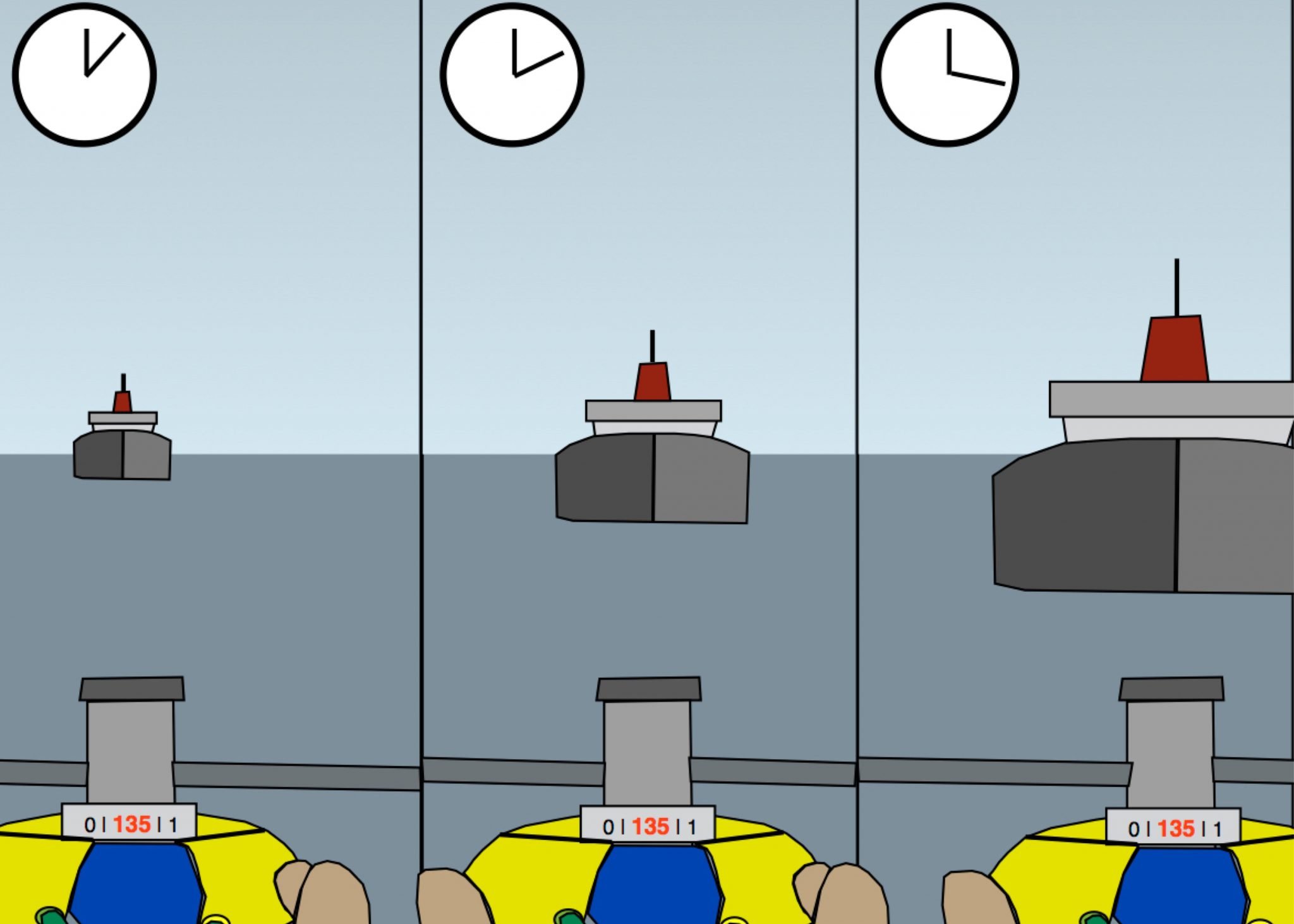
The risk of collision can be determined by taking a series of compass bearings of an approaching vessel. If the bearing of the approaching vessel does not change then the two vessels are on a collision course.

Narrow channels

Here are some reminders about narrow channels:

  • The term narrow channel is relative to the size and draught of vessels using it.
  • Fishing vessels are not allowed to impede the passage of others using a channel.
  • Vessels crossing a channel must stay clear of other vessels who can only safely navigate within it.
  • Remember your heading is the course you are steering. A bearing is the compass direction between you and another object.
  • Take bearings every minute or so and make a note of them.
  • When at close range risk of collision can still exist with a very large vessel, even if the bearing is changing.

Learn all of the nautical ColRegs Rules of the Road for power boating and sailing, in our comprehensive reference app, which includes a quiz to test yourself!

Happy boating and stay safe on the water!

Boat Engine Failure – what to check

Engine failure If your engine fails or is overheating there are a number of things to check immediately: • Air filter...

Boat batteries

Under-sized battery banks are one of the key factors behind power failure at sea, as well as the premature failure of batteries, so make sure that your boat battery measures up to the use you want to put it to.

How to trim a genoa sail

I recently had two new sails made by Sanders Sails, based in Lymington UK. The first to arrive was the new genoa and it took me a little while to get to know it and learn how to adjust it correctly. Here is an aide memoire for getting to know how to trim a genoa so that it will deliver the best performance.

Narrowboating on the Kennet and Avon Canal

A recently cancelled sailing event I was due to take part in left us with a free weekend in the diary. Given that my wife and I were celebrating a bumper wedding anniversary and the weather forecast was for fine weather, we decided to hunt around for a last minute canal holiday.

Sailing into a storm

Weather forecasting has become increasingly accurate, but despite this, I was caught out recently by a forecast that considerably underestimated the wind strengths and consequently was sailing single handed in to a Force 8 gale, which proved to be challenging!

Marine diesel exhaust checks

You should inspect the exhaust system for corrosion damage regularly, especially around the injection bend. If you have noticed the engine exhaust smoking a lot during the sailing season this can also indicate a number of potential problems.

Tools and spares for your boat

Tools and Spares to take to sea!

You won’t regret taking a look at our essential tips and checklist to make sure you’re prepared for routine maintenance and those unexpected jobs that come up whilst you’re afloat!

VHF DSC radio – how best to communicate at sea

There are many ways to communicate with others at sea. What makes the VHF DSC radio the best form of short range...

Sector lights, directional lights, leading lights – how do they differ?

Sector lights, directional lights and leading lights guide vessels safely through hazardous waters or narrow channels at...

ColRegs Nav Lights & Shapes, Rules Of The Road and IALA Buoys Apps

ColRegs Nav Lights & Shapes, Rules Of The Road and IALA Buoys Apps Make Learning Rules on iPhone, iPad, iPod and Android...

Weather forecasting resources and tips

All competent sailors need to have a good basic understanding of how to interpret a weather forecast. They also need to be able to interpret the actual conditions they are experiencing.

How to predict wind direction and strength by reading a weather chart

Weather charts, also known as surface pressure or synoptic charts, contain a lot of information that helps weather...

You Need To Understand The IRPCS ColRegs To Pass Your Yachtmaster, Master of Yachts and Coxswain Certificate of Competence

IRPCS ColRegs Rules of the Road at Sea and Yachtmaster Learning, understanding and remembering the International Regulations...

Boat maintenance below decks

While most interior maintenance work can be done when a boat is afloat, some jobs such as servicing the seacocks have to be done ashore. It makes sense to do any major interior repairs and improvements with the boat hauled out in the boatyard.

How diesel engines work

The basic principle of a diesel engine is less complex than that of a petrol engine. No spark plug or ignition system is needed, making the basic diesel engine a comparatively straightforward system that results in fewer faults and has lower maintenance costs than a petrol engine.

Boat Engine Safety Checks

  Boat Engine Safety Checks Every skipper needs to make regular essential boat engine safety checks. Below you will...

Points of Sailing

The course on which a boat is sailing can be described by its angle to the wind, not to be confused with its compass...

Cutless bearing replacement

Cutless bearings can last for many years but if the propeller shaft is out of alignment they will wear through more quickly. If you have noticed a clunking sound when motoring then it could be a worn cutless bearing that is causing the problem.

Going aground – what to do if it happens to you

When a yacht runs aground, it can be a stressful situation, especially on a falling tide in an exposed position with a swell running. There are several steps you can take to address the situation in order to ensure the safety of your vessel and its occupants. Here are some tips should this happen to you.

Marine toilets – care and maintenance

There are a number of different types of marine toilet, or heads. They fall into one of three categories – manual, electric and vacuum, the most common being the manual, hand pumped type. These have double acting piston-pumps which both discharge the waste and flush the toilet with sea water.

2023 Rolex Fastnet Race – Part 2

Simon Jollands took part in the 2023 Rolex Fastnet Race. This is the second of his articles on the race aboard Lancelot II, a Beneteau First 40.

Marine engine oil system maintenance

The regular maintenance of a marine diesel is key to preventing engine failure at sea. This means doing regular checks of the fuel, cooling, electrical and oil systems.

Saildrive maintenance

There are less maintenance tasks to carry out on a saildrive transmission than on a traditional inboard shaft drive system with its associated stern gear. However, there are a few critical things that require maintenance, as recommended in detail by the engine manufacturers, and should be adhered to.

The give-way hierarchy – sail boats and power boats

Who gives way to who at sea? Even seasoned sailors sometimes get this wrong and in a crowded harbour this can easily lead to a collision or at best considerable embarrassment for a boat that mistakenly thinks it has right of way over another.

The give-way hierarchy at sea – who gives way to whom?

Whatever their size or type, all skippers have a responsibility to avoid collisions with other boats at sea.  It is...