


Essential Knots: Reef knot
Essential Knots: Reef knot Use: Tying two ends of rope together, often used for tying up a bundle of loose sail around the boom. Step 1. Take two ends of a rope. Use one as the working end. Step 2. Right over left. Then under. Step 3. Then left over right and under....
Essential Knots: Bowline
Essential Knots: Bowline Use: Making a secure eye or loop in the end of a rope. Bowlines have many uses on a boat, for example to make a loop in a mooring line to go over a bollard, or to secure a jib sheet to a head sail. This is one of those very useful knots to go...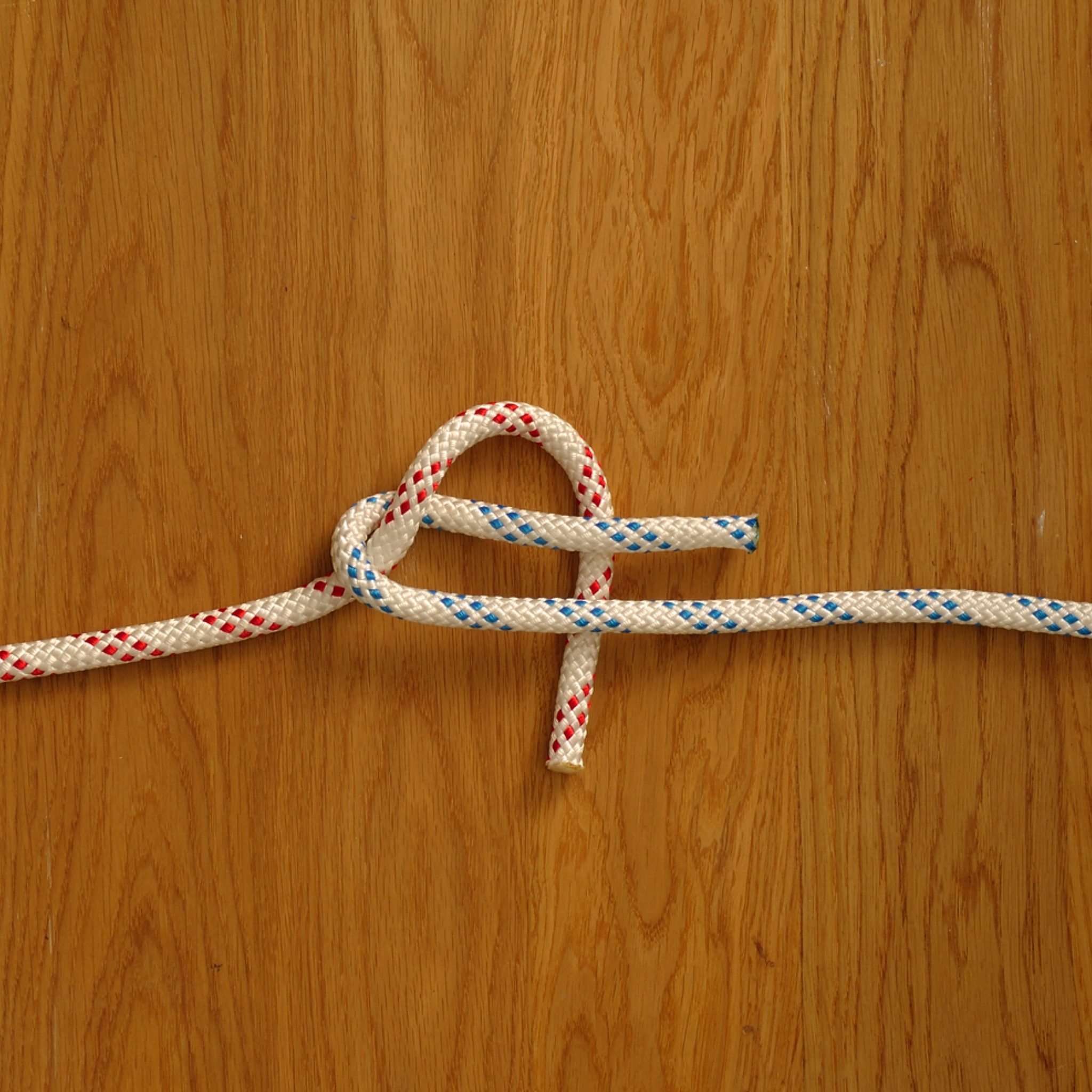
Essential Knots: Sheet bend
Essential Knots: Sheet bend Use: Joining two ropes together. A sheet bend is particularly useful for joining two ropes of different thicknesses together and is very secure. Step 1. Make a bight in the end of one rope (the thicker one if the two are different...
Essential Knots: Clove hitch
Essential Knots: Clove hitch Use: Tying a rope to posts, bollards, rings or a guardrail. Step 1. Make a turn around the object and lay the working end diagonally back over the standing part. Step 2. Pass the working end round the object and back through the loop. Step...
Essential Knots: Round turn and two half hitches
Essential Knots: Round turn and two half hitches Use: Tying a rope to a pole or a ring. Step 1. Pass the end around the object. Step 2. Make a second turn. Step 3. Take the working end over the standing part, tuck it between the two parts to make the first hitch. Step... Download from iTunes
Download from Google Play
 Download from iTunes
Download from Google Play
 Download from iTunes
Download from Google Play
 Download from iTunes
Download from Google Play
 Download from iTunes
Download from Google Play
 Download from iTunes
Download from Google Play
 Download from iTunes
Download from Google Play
 Download from iTunes
Download from Google Play

🔹🔹𝗡𝗘𝗪𝗟𝗬 𝗨𝗣𝗗𝗔𝗧𝗘𝗗🔹🔹![]()
![]() Do you know which knot is right for the job? 🪢
Do you know which knot is right for the job? 🪢![]()
![]() Knot Bible helps sailors and boat owners choose and tie 50 essential knots — from reliable hitches and rope-joining bends to fixed and adjustable loops.
Knot Bible helps sailors and boat owners choose and tie 50 essential knots — from reliable hitches and rope-joining bends to fixed and adjustable loops.![]()
![]() 🧑🎓 Learn what each knot is for - not just how to tie it!
🧑🎓 Learn what each knot is for - not just how to tie it!![]()
![]() ✅ Save Favourites
✅ Save Favourites![]()
![]() 🔎 Search instantly and follow full-screen step-by-step photos
🔎 Search instantly and follow full-screen step-by-step photos![]()
![]() 🎬 Hands-free slideshows while you practise
🎬 Hands-free slideshows while you practise![]()
![]() App Store: 🍏 loom.ly/vVsQ3rM
App Store: 🍏 loom.ly/vVsQ3rM![]() Google Play: ▶️ loom.ly/WOxq2aw
Google Play: ▶️ loom.ly/WOxq2aw![]()
![]() ● NO DATA REQUIRED FOR USE
● NO DATA REQUIRED FOR USE![]() ● ALL CONTENT INCLUDED
● ALL CONTENT INCLUDED![]() ● NO IN-APP PURCHASES or SUBSCRIPTIONS!
● NO IN-APP PURCHASES or SUBSCRIPTIONS!![]()
![]() #SailingTips #boatinglife #knots #yachting #knottying #SailingKnots #sailing #lifeatsea #boating #watercraft
#SailingTips #boatinglife #knots #yachting #knottying #SailingKnots #sailing #lifeatsea #boating #watercraft
🆘🛟Essential!
This content isn't available right now
When this happens, it's usually because the owner only shared it with a small group of people, changed who can see it or it's been deleted.
