Select Page

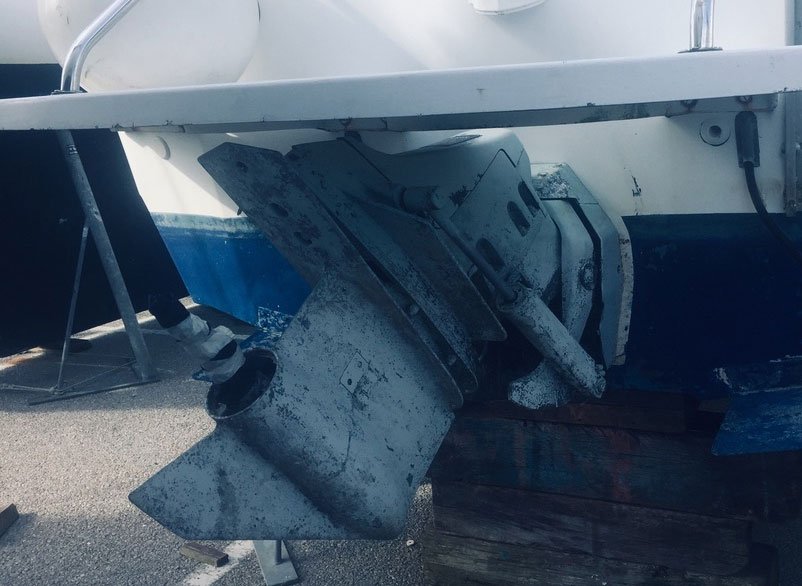
Sterndrives are a popular form of propulsion in the powerboat market. While popular, they require a fair amount of maintenance, their care and maintenance can keep a DIY boater very busy.

The main factors to be aware of are salt water corrosion, lubrication and regular inspection of the bellows, the condition of which is vital to prevent water from entering into the hull.

Bellows inspection

There are three types of bellows – for the exhaust, drive shaft and gear cables – and they all need careful inspection. With the boat out of the water, these are the things to check and do:

  • Some bellows can be partially covered up by protective caps or steering helmets and these will need to be removed to make a proper inspection.
  • Check for signs of cracking in the rubber. If the rubber is becoming brittle it is time to replace the bellows.
  • Look out for any marine growth and remove any barnacles, which are very sharp and can easily damage the rubber.
  • Check the condition of the stainless steel clamps.
  • Check inside the hull for any signs of water ingress.
  • Check for any damage that may have been caused by fishing line wrapped around the propeller. This will entail removing the propeller.
  • Replace bellows if there are any signs of damage.

Surveyor’s tips

  • As a rough guide, the bellows on your sterndrives should be replaced every two years. Some manufacturers will state that their bellows will last for longer than this. However, I feel that it is best to err on the side of caution and replace them every two years. At a minimum, properly inspect the bellows yearly for any signs of damage or cracking.

Corrosion inspection

Sterndrives, as with saildrives, have aluminium housings and these remain in the water when the boat is afloat. This means that if they are used in salt water they must be protected from galvanic corrosion by sacrificial zinc anodes and well maintained paint layers. Here is what to do:

  • Check the owner’s manual for the location of all anodes.
  • Check the condition of the sacrificial anodes and replace them when they are 50% wasted. If unsure how much 50% is, buy spares so you can double-check.
  • Remember never to paint anodes with antifouling as their surfaces must be in direct contact with water to be effective.
  • Carefully check the condition of the painted surfaces of the sterndrive before applying any antifouling. If any repainting is necessary, this must be done first (see below: Painting a sterndrive).
  • Make sure the whole sterndrive is free of any standard antifouling bottom paint that may be used for the rest of the hull below the waterline.
  • Apply copper-free antifouling paint suitable for aluminium outdrives as recommended by your sterndrive manufacturer. These paints should contain copper thiocyanate rather than copper oxide.

Surveyor’s tips

  • It is always a good idea to check the electrical continuity between the anode you have fitted and the items that you are trying to protect. This can be done with relative ease, by setting a multi-meter to its “continuity” setting, and touching one lead firmly to the anode, and the other lead firmly against the stern gear you are trying to protect. You may have to scratch away at the anode and stern gear to make sure that both leads are touching good metal.
  • If you are switching a vessel from freshwater to saltwater (or vice versa), it is worth checking if the anodes you currently have fitted are correct for the type of water your vessel will be moving to. Magnesium anodes tend to perform better in fresh water, whereas zinc anodes tend to perform better in saltwater. You might have to ask local suppliers for the best option if your boat is moored in brackish water.

Painting a sterndrive

The key to all boat painting and varnishing work is to prepare the surfaces thoroughly. Anything less than this will result in wasted effort and frustration when the job has to be done again. Sterndrive surfaces are fiddly and uneven, so sanding back is best done by hand – a good supply of 80, 120 and 240 grit aluminium oxide wet and dry paper and a wire brush will be needed. These are the steps involved:

  1. When the boat is hauled out, ask the yard to give the sterndrive a thorough pressure wash.
  2. Before doing any sanding, make sure that all barnacles are removed. Use a plastic scraper for this if needed.
  3. If the paintwork is in good condition and there is no sign of underlying corrosion, then wet sand using 120 grit paper to provide a key for new topcoat.
  4. If there is any loose or flaking paint or any sign of bubbling, this must be removed. Use 80 grit wet and dry paper for this, removing all signs of aluminium oxide in the process. A wire brush may be needed on badly pitted surfaces.
  5. Rinse thoroughly with fresh water – a high pressure hose is best. Wipe dry with an old towel.
  6. Apply an etch primer. This paint is designed to bond itself to the substrate and contains acid so the use of rubber gloves and protective gear is essential.
  7. Apply two coats of antifouling primer. Allow to cure and dry between coats according to the paint manufacturer’s instructions.
  8. Lightly sand back any paint drips or imperfections using 240 or 400 grit paper.
  9. Apply two coats of antifouling paint.

Lubrication and other checks

  • Check the condition of the cabling.
  • Check the hydraulic hoses for steering and trim, making sure they are not cracked and their connections are all in good condition.
  • Check hydraulic system fluid levels and if necessary trace and repair any leaks.
  • Check gearbox oil condition. If this is milky in colour, then this indicates a seal has failed, allowing water ingress. The shaft seals will need to be replaced.
  • Check and grease all grease points off the drive as recommended in the sterndrive instruction manual.

How to tackle osmosis

Many owners of old GRP boats live in fear of osmosis, but what exactly is osmosis and what can be done about it? Osmosis comes about...

Boat Engine Failure – what to check

Engine failure If your engine fails or is overheating there are a number of things to check immediately: • Air filter...

Saildrive maintenance

There are less maintenance tasks to carry out on a saildrive transmission than on a traditional inboard shaft drive system with its associated stern gear. However, there are a few critical things that require maintenance, as recommended in detail by the engine manufacturers, and should be adhered to.

Boat gas system maintenance

There are correct types of hose for marine plumbing, sewerage, exhaust, cooling and gas and all hoses should be checked regularly for wear and deterioration.

Sailing Safely at Night – Best Practice

Sailing at night can be a magical experience – the peaceful solitude, starry skies, and gentle lapping of waves create an unforgettable atmosphere. However, nighttime sailing also presents unique challenges and risks that require careful preparation and vigilance. This comprehensive guide will cover essential safety practices to ensure your nocturnal nautical adventures are both enjoyable and secure.

How to Avoid Collisions At Sea With The ColRegs

      Every Skipper Needs Accurate Knowledge of the IRPCS ColRegs As a responsible skipper it is every skipper’s duty to learn and apply the IRPCS...

How diesel engines work

The basic principle of a diesel engine is less complex than that of a petrol engine. No spark plug or ignition system is needed, making the basic diesel engine a comparatively straightforward system that results in fewer faults and has lower maintenance costs than a petrol engine.

How a propeller works

Have a look around any boatyard and you will notice quite a variety of propellers – some have two blades, some have three and others have four or more. While most propellers are completely rigid some have blades that fold.

Jester Challenge 2022 – Sailing single handed from Plymouth UK to the Azores: Part 5 – Boat Management

Jester Challenge – A modern experiment in old-fashioned self-reliance, self sufficiency, and personal responsibility. This is the fifth of a 10-part post where solo sailor, Bernie Branfield, shares his first hand account of his single-handed, 2022 Jester Challenge, from Plymouth, UK to the Azores, in his 26′ Invicta Mk2, Louisa.

First Aid Afloat – Jellyfish Stings

Jellyfish stings are a common occurrence when boating or swimming in many parts of the world. While most stings are not serious, some can cause...

Essential Knots: Round turn and two half hitches

Essential Knots: Round turn and two half hitches Use: Tying a rope to a pole or a ring. Step 1. Pass the end around the object. Step 2....

Jester Challenge 2022 – Sailing single handed from Plymouth UK to the Azores: Part 6 – Communications

Jester Challenge – A modern experiment in old-fashioned self-reliance, self sufficiency, and personal responsibility. This is the sixth of a 10-part post where solo sailor, Bernie Branfield, shares his first-hand account of his single-handed, 2022 Jester Challenge, from Plymouth, UK to the Azores, in his 26′ Invicta Mk2, Louisa.

Always have an emergency ditch bag ready to go…

An emergency ditch bag (also known as a grab bag, abandon ship bag, or go-bag) is a crucial piece of safety equipment for any vessel venturing out...

What boating skills should you have before you buy a yacht?

Many people dream of owning a yacht and sailing off into the blue yonder. What boating skills should you have before you buy...

Boat Engine Safety Checks

  Boat Engine Safety Checks Every skipper needs to make regular essential boat engine safety checks. Below you will...

Boat engine fuel system

If engines are installed and serviced correctly then most marine engines are very reliable, but one of the most important parts of the engine to check and service is the fuel system.

The VHF DSC Radio jargon buster

AIS - Automatic Identification System This system is used by shipping. It allows another vessel or coast station to use...

Seacock maintenance

If seacocks are always left open and neglected they can eventually seize which will prove a serious threat to boat safety should a connecting hose fail and the seacock refuses to close. There are three main types of seacock – ball valves, cone valves and gate valves.

Five dangers a vessel may encounter at sea

What are the main dangers a vessel may face at sea and what should skippers do to reduce the risk of these happening?

Jester Challenge 2022 – Sailing single handed from Plymouth UK to the Azores: Part 3 – Preparations

Jester Challenge – A modern experiment in old-fashioned self-reliance, self sufficiency, and personal responsibility. This is the third of a 10-part post where solo sailor, Bernie Branfield, shares his first hand account of his single-handed, 2022 Jester Challenge, from Plymouth, UK to the Azores, in his 26′ Invicta Mk2, Louisa.

Marine toilets – care and maintenance

There are a number of different types of marine toilet, or heads. They fall into one of three categories – manual, electric and vacuum, the most common being the manual, hand pumped type. These have double acting piston-pumps which both discharge the waste and flush the toilet with sea water.

Cleaning & polishing painted topsides

The gelcoat topsides of a GRP boat can be pampered and restored to their former glory relatively easily when it is ashore. Gelcoat is only a very thin outer layer of the hull, often less than 1mm thick, so you should avoid cleaning it with highly abrasive cleaners, or an-ything that could potentially damage its surface.

You Need To Understand The IRPCS ColRegs To Pass Your Yachtmaster, Master of Yachts and Coxswain Certificate of Competence

IRPCS ColRegs Rules of the Road at Sea and Yachtmaster Learning, understanding and remembering the International Regulations...

Navigating Through Rough Waters: Tips for Handling Adverse Weather Conditions in a Sailboat

Navigating through rough waters in a sailboat requires skill, preparation, and a good understanding of both your vessel and the environment. Here are some tips for handling adverse weather conditions including Preparation, Techniques, Safety and much more..

Gybing a sailing boat

Gybing is the sailing manoeuvre used to change a boat's direction through a following wind. As with the tacking manoeuvre,...