Select Page

Wooden hull care and maintenance

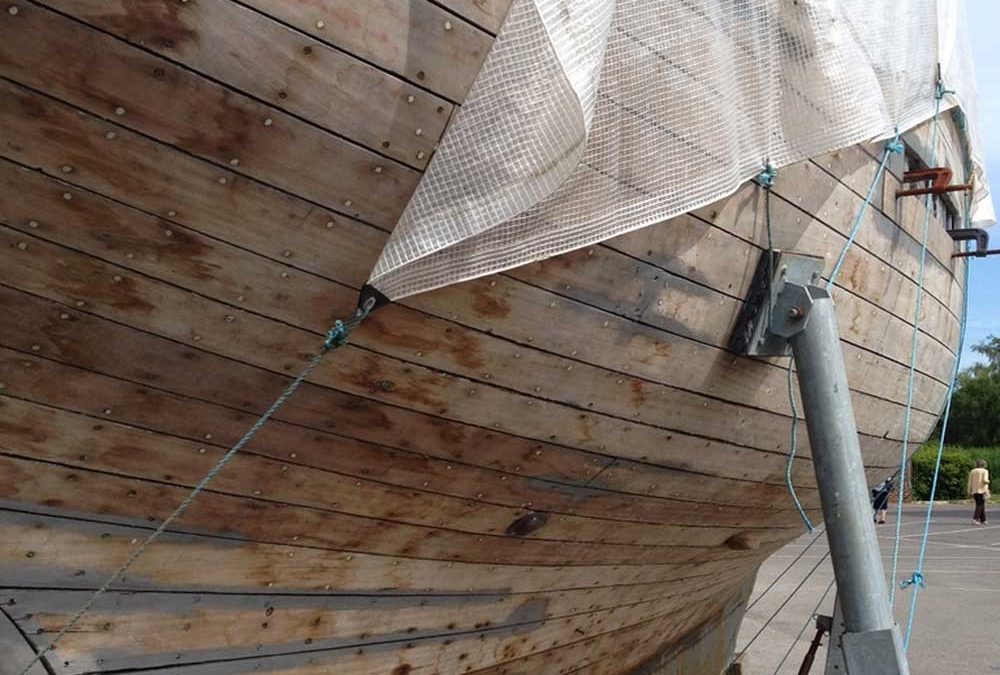
It is important to ensure the essential hull maintenance of a wooden boat is done, even if you are paying others to look after your boat for you. The priority is to prevent rot from taking hold. The protective layers of paint and varnish over wood are far more critical than on GRP boats, where the topsides are painted more for cosmetic reasons.

One of the fundamental things to understand is the nature of wood itself. If wood becomes soaking wet, it swells. As it dries, it shrinks. The proper care of a wooden hull is down to keeping a balance between the cycle of wet (i.e. afloat) and dry (i.e. ashore) periods. Dry weather dries out wood causing it to shrink. Salt water is good for wood as it not only protects the wood from fungus but also moistens the wood which stops it from shrinking.

Wooden hull inspection

  • Check the condition of the paintwork. If there is any cracking of the paint along the grain of the wood then this indicates there might be rot developing beneath. To be sure, cracks need to be scraped out to check for rot.
  • To check for rot, tap along the hull using a small wooden mallet, or the wooden handle of a tool will do. Listen out for the sounds the tapping makes. A high, metallic or slight ringing sound indicates the planking is in good condition. If there is a dull, soft sound, this indicates there is rot. Mark the area and if in doubt have it checked thoroughly by a surveyor. Note the tapping will sound different as you pass over the ribs.
  • If the timbers themselves show signs of splitting along the grain then this indicates the hull has dried out.
  • Check the plank edges and seams are in good condition. If these are proud in places then this can indicate the planking has moved.
  • Check the caulking is in good condition and remains well bedded in the seams.
  • Inspect the plank fastenings for signs of corrosion – green coloured stains indicate corrosion of copper fastenings, rust stains indicate corrosion of steel fastenings and white stains indicate corrosion of galvanised fastenings.
  • Pay particular attention to the fastenings where the planks attach to the transom. Also check for splits in the ends of the planking where it joins the transom.
  • Likewise, check the fastenings of the planking at the stem. This is where the planking is under considerable stress.
  • Make sure none of the frame ribs are broken, especially near the tops where most damage can occur.
  • Check there is no gap or signs of corrosion along the joint between the keel and the hull.
  • Check the keel band of motor boats is in good condition.
  • Check the keel bolts are in good condition.

If your boat passes the hull inspection with flying colours, then the care and  maintenance of the hull when it is hauled out entails the following:

  • Fitting a cover that comes down to the waterline.
  • Priming any bare timber that may have been exposed by the pressure washer.
  • Rubbing down the topsides, patching with undercoat as necessary, applying topcoat as required.
  • Below the waterline, rubbing back, patching undercoat where required and then applying antifouling.

Hull stripping

For wooden hulls, the two main methods to consider for removing paint are either using a chemical paint stripper or a heat gun. The heat gun is generally recommended as it will be cheaper and less messy to use.

These are the steps involved in stripping the paint from a wooden hull:

  1. Heat gun – use a heat shrink gun and a putty knife to scrape the old paint layers off. Take special care not to scorch the wood. If you have not used a heat gun before then practice on some scrap of painted wood, an old painted wooden door for example, until you are confident you can work the machine correctly. Wet the bare wood using salt water to make a wet barrier to protect it from the heat gun.
  2. Electric plane – when you have removed as much paint as possible with the heat gun and putty knife, use an electric planer to take off any remaining paint, being careful only to remove a tiny bit of the wood if necessary at the same time. Again, practice using this machine before diving into planing your hull.
  3. Rotary sander – go over the surface of the wood with 40 grit paper using a rotary sander at low speed. Keep the sander flat against the hull with an even pressure, moving at all times in order not to leave sanding marks. Never stop the machine when it is against the wood as it will leave a nasty mark.

How to use tides and currents to your advantage

If you are contemplating a cruise through tidal waters and strong currents, then planning your trip carefully in advance is essential to enable you to take advantage of favourable tides rather than constantly fighting against them.

Sailing at the touch of a button

Easier and more controlled sail handling can also be achieved by powering up a furling mast. I came across some interesting solutions at the Southampton Boat Show this week on the Selden Mast stand, where they were running demos of their E40i electric winch and SMF furling system.

Medical Emergency at Sea

How to deal with a medical emergency afloat   If you are planning a boating trip, it is important to have at least one...

Finding your way at sea: waypoints

Any sea voyage needs a certain amount of planning before it is undertaken. It makes sense to think about where you are going, how you will get there and what factors might influence your plan. Planning the route itself is also critical. One of the essential parts of modern navigation is the use of waypoints.

Sailing to windward – how to take advantage of wind shifts

For most sailors, sailing upwind is the most exhilarating point of sail as you tack your way to your destination. Sailing to windward is a bit like zig-zagging your way up a mountain road through a series of hairpin bends – great fun but also calling for concentration and hard work.

Boat ownership

Owning a boat is a big commitment that should bring no end of satisfaction for the owner as well as the owner's family and friends. In...

Tidal terms and definitions

Getting to grips with tidal terms and definitions can seem a little daunting, even to the most experienced sailors! Here we look at some of the key terms and definitions associated with the language of tides.

Sail care and maintenance – Part 1

When thinking about the care, maintenance and repair of sails it helps to have some understanding of the properties of the ever growing range of modern sailcloth and the fibres they are made from, as opposed to the traditional canvas sails of the past.

Jester Challenge 2022 – Sailing single handed from Plymouth UK to the Azores: Part 3 – Preparations

Jester Challenge – A modern experiment in old-fashioned self-reliance, self sufficiency, and personal responsibility. This is the third of a 10-part post where solo sailor, Bernie Branfield, shares his first hand account of his single-handed, 2022 Jester Challenge, from Plymouth, UK to the Azores, in his 26′ Invicta Mk2, Louisa.

Crew Overboard Drill – Updated

How to respond to crew overboard A Man Overboard (MOB) drill is a crucial safety procedure that every boater should practice regularly. It simulates...

Boat surveys

A full boat survey assesses the condition of the hull, mechanical gear and means of propulsion. The survey is carried out with the boat...

Sailboat rig checks – Part 1

Sailing boat rigs need to be checked regularly to reduce the risk of rig failure at sea. In part one of Sail boat rig checks we run through a series of useful checks that owners and skippers can carry out.

Care of boat batteries

Boat batteries need to be kept properly charged, which means never allowing the batteries to discharge below 50 per cent of their total charge. As well as the batteries themselves, keeping a boat’s charging systems in good shape will also help to keep batteries topped up to a higher level of charge.

Essential yacht tender safety for skippers and crew

Essential yacht tender safety - the dangers inherent in using a dinghy to get ashore from a moored or anchored yacht are all too easily...

Marine diesel exhaust checks

You should inspect the exhaust system for corrosion damage regularly, especially around the injection bend. If you have noticed the engine exhaust smoking a lot during the sailing season this can also indicate a number of potential problems.

How diesel engines work

The basic principle of a diesel engine is less complex than that of a petrol engine. No spark plug or ignition system is needed, making the basic diesel engine a comparatively straightforward system that results in fewer faults and has lower maintenance costs than a petrol engine.

2023 Rolex Fastnet Race – Part 3

This is our third and final article about the 2023 Rolex Fastnet Race. It is a first hand account by Simon Jollands who was one of the crew of Lancelot II, a Beneteau First 40 skippered by John Gillard.

Understanding your mast and rigging

The rig of a sailing boat is put under huge stresses and strains so it is important for inspections of a yacht's spars and rigging to be...

Avoiding personal dangers at sea

In order to stay safe at sea, we need to know the risks we are facing and to be aware of any personal dangers we could possibly encounter. Here are six of the most common potential dangers individual crew members should be aware of.

How to cope with an emergency at sea

A safe skipper will be mentally prepared for all kinds of potential emergencies happening at sea, including medical emergencies, engine failure, fire, a holed hull, capsize and dismasting.

Wooden Hull Repairs

While wooden boat hull maintenance is mostly straightforward, it is always a good idea to take expert advice on any repair job needed doing to a wooden boat, unless you have done the job before and know what you are doing.

Tools and spares for your boat

Tools and Spares to take to sea!

You won’t regret taking a look at our essential tips and checklist to make sure you’re prepared for routine maintenance and those unexpected jobs that come up whilst you’re afloat!

VHF DSC radio – how best to communicate at sea

There are many ways to communicate with others at sea. What makes the VHF DSC radio the best form of short range...

Competent crew skills: arriving and leaving a berth

Skilled boat handling is needed when entering or leaving harbour. Crew tasks include preparing the mooring lines and fenders before docking and...

Boat Engine Safety Checks

  Boat Engine Safety Checks Every skipper needs to make regular essential boat engine safety checks. Below you will...