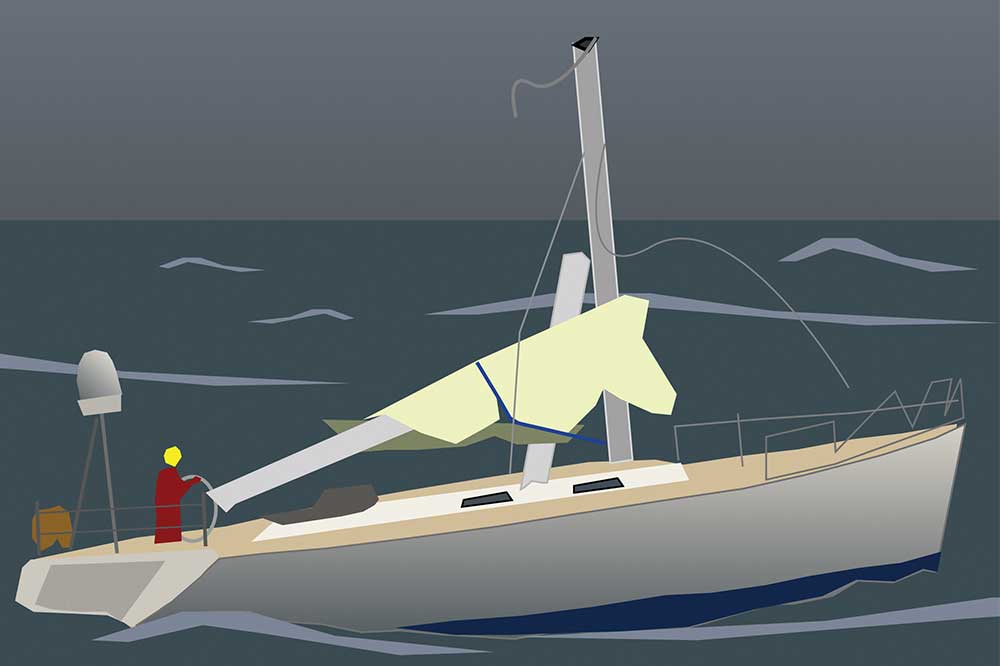

Getting a tow for your sail or power boat
FREE tips from the Safe Skipper App for iPhone/iPad/Android:
Getting a tow for your sail or power boat
- Plan how to secure a tow rope to your boat. The tow rope must be attached to strong deck fittings
- As a rescue boat approaches, warn them of any debris or loose lines in the water
- If you are being rescued by a lifeboat, follow their instructions – they are experienced in rescue techniques
- If necessary back the tow rope with other ropes to lead to other cleats and strong points on deck
- Avoid using knots or loops that cannot be released under load
- Protect the rope from chafing using plastic tube, rags or fenders
- When being towed in a small boat, you will need to keep the weight well aft to keep the bow up
- If the boat is down by the bows you may need to be towed from astern
- The towed boat should always steer to follow the towing boat unless the steering has been disabled
- The use of a drogue to aid towing can be used

Rudders and steering systems – Part 3
In the third of our three blog articles on rudders and steering systems, we look at how to replace rudder bearings and repair a water-saturated core.
First Aid Afloat – fish spine injury
Boat interior varnishing
Most boat interiors have a combination of varnished and painted surfaces including solid wooden joinery, plywood laminates with thin hardwood veneers and glass reinforced plastic. When making your assessment of what you are going to do, bear in mind that the varnishing process consumes a lot of time, especially if the existing surfaces are in poor shape.
Understanding tide tables and tidal curves
There are many factors that influence local tidal patterns and it’s essential for every sailor to have a good understanding of tide tables and tidal charts to ensure they can calculate the level of tide at any given time.
Boat electrics inspection checklist
With the boat ashore, here are some recommendations for carrying out a boat owner electrics inspection. Safety is always paramount so remember to do the checks with the batteries off. Wearing a head torch helps, make notes as you go and only tackle a repair if you are 100% sure you know what you are doing:
How to read nautical charts
Whilst most sailors today rely on GPS to find their way at sea, nautical charts are a crucial tool for any sailor to navigate safely and effectively. Here is a reminder of some of the basic steps involved in reading a nautical chart:
First aid at sea – four common emergencies
In this blog we look at what to do in the event of a crew member choking, drowning, or suffering from hypothermia or fatigue. Knowing how to cope with them could well save a life, while not knowing could result in an avoidable tragedy.
Boat ownership
Nautical paper charts – a reminder of the basics
The nautical chart is an indispensable tool for navigation. A chart is a graphic representation of an area of the sea which might also include coastlines, estuaries and islands. All cruising leisure boats should carry up-to-date paper charts.
The give-way hierarchy at sea – who gives way to whom?
Steel hull maintenance
A steel boat owner’s biggest enemy is corrosion. You don’t have to worry about osmosis or rotting timbers, instead rust is the number one issue that will keep you awake at night.
Sail care and maintenance – Part 1
When thinking about the care, maintenance and repair of sails it helps to have some understanding of the properties of the ever growing range of modern sailcloth and the fibres they are made from, as opposed to the traditional canvas sails of the past.
Jester Challenge 2022 – Sailing single handed from Plymouth UK to the Azores: Part 2 – Weather
Jester Challenge – A modern experiment in old-fashioned self-reliance, self sufficiency, and personal responsibility. This is the second of a 10-part post where solo sailor, Bernie Branfield, shares his first hand account of his single-handed, 2022 Jester Challenge, from Plymouth, UK to the Azores, in his 26′ Invicta Mk2, Louisa.
Marine engine oil system maintenance
The regular maintenance of a marine diesel is key to preventing engine failure at sea. This means doing regular checks of the fuel, cooling, electrical and oil systems.
How to ensure your boat is in proper working condition
In this article Eva Tucker from Volvo Penta presents a handy check list of all the things that you need to check regularly in order to make sure that your boat is in a seaworthy condition. Including maintenance, safety gear and electrical checks.
Jester Challenge 2022 – Sailing single handed from Plymouth UK to the Azores: Part 5 – Boat Management
Jester Challenge – A modern experiment in old-fashioned self-reliance, self sufficiency, and personal responsibility. This is the fifth of a 10-part post where solo sailor, Bernie Branfield, shares his first hand account of his single-handed, 2022 Jester Challenge, from Plymouth, UK to the Azores, in his 26′ Invicta Mk2, Louisa.
You Need To Understand The IRPCS ColRegs To Pass Your Yachtmaster, Master of Yachts and Coxswain Certificate of Competence
Points of Sailing
Estimating your position at sea
Navigators use a combination of techniques to estimate their position at sea. The primary method used today is GPS (Global Positioning System), a network of 24 satellites that became fully operational in the 1990s and was originally restricted for use by the United States military.
Sailboat rig checks – Part 2
In part two of Sail boat rig checks we run through some useful rig maintenance tips and then finish with a brief look at what a professional rig check involves.
Passage Planning Advice & Safety for skippers
Boat plumbing maintenance & troubleshooting
A boat’s fresh water system needs annual maintenance to keep it in good condition. Some boats have far more complex systems than others, with pressurised hot and cold water, associated pumps, an accumulator, calorifier and pressure valves, all to keep a boat owner busy.
How to Avoid Collisions At Sea With The ColRegs
Boat surveys
The Round The Island Race 2023
This year’s Round the Island Race turned out to be a really thrilling and competitive event. 1100 boats entered the race, which took place on Saturday 1st July. The race started from the world famous Royal Yacht Squadron line in Cowes UK, with the largest and fastest boats starting first, leaving the rest of us to wait our turn.