Select Page

A medical emergency aboard a boat at sea requires immediate attention to ensure the safety of the casualty and the crew in general. The skipper needs to know which crew members, if any, have had medical training or have a first aid qualification. All boats should carry first aid handbooks to help an untrained crew cope with a medical emergency.

Here are a few tips on what to do in the event of some of the most common medical emergencies at sea:

Communications

Remember:

If you require immediate assistance, don’t delay, send a MAYDAY.

If you need urgent medical advice, make an all stations PAN PAN.

Before using the radio, write down a medical checklist with as much information as possible about the casualty so you can pass on details clearly and quickly. There is clearly a limit to what can be achieved over the radio, a better option is to be prepared and trained to be as self-reliant as possible, especially if you plan to be at sea for several days or weeks. If in doubt, do not hesitate to make contact with help ashore.

Primary survey

Bleeding

Minor cuts and bruises have a habit of happening frequently at sea and are easily dealt with. However if someone suffers a deep wound, a major blood vessel may be punctured and swift action needs to be taken to prevent severe blood loss. The casualty will most likely suffer from shock and need to be treated accordingly.

Step 1  Raise the wounded limb above the level of the heart to help reduce blood loss.

Step 2  Clean the wound with antiseptic lotion.

Step 2  Place a sterile dressing pad over the wound and hold it firmly in place.

Step 3  Secure the dressing in place with a bandage. If blood seeps out, add another sterile dressing pad over the first.  Add further pads, if necessary. Do not over tighten the bandage as this could cut off the blood circulation and cause further problems.

Step 4  If bleeding is severe, treat for shock (see below) and call for medical help.

Step 5  Keep the wounded limb raised. After 10 minutes check the circulation is ok and the bandage is not too tight.

Internal bleeding

Internal bleeding may occur if a casualty has a fracture, crush injury, or receives a severe blow to their body. The casualty should be treated for shock, made comfortable and needs to be evacuated ashore as soon as possible.

Signs of internal bleeding:

  • Cold, clammy skin.
  • Rapid, weak pulse.
  • Shallow, rapid breathing.
  • Thirst
  • Confused, restless, irritable.
  • Dizziness.
  • Bleeding from body openings.
  • Abdomen may be tender and rigid.
  • Signs of shock.

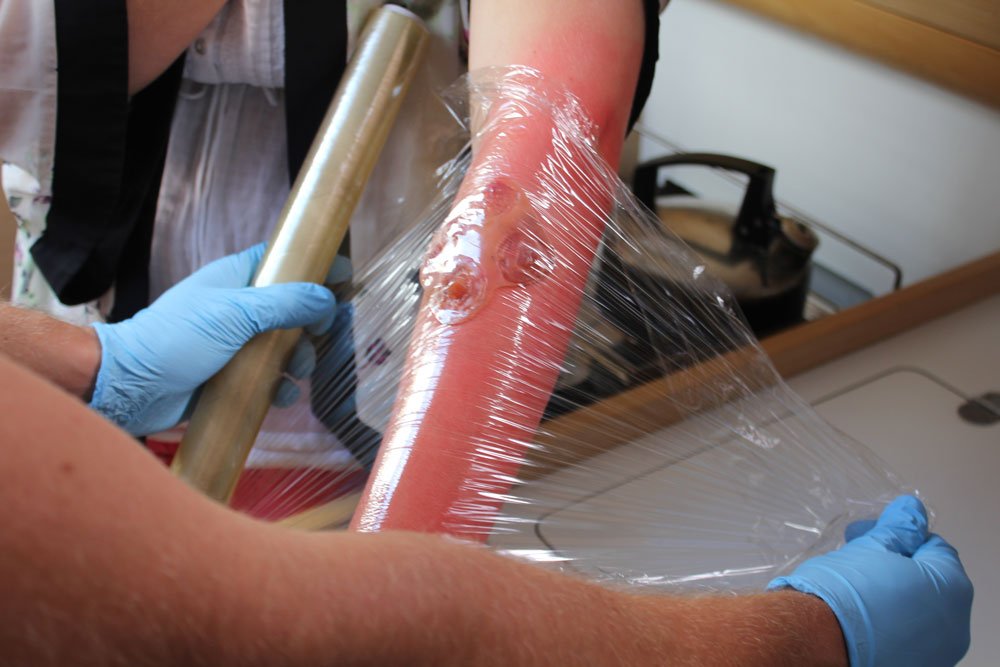
burn clingfilm

Burns

Minor burns and scalds are quite common at sea, especially for those working in a galley. These can be prevented by wearing protective clothing and footwear, but that is hardly going to be popular in hot summer temperatures.

Severe burns can cause deep tissue damage and there is a risk of shock for sufferers. Seek medical advice and be prepared to describe the area of the burn as well as the thickness of the skin affected. For the most severe cases you may need to administer CPR.

Treatment of burns:

Step 1  Immerse burnt area in cold water for a minimum of 15 minutes.

Step 2  Gently remove loose clothing but be careful not to remove clothing that has stuck to the skin.

Step 3  Apply sterile, non-stick dressings. Cling film can be used, but do not wrap tightly.

Step 4  Elevate the limb.

Step 5  Give antibiotics, painkillers and plenty of liquid with added sugar and a little salt.

Step 6  Treat for shock (see below).

Note: do not prick blisters, or cover facial burns or put ointments on broken skin.

Sunburn

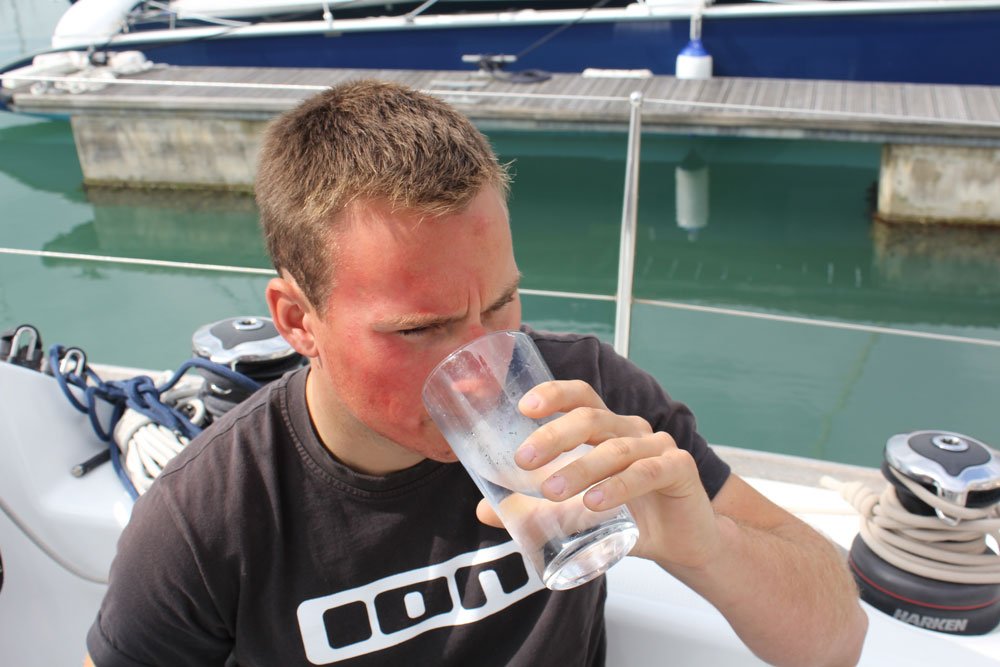
If a crew member is suffering from severe sunburn, cool the affected skin with lukewarm water, then apply calamine, after sun lotion or aloe vera gel. Cover up with loose clothing and keep the sufferer in the shade and well hydrated.

Boatyard Health and Safety

Boat storage facilities are potentially hazardous environments and it is the responsibility of both boat owners and boatyards to ensure that the...

Hull inspection – the annual checks

With the boat ashore for the winter it is time to do a hull inspection - the annual checks. Are there any scratches and chips in the...

Rudders and steering systems – Part 3

In the third of our three blog articles on rudders and steering systems, we look at how to replace rudder bearings and repair a water-saturated core.

Antifouling for leisure boats – Part 2

To prepare for antifouling, as soon as your boat has been lifted out and pressure washed, you need to check all the surfaces of the hull below the waterline, remove any remaining barnacles and check for blisters.

Wooden Hulls – Part 1

Traditional wooden boats have a plank on frame construction, a centuries old boat building method that is still in use today. Variations of the traditional method include carvel, clinker and strip planking, which all relate to the way the planking is attached to the frame.

Pleasure craft safety equipment recommendations

Safety equipment is an important part of boat preparation and it is advisable for all pleasure craft skippers to check their vessel is...

Steel and Aluminium Hulls

The two metals used for hull construction are steel and aluminium. These are both very strong materials and will last a long time as long as they are cared for, which primarily means protecting steel boats from rust and aluminium boats from electrolytic action.

Tacking a sailing boat

Tacking is the sailing manoeuvre used to change a boat's direction through an oncoming wind. Tacking a sailing boat calls for the crew to work as a...

Boat engine cooling systems

Some boat engine breakdowns are unavoidable but those caused by lack of maintenance or regular checks can be avoided. Failure to maintain an engine’s cooling system is a well known example of this, so it is well worth spending time checking over the cooling system both when the boat is ashore and afloat.

How to cope with an emergency at sea

A safe skipper will be mentally prepared for all kinds of potential emergencies happening at sea, including medical emergencies, engine failure, fire, a holed hull, capsize and dismasting.

Essential Boat Buying Tips for First-Time Boat Owners

The first question that comes to mind when thinking about buying a boat is: what type of boat? There are more than 20 different kinds, of different sizes, for different purposes, and different pockets. So, your first step is to decide your boat type.

How diesel engines work

The basic principle of a diesel engine is less complex than that of a petrol engine. No spark plug or ignition system is needed, making the basic diesel engine a comparatively straightforward system that results in fewer faults and has lower maintenance costs than a petrol engine.

Seasickness – how can you prevent it?

Seasickness is a common problem at sea and affects both seasoned sailors and novices. What are the causes and symptoms of seasickness?...

Boating Rules of the Road – International ColRegs

    International ColRegs Rule 7: Risk of Collision Anyone who is responsible for a vessel at sea, from the...

Marine engine oil system maintenance

The regular maintenance of a marine diesel is key to preventing engine failure at sea. This means doing regular checks of the fuel, cooling, electrical and oil systems.

Boat electrics inspection checklist

With the boat ashore, here are some recommendations for carrying out a boat owner electrics inspection. Safety is always paramount so remember to do the checks with the batteries off. Wearing a head torch helps, make notes as you go and only tackle a repair if you are 100% sure you know what you are doing:

Understanding tide tables and tidal curves

There are many factors that influence local tidal patterns and it’s essential for every sailor to have a good understanding of tide tables and tidal charts to ensure they can calculate the level of tide at any given time.

Narrowboating on the Kennet and Avon Canal

A recently cancelled sailing event I was due to take part in left us with a free weekend in the diary. Given that my wife and I were celebrating a bumper wedding anniversary and the weather forecast was for fine weather, we decided to hunt around for a last minute canal holiday.

Hourly Checks when sailing or motoring

  Hourly Checks Get into the habit of carrying out these checks and both yourself, your crew and your boat will be...

Boat interior varnishing

Most boat interiors have a combination of varnished and painted surfaces including solid wooden joinery, plywood laminates with thin hardwood veneers and glass reinforced plastic. When making your assessment of what you are going to do, bear in mind that the varnishing process consumes a lot of time, especially if the existing surfaces are in poor shape.

Cleaning & polishing gelcoat topsides

The gelcoat topsides of a GRP boat can be pampered and restored to their former glory relatively easily when it is ashore. Gelcoat is only a very thin outer layer of the hull, often less than 1mm thick, so you should avoid cleaning it with highly abrasive cleaners, or an-ything that could potentially damage its surface.

Essential boat engine checklist

Boat engine checklist Engine oil level check Even if you have checked it previously, confirming the engine oil level is up...

The give-way hierarchy – sail boats and power boats

Who gives way to who at sea? Even seasoned sailors sometimes get this wrong and in a crowded harbour this can easily lead to a collision or at best considerable embarrassment for a boat that mistakenly thinks it has right of way over another.

Safety at sea principles

Safety at sea is not as simple as just spending money adding shiny new emergency equipment such as liferafts, danbuoys, distress flares, EPIRBs and so on.

Stress cracks on GRP boats

It is quite common to find cracks in the gelcoat when inspecting the deck and superstructure of a GRP boat. It is important to differentiate between a gelcoat crack and a scratch.