Jester Challenge – A modern experiment in old-fashioned self-reliance, self sufficiency, and personal responsibility.
The Jester Challenge was created for skippers of small boats who want to test their skill and self-reliance, is a uniquely successful experiment in single-handed ocean sailing. This site tells you everything you need to know about it: its history, philosophy, guidelines and future events, along with the views and experiences of skippers who have taken part over the years.
There is a Challenge every single year and new skippers are always welcome. If you like the idea of developing your offshore seamanship in a relaxed and supportive environment, visit the Jester Challenge website.
This is the second of a 10-part post where solo sailor Bernie Branfield shares his first hand account of his single-handed, 2022 Jester Challenge, from Plymouth, UK to the Azores, in his 26′ Invicta Mk2, Louisa. You can read more about Bernie at the end of the post.
Part 2 – Weather
About halfway through the passage my wife and I were text chatting on the satellite communicator and she mentioned that all I talk about was the weather. THAT IS ALL THERE IS, everything is the weather; what progress I make, what gets broken, how I feel, what are my plans, they are all the weather.
Weather information
- Weatherfax, this is a shortwave service offered by various countries and can be received on a half decent sideband HF radio with a reasonable antenna. I have a Tecsun PL-990x receiver with an active HF antenna. I feed the line-out to an iPad or iPhone running Black Cat Systems software. After a bit of practice I can receive pretty good images such as synoptic charts and wave / swell predictions.

The image above was from 29th May and through interpretation with the predictions it became possible to work out bigger picture forecasts for where I was. Below is a predictive chart for the day before but produced on 26th May.

At my location to the north east of the Azores the weather was NW’ly F3 and the front was clearly visible as cloud formations and wind backing to SW.
In hindsight I wish that I had spent more time practicing and learning how to make the most of this resource. Reception in the UK isn’t great because of being too close to the transmitters and background noise but even with these factors images are still usable.
This image, probably the poorest of the passage, is the analysis conducted by DWD on the Atlantic on 7th June while I was in port, TS Alex is just North of the Azores and there is another low on the North Norway coast. (I think the reason it is so poor is because a boat nearby arrived and the interference levels increased.)

My ideal reception schedule, this became my daily routine.
Hamburg
08:17 H+36 surface pressure 13881.2 MHz
08:30 H+48 surface pressure 13881.2 MHz
11:50 surface weather 06h 7878.6 MHz
17:36 surface weather 12h 13881.2 MHz
19:00 surface pressure analysis 13881.2 MHz
19:34 H+24 surface pressure 13881.2 MHz
Northwood
10:00 surface analysis, no isobars, 8038.7 MHz
13:00 surface pressure 8038.7 MHz
13:12 H+24 surface pressure 8038.7 MHz
All times BST, all transmissions USB
I much preferred the DWD charts from Hamburg but Northwood was usable.
- Garmin inReach
One of the services offered through my Garmin inReach subscription is weather forecasts. These range from simple local two day pictograms, through more detailed longer range up to their marine version. The marine version costs extra and includes sea state predictions which was useful but I found that weatherfax could provide the swell / wave height info. The really useful info was the swell period. Anything below 10 seconds and it was getting uncomfortable.

This image was from 16th May and was fairly typical. The swell did get up to about 6m and the period was around 7 seconds so fairly rough. Wind speed peaked at F8 SW on 16th by my reckoning.
- Shore support
I was blessed with fantastic support from someone who has been through these same conditions so understands what it is like. The support was far more than wind speed and direction. It was motivational, empathetic, focussed and very timely. I might quibble about how accurate Windy’s wind speed predictions are, about 50% low, but just having someone looking out for me was tremendous and got me through a dark patch.
Weather As Found
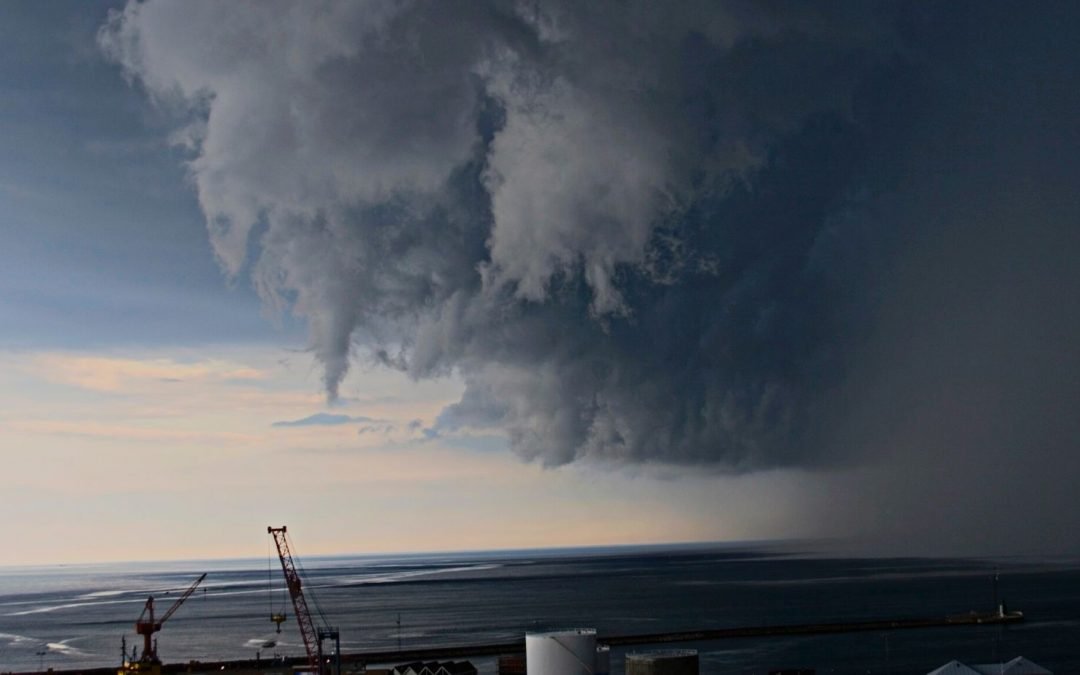
First day was a SE breeze which enabled me to put in the best day’s performance of the passage, 99nm. Then we hit the edge of the first system! It had been stuck off the UK for the past 48 hours and the sea state was 9m with a period of 12 seconds. With wind waves on top it was very uncomfortable causing random slamming and all but stopping forward progress. I turned round headed south and tried again. My log record says F6 SW, 2 reefs but I couldn’t get a suitable sail balance. 3 reefs was better and by the next day the wind had veered to NW F3 but the sea state was the issue, I made 27nm on the third day in the wrong direction. Things didn’t let up and it knocked the stuffing out of me and loosened a few fillings on me and the boat. Then the wind died and I was becalmed in the bay of Biscay for a couple of days. By day 7 the second weather system was upon me and for 4 days of triple reefed bashing into big seas but only managing 80° off the wind progress was very slow and by day 12 I was only ½ way between the UK and the Azores.
I had always intended to take the southern route and was aiming for 40N, 30W but couldn’t make this heading most of the time. Winds were south westerly for around 80% of the time and more often than not F6 or more. It was around this time I found I had a problem with the rigging so decided two things, sail very conservatively, i.e. more reefed than necessary, sheets not hard in and douse sails if slamming. Secondly, go to Azores to check things out.
Weather system 3 was upon me by day 15, it would have been reasonable to expect to be within striking distance of the Azores by now on a normal passage but I was over 500nm from Terciera. The latest weather system brought F7, gusting F8, NW’lies so at least I could make progress in the right direction, albeit with about 1.5m of jib set and main lashed to the boom.
I then had a really good day on day 19 with multiple dolphin sighting (where do they go when it is rough?) and 74nm progress in the right direction. F3 NNW with triple reefed main and genoa was ideal for what I wanted. Dolphins at night were incredible, setting off phosphorescent streamers all round the boat and making a lot of noise. Of course the photos were totally dark but this was the highlight of the trip. By now the wind direction had been steady enough for the sea state to build up and so things started to get uncomfortable again.
Once that system had passed I was on the edge of a high pressure system so with F1 SSE winds I made the most of it and had my second best mileage of the trip, 82nm. By day 23 I was in another system, number 4 for the passage, and spent most of it with just a very small jib and no main. It looked like I might make Praia do Vitória but the wind backed and pushed me south. The barometer was falling quite rapidly and the weatherfax was showing a deepening depression. This flattened out at 994mb so not bad at all. I still had F7 gusts keeping me on my toes and I hand steered all night to try for Terceira. The wind had backed to NW and so I resigned my self to missing Praia do Vitória and instead trying for Angra do Heroismo. On day 25 I had to motor for a few hours against the NW F5 to close Angra and as the lee of the island took hold the wind abated and I made the anchorage at first light.
25 days is probably one of the slowest Jester passages to the Azores and 4 weather systems in 3.5 weeks seems a lot for this time of year. None of the systems generated storm conditions but they did generate gales. I hove to during these but didn’t deploy a sea anchor and didn’t feel the need to. Due to the rigging problem I sailed the second half very cautiously. The great circle distance is 1,218 nm, my midday to midday totals was 1,378 nm and my satellite tracker based on 4 hourly positions was 1,879 nm. I probably travelled close to 2,000 to get the Azores and of the 25 days, only three were fine sailing days. The others were mostly poor because of sea state or I was becalmed. Sea state was the biggest factor, especially once I had found the problem with the rigging. Any 24 hour period of steady wind direction would cause the sea to become an issue. Similarly, a significant change in wind direction would knock the sea state back so fronts, especially cold ones, were things to look forward to. Much of this seems contrary to standard model weather; it is rough in Biscay, I was becalmed for almost 2 days. The Azores high can be relied upon, there were multiple sub lows that formed over the Azores and joined the main lows. Named storms are formed later in the season. Just after I arrived in the Azores Tropical Storm Alex formed over Bermuda and at one point was forecast to bring storm force winds to the Azores and to the UK.
Now the difficult bit, I have to get home through this!
You can read the complete story on Bernie’s blog page here.
About Bernie Branfield
I have been sailing since I was 7, I started in Mirror dinghies at the local gravel pit and made my way up to VLCCs for a large oil company as Third Mate. After a break for family life I bought a MacWester Rowan 22’, Chantilly, which I sailed to Holland, Belgium, France and Ireland as well as around the UK East Coast. I still have Chantilly. For a short time I owned an Achilles 24, Mischief, that I had hoped to sail to the Azores but abandoned this plan after an eventful trip back from Ireland. My current boat is an Invicta 26’ Mk2, Louisa, which I bought just before the Covid lockdown. Due to timing, work commitments and various other factors I decided to enter the 2022 Jester Challenge to Newport Rhode Island. When I am not sailing my own boat I try and crew on a yacht delivery each year to build up experience. I have around 30,000 sea miles in yachts and various qualifications including YM Offshore under my belt. Louisa was built in the early 1970s and suits my singlehanded sailing needs to a tee, she is moored at Hoo Ness Yacht Club on the River Medway in Kent.