Select Page

Take a look around the average boatyard and you will see examples of all kinds of different rudders and steering systems. Some rudders hang off the transom, some hang beneath the stern, others are built into the back of the keel, some look fine and elegant, others are crude and square – there really are all sorts.

One thing all rudders have in common is that they have three main parts that need to be checked: the rudder, or a steerable drive leg in the case of many power boats; the system that joins the rudder to the steering; the steering control itself.

Transom hung rudder

Traditional, aft hung rudders with tiller steering are the simplest form of rudder. A common form is the 3-point hung type with a laminated tiller attached through a hole in the top of the rudder. Fixed to the transom there are usually two or three metal eyes or gudgeons (made from bronze or stainless steel), through which metal pintles, with tangs attached to the rudder, slot into place. This forms a hinge. At the base of the rudder is a heel bearing which helps support the rudder.There are different ways for the rudder to be connected to the transom and also to the keel, depending on keel type. Some tillers are attached to the head of the rudder stock by metal straps.

Transom hung rudder checks:

  • Check whether the pintles and gudgeons are worn and how much play there is in the rudder as a result, by moving it from side to side and up and down. The pintles and gudgeons should be replaced if there is excessive wear – 2-3 mm is about the limit.
  • Check for loose fastenings. If these are found inspect wooden rudders or transoms for signs of rot.
  • Inspect stainless steel gudgeons and pintles for signs of corrosion. Be prepared to remove the rudder in order to make a full inspection.
  • Check the pivot bolt for wear.

Boat rudder, boat rudder maintenance

Skeg rudder

A skeg rudder is a variation of the transom hung rudder used by boats without a full length keel. The skeg hangs down below the hull in place of the keel, providing support and protection for the rudder. A full-skeg hangs down the full length of the rudder, while a half-skeg supports the upper part of the rudder only.

Skeg rudder checks:

  • As with all types of rudder, if there is a distinct vibration in the tiller when sailing, this indicates bearing failure.
  • Check all the pivot points for wear.
  • Check the condition of the skeg, as skegs are subjected to very large stresses at sea. Check the seam is not cracked and the laminate waterlogged as a result.
  • The bottom bearing of a skeg-hung rudder is usually very reliable but if there is excessive play then this will need replacing.

Boat rudder, boat rudder maintenance

Galvanic corrosion

Rudders, rudder fittings and stern drives are at risk of galvanic corrosion. If your boat’s rudder is made of metal it will most likely have a sacrificial anode bolted to it. This will need replacing when more than half of the anode has been lost to corrosion. Points worth remembering are:

  • Anodes will not work if they are painted over.
  • Make sure the metal is bare beneath the anode.
  • For outdrives, check your engine manual to be sure how many anodes you need and where they should go.

Preventative maintenance

Preventative maintenance is especially important for rudders. However, the annual maintenance of a rudder and steering system should be approached with some caution as there are not really any hard and fast rules that apply to all. It is always best to follow manufacturer’s recommendations. However, if you are unable to access this information or are unsure how best to proceed, then check with your boatyard or surveyor to find out precisely what needs to be done before going into DIY mode.

Take rudder bearings for example – some should never be greased, others require special synthetic grease. Roller bearings and seals should be replaced on a regular basis, normally every five years, according to manufacturer’s recommendations.

It is good practice to remove a rudder for a thorough inspection every four or five years and certainly before a long offshore voyage.
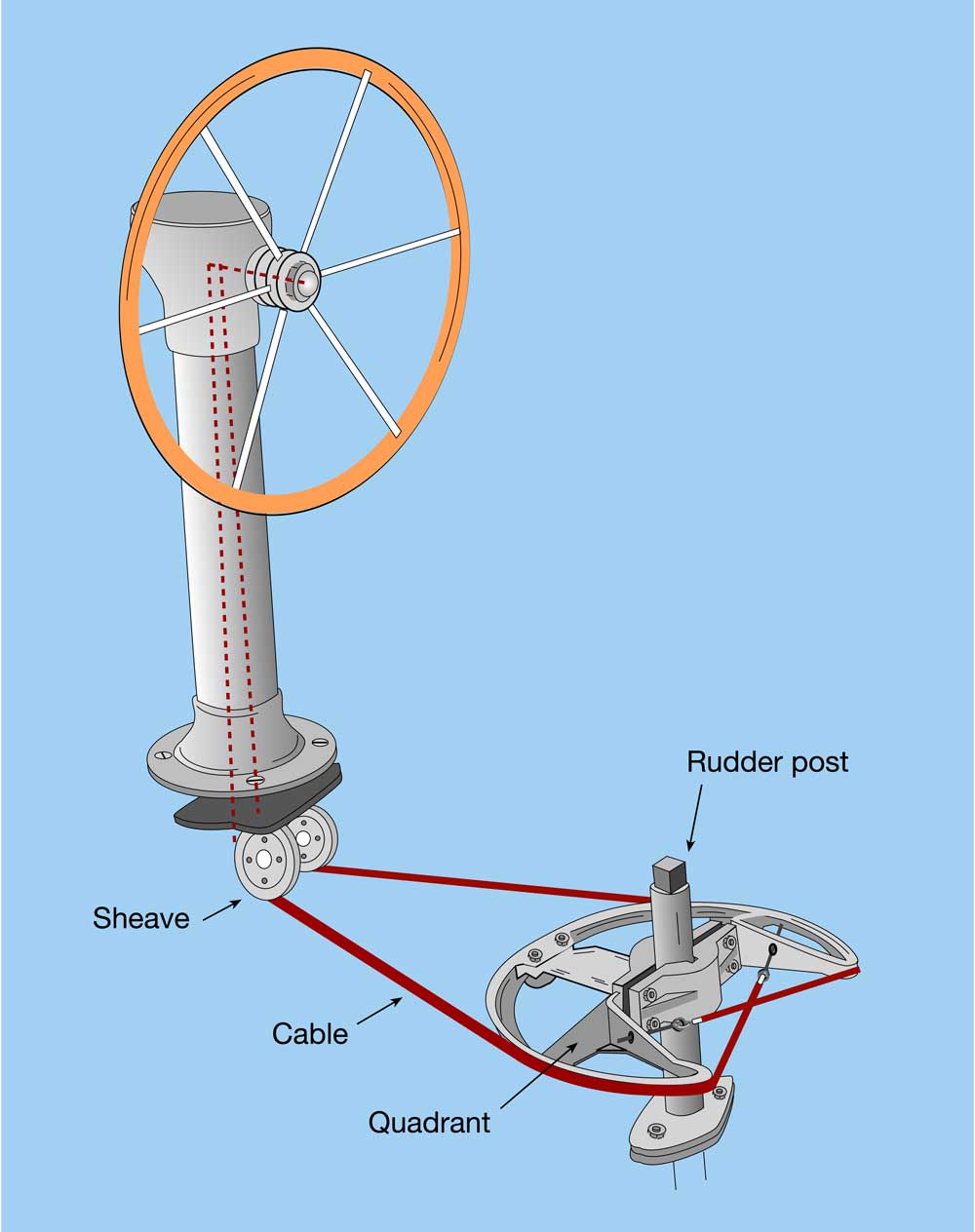
Boat Sterring systems, cable steering

Wheel steering systems

Wheel steering systems include cable operated types, push-rod and hydraulic systems. Here are some of the usual checks, but for all the specific requirements for your boat, refer to the manual:

  • Check cables for broken strands, which will need to be replaced if found.
  • Check and adjust cable tension if necessary, being careful not to over tighten.
  • Check all pivots, connections, split pins and adjusters.
  • Check the condition and tightness of bearings at the end of push-rods.
  • Check the fluid level in the reservoir of hydraulic systems and check for leaks.
  • Check all pivots for wear and all steering locking devices.

Cleaning & polishing gelcoat topsides

The gelcoat topsides of a GRP boat can be pampered and restored to their former glory relatively easily when it is ashore. Gelcoat is only a very thin outer layer of the hull, often less than 1mm thick, so you should avoid cleaning it with highly abrasive cleaners, or an-ything that could potentially damage its surface.

The Boatyard Book – a boat owner’s guide to yacht maintenance, repair and refitting

The Boatyard Book is a fully illustrated 224 page practical reference manual that provides advice for boat owners on planning and carrying out annual maintenance, repairs, upgrades and refits of sailing yachts and motorboats, up to 20 metres in length.

Boat maintenance – what does it involve?

The maintenance of a boat involves things like cleaning, varnishing, painting, polishing, antifouling, servicing the engine, servicing the seacocks, and maintaining the gas and plumbing systems. It all amounts to a fairly considerable amount of work that can’t be ignored if you are to keep your boat in a safe and good condition.

Repairing a leaking hull-to-deck joint

If you suspect a hull-to-deck joint has failed, then being absolutely sure where the actual leak is occurring is of prime...

Boat Security: Protecting your vessel from theft & vandalism

Boats are susceptible to theft and vandalism. Protecting your vessel from these risks requires a proactive approach to boat security. In this comprehensive guide, we’ll explore the various threats to boat security and provide practical strategies and technologies to safeguard your investment and enjoy peace of mind on the water.

Diesel engine winterisation

An inactive boat engine needs to be protected from corrosion during the winter, caused by the rising humidity levels through the cold months and the salty coastal air. This applies whether the boat is left afloat or hauled out over the winter. Read here about the two important stages of winterisaton for a diesel boat engine.

Winch Servicing

It is not essential to service the winches when a boat is ashore, but if time allows I prefer to do this maintenance job when the boat...

Seized fixings and fastenings

Maintaining a boat can be a rewarding experience but at times it can also be frustrating. A prime example of this is when you come across a seized fixing or fastening that refuses to budge. Read our tips on how to release and fix them:

Essential Yachting + Power Boat Safety Briefing

Yachting Safety Briefing   Down below Lifejackets and harnesses - fitting, when to wear, clipping on Gas - risks, precautions, gas bottles and...

Jester Challenge 2022 – Sailing single handed from Plymouth UK to the Azores: Getting to the Start

Jester Challenge – A modern experiment in old-fashioned self-reliance, self sufficiency, and personal responsibility. This is the start of a 10-part post where solo sailor, Bernie Branfield, shares his first hand account of his single-handed, 2022 Jester Challenge, from Plymouth, UK to the Azores, in his 26′ Invicta Mk2, Louisa.

Finding your way at sea: waypoints

Any sea voyage needs a certain amount of planning before it is undertaken. It makes sense to think about where you are going, how you will get there and what factors might influence your plan. Planning the route itself is also critical. One of the essential parts of modern navigation is the use of waypoints.

Navigation safety: a quick-reference mobile app to learn the ColRegs NavLights and Shapes

 Safety at SeaSafety at sea will always remains a topical and important subject that will no doubt dominate the syllabuses of nautical...

Wooden Hulls – Part 1

Traditional wooden boats have a plank on frame construction, a centuries old boat building method that is still in use today. Variations of the traditional method include carvel, clinker and strip planking, which all relate to the way the planking is attached to the frame.

Boat gas system maintenance

There are correct types of hose for marine plumbing, sewerage, exhaust, cooling and gas and all hoses should be checked regularly for wear and deterioration.

Keeping boat records and doing checks

A boat’s records should provide information about maintenance schedules, when major work was done and when equipment was replaced or added to the boat. Without this information you are left guessing when things are likely to need replacing in the future and also what the costs are likely to be.

How to ensure your boat is in proper working condition

In this article Eva Tucker from Volvo Penta presents a handy check list of all the things that you need to check regularly in order to make sure that your boat is in a seaworthy condition. Including maintenance, safety gear and electrical checks.

Sailing Safely at Night – Best Practice

Sailing at night can be a magical experience – the peaceful solitude, starry skies, and gentle lapping of waves create an unforgettable atmosphere. However, nighttime sailing also presents unique challenges and risks that require careful preparation and vigilance. This comprehensive guide will cover essential safety practices to ensure your nocturnal nautical adventures are both enjoyable and secure.

Boat Engine Failure – what to check

Engine failure If your engine fails or is overheating there are a number of things to check immediately: • Air filter...

Right boat vs Wrong boat – Over 30 Ways to Cut the Cost of Your Sailing and Cruising

Sailing and cruising offer unparalleled freedom and adventure, but they can quickly become costly. Fortunately, there are numerous strategies to help you enjoy the open water without breaking the bank. Here are over 30 practical ways to cut your sailing and cruising costs.

Essential Knots: Clove hitch

Essential Knots: Clove hitch Use: Tying a rope to posts, bollards, rings or a guardrail. Step 1. Make a turn around the object and lay...

Capsize – understanding the risks

A skipper should know how their boat will cope with rough seas. By working within known limits and understanding the risks,...

The dangers of running aground in a motor boat

The peril of grounding a motor boat is not only an inconvenience; it can lead to substantial risks for both the vessel and its passengers. . In this article, we’ll explore the potential dangers of running aground and highlight the importance of proper navigation and preparedness to avoid these hazards!

The give-way hierarchy – sail boats and power boats

Who gives way to who at sea? Even seasoned sailors sometimes get this wrong and in a crowded harbour this can easily lead to a collision or at best considerable embarrassment for a boat that mistakenly thinks it has right of way over another.

Tidal terms and definitions

Getting to grips with tidal terms and definitions can seem a little daunting, even to the most experienced sailors! Here we look at some of the key terms and definitions associated with the language of tides.

Peer to Peer yacht charter – How can you monetize your boat?

There is a growing trend in peer to peer yacht charter. How does it work? People already rent rooms, cars and bikes from one...