Select Page

Seacocks are often awkward to get at, awkward to open and close, and often ignored. Should they fail, the results can prove disastrous.

Most seacocks are sited well below the waterline, so they cannot be ignored if your vessel is to remain safe. If seacocks are always left open and neglected they can eventually seize which will prove a serious threat to boat safety should a connecting hose fail and the seacock refuses to close. There are three main types of seacock – ball valves, cone valves and gate valves.

Servicing seacocks

All through-hull fittings, including seacocks, should be serviced at least once a year. As well as cleaning and re-greasing the seacocks themselves, the condition of the hoses and stainless steel clips need to be checked and replaced as necessary. Make sure two hose clips are used at each end of the hoses connected to seacocks.

  • Ball valves – ball valves are hard wearing, but can stiffen and seize if they are not kept greased, which will also make them more likely to corrode. If a ball valve has become very stiff or seized, the first thing to do is use penetrating oil to try and loosen it. Even if it the valve is moving reasonably satisfactorily, it will still pay to take it apart and check it for corrosion, give it a clean and apply fresh waterproof grease to help keep it in good working condition. If on inspection the valve looks seriously corroded, then be prepared to replace it with a new one, even if it is still working, as trouble could be brewing. Remember to order a marine grade valve as they are also made for domestic systems.
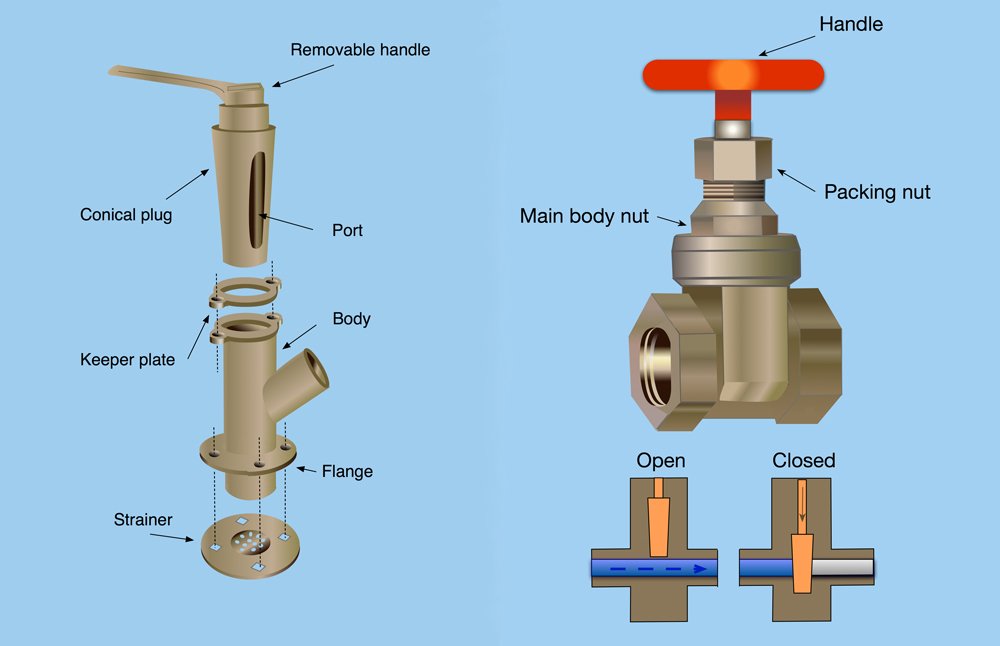
  • Cone valves – cone valves are usually made of bronze. They have a conical tube or plug that fits inside a cylindrical body which connects to a hose. The plug has a whole in one side and as it is turned by a handle the seacock is opened and closed. Although bronze is hard wearing the plug needs to be kept greased so that it can turn smoothly and to prevent corrosion. The plug is held in place by a keeper plate with two bolts and locking nuts which need careful adjustment to allow the valve to operate smoothly.

To service the valve, undo the keeper and remove the plug. Clean the plug and housing using a degreasing agent. Check the condition of the plug. Use grinding paste or fine wet and dry paper to polish the plug smooth before adding fresh seacock grease – note that any old grease is not recommended, it is best to use the manufacturer’s recommended waterproof grease, even if this is pricey. If the plug is badly pitted then it might need replacing.

  • Gate valves – gate valves should also be greased and inspected annually. They are usually made of brass with a circular handle connected to a threaded rod which moves up and down to open and close a gate in the valve. They are more prone to failure than cone and ball valves, being very susceptible to corrosion in the marine environment. The handles can get very stiff to operate and if they seize they will most like need to be replaced. If so, it would be best to replace with a ball or cone valve, which are considered more reliable. A big drawback with gate valves is there is no way of knowing whether the valve is open or closed when it is seized.
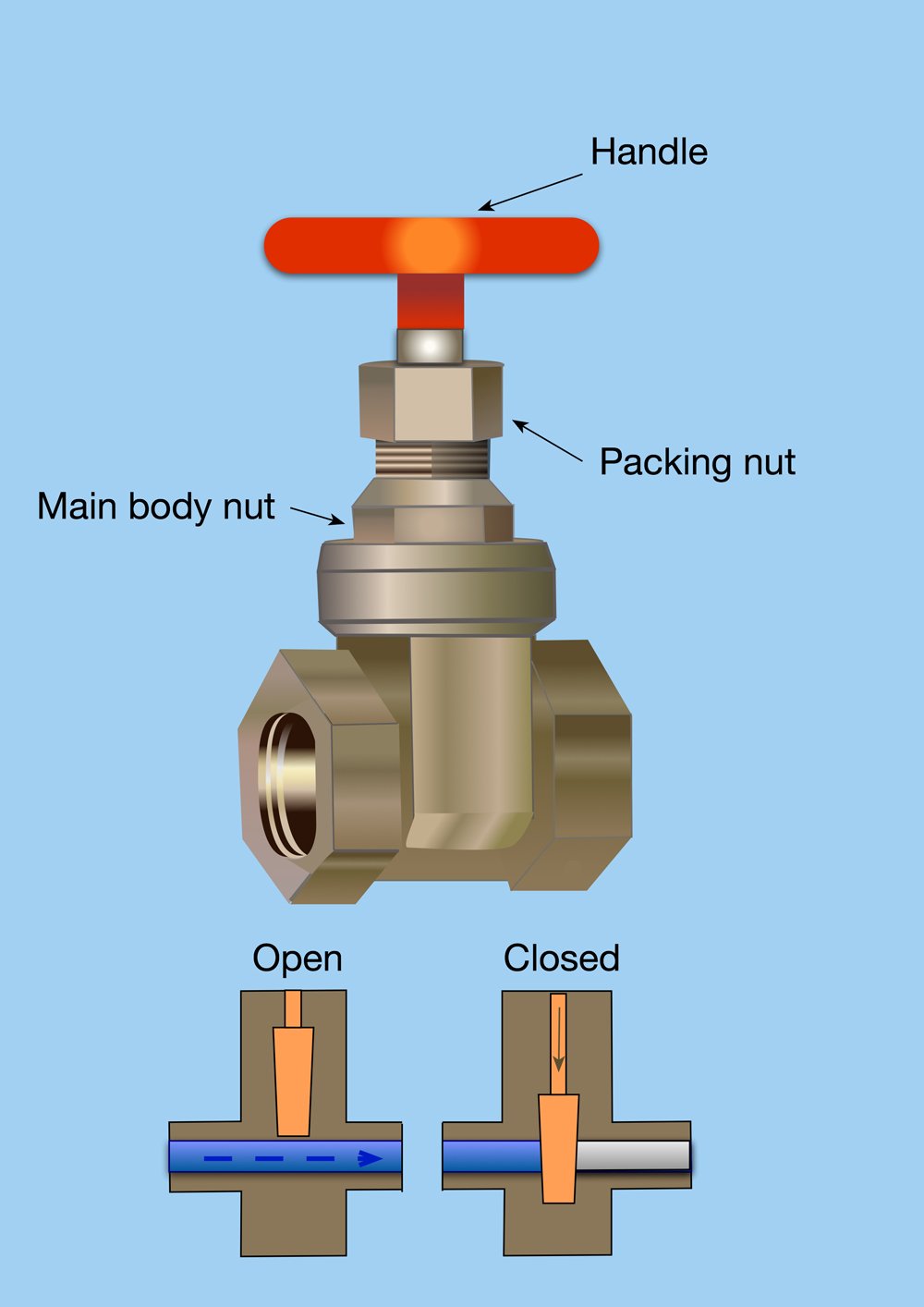
To service a gate valve, remove the valve body and dismantle it. Check for corrosion, clean and re-grease. Also check for damage to the bottom part of the gate which is quite common.

  • Jammed seacocks – seacocks can seize through lack of maintenance, corrosion or through lack of use. If a seacock is seized, start by spraying it with penetrating oil and leave it for an hour or two. Applying heat from a hot air gun also works. Resorting to a hammer is not good.

International Standard

The international standard for metal seacocks and through-hull fittings is ISO 9093-1:1998. When replacing a seacock check the replacement complies with this standard. Sub-standard fittings are more likely to corrode and fail.

Tips:

  • Make a note of where all seacocks and through-hull fittings are located.
  • Ensure all hoses attached to seacocks and through-hull fittings have two stainless steel hose-clips.
  • Tie a tapered softwood plug to each seacock and fitting. Plugs can be hammered into a hole in case of a fitting failure.

Common marine electrical problems

Most problems with marine electrical systems arise from four possible sources, a lack of maintenance, a poor standard of initial installation, insufficient battery capacity, or ineffective charging systems.
Water ingress is a frequent issue – salt water can corrode contacts very quickly. If connections are not scrupulously clean – or are loose – resistance will be increased, resulting in progressively reduced power.

Getting a tow for your sail or power boat at sea or on inland waterways

FREE tips from the Safe Skipper App for iPhone/iPad/Android: Getting a tow for your sail or power boat Plan how to secure a...

Capsize – understanding the risks

A skipper should know how their boat will cope with rough seas. By working within known limits and understanding the risks,...

2023 Rolex Fastnet Race

Safe Skipper’s Simon Jollands took part in the 2023 Rolex Fastnet Race – a classic offshore sailing event. This is the first of several articles on the race and focuses on the start.

Sailboat rig checks – Part 1

Sailing boat rigs need to be checked regularly to reduce the risk of rig failure at sea. In part one of Sail boat rig checks we run through a series of useful checks that owners and skippers can carry out.

Passage planning and pilotage

Passage planning and pilotage help skippers navigate safely from one port to another. A passage plan takes into account all...

Antifouling for leisure boats – Part 2

To prepare for antifouling, as soon as your boat has been lifted out and pressure washed, you need to check all the surfaces of the hull below the waterline, remove any remaining barnacles and check for blisters.

Antifouling for leisure boats – Part 1

Boats that are kept afloat can very quickly become a home for small marine organisms such as barnacles, weed and slime. Applying an antifouling paint to your hull is necessary to protect it from these micro-organisms, as a fouled hull can cause problems and will slow down a boat’s maximum speed considerably if left unchecked.

Crew Overboard Drill – Updated

How to respond to crew overboard A Man Overboard (MOB) drill is a crucial safety procedure that every boater should practice regularly. It simulates...

Marine toilets – care and maintenance

There are a number of different types of marine toilet, or heads. They fall into one of three categories – manual, electric and vacuum, the most common being the manual, hand pumped type. These have double acting piston-pumps which both discharge the waste and flush the toilet with sea water.

Rudders and steering systems – Part 2

One thing all rudders have in common is that they have three main parts that need to be checked: the rudder, or a steerable drive leg in the case of many power boats; the system that joins the rudder to the steering; the steering control itself.

Sailboat rig checks – Part 2

In part two of Sail boat rig checks we run through some useful rig maintenance tips and then finish with a brief look at what a professional rig check involves.

Sailing Safely at Night – Best Practice

Sailing at night can be a magical experience – the peaceful solitude, starry skies, and gentle lapping of waves create an unforgettable atmosphere. However, nighttime sailing also presents unique challenges and risks that require careful preparation and vigilance. This comprehensive guide will cover essential safety practices to ensure your nocturnal nautical adventures are both enjoyable and secure.

Seized fixings and fastenings

Maintaining a boat can be a rewarding experience but at times it can also be frustrating. A prime example of this is when you come across a seized fixing or fastening that refuses to budge. Read our tips on how to release and fix them:

Boat plumbing maintenance & troubleshooting

A boat’s fresh water system needs annual maintenance to keep it in good condition. Some boats have far more complex systems than others, with pressurised hot and cold water, associated pumps, an accumulator, calorifier and pressure valves, all to keep a boat owner busy.

Electric motors and hybrid systems

In recent years there have been considerable advances with the development of electrically powered propulsion in the leisure marine sector. This includes developments with inboard and outboard electric motors, hybrid systems, lithium-ion battery technology as well as solar, wind and hydro powered generators.

2023 Rolex Fastnet Race – Part 2

Simon Jollands took part in the 2023 Rolex Fastnet Race. This is the second of his articles on the race aboard Lancelot II, a Beneteau First 40.

Gybing a sailing boat

Gybing is the sailing manoeuvre used to change a boat's direction through a following wind. As with the tacking manoeuvre,...

Sail care and maintenance – Part 1

When thinking about the care, maintenance and repair of sails it helps to have some understanding of the properties of the ever growing range of modern sailcloth and the fibres they are made from, as opposed to the traditional canvas sails of the past.

Is Boating Good for Your Health and Happiness?

Absolutely! Boating offers a wealth of benefits for both your physical and mental well-being, making it a fantastic activity for overall health and...

Propeller care and maintenance

Propellers are complicated and repairs should be done by specialists but owners can carry out checks and some routine maintenance themselves when the boat is in the boatyard. A propeller is critical to a boat’s performance, fuel consumption and ride, so it makes sense to keep a propeller in good working order.

Fractures, sprains and dislocations at sea

Moving about a boat at sea often results in a few knocks and bruises, but if a crew member has a fall or major bump and is in serious pain, they should be examined and treated accordingly.

Understanding your mast and rigging

The rig of a sailing boat is put under huge stresses and strains so it is important for inspections of a yacht's spars and rigging to be...

How to improve a yacht’s upwind performance

There are several ways to improve the upwind performance of a sailing yacht. Read on for some useful tips including headsail reefing, heavy weather jibs and motor sailing.

Medical Emergency at Sea

How to deal with a medical emergency afloat   If you are planning a boating trip, it is important to have at least one...