Select Page

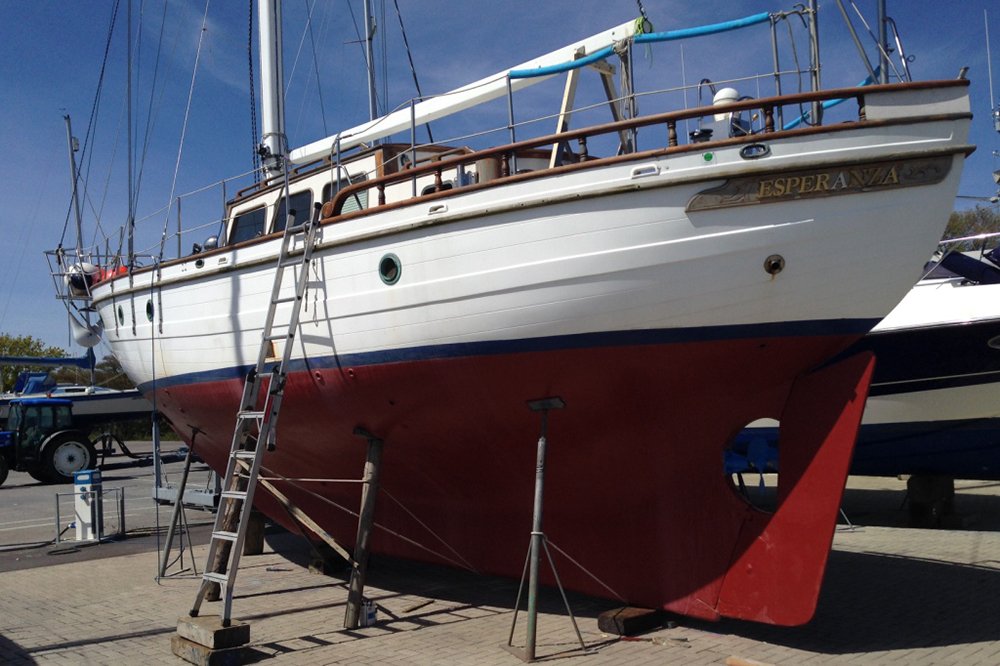
A full boat survey assesses the condition of the hull, mechanical gear and means of propulsion. The survey is carried out with the boat ashore in order to be able to properly inspect the hull and rudder.

A professional boat survey involves a thorough inspection that can take up to a day or longer. There are several types of survey that include a pre-purchase, condition and valuation survey; an insurance renewal and valuation survey; a damage assessment survey and a pre-sale survey.

While it is important to have professional surveys done when required, boat owners often carry out their own inspections or DIY surveys to ensure that any potential defects can be spotted early.

The following is an example of a typical pre-purchase survey of a GRP yacht:

  • The hull will be inspected for voids, de-lamination and damage. The surveyor will comment on the under hull condition, whether it has been gelshielded, antifouled and well maintained.
  • The surveyor will take moisture readings above and below the waterline and report whether these are acceptable level for the age and type of vessel.
  • All structural bulkheads and internal hull members will be checked.
  • The topsides will be checked and any repairs that need to be done will be listed.
  • The keel will be inspected for any defects and grounding damage.
  • The rudder and steering gear will be inspected, and the condition of the rudder mountings, bearings and pintles noted.
  • The stern gear will be inspected including the propeller, stern tube, stern gland and prop anode.
  • Deck hardware such as winches, cleats and stanchions, as well as the condition of the spars and rigging will also be recorded.
  • All skin fittings will be checked including the speed and depth transducers and the condition of the seacocks.
  • All seacock related pipework will be checked as will the condition of the sea toilet.
  • The shroud anchorage points will all be inspected, including the forestay fitting, inner forestay fitting and backstay fitting.
  • The engine beds and general condition of the engine will be checked.
  • The deck and superstructure will be examined by tapping with a small hammer over the outer surface. This is done to check for any voids or de-lamination.
  • Windows and hatches will be checked for any signs of leakage.
  • The stanchions, pushpit, pulpit and guardrails will be checked for the quality of fixings and whether they are all in a serviceable condition.
  • The deck gear will be checked.
  • The hull to deck joint will be checked for soundness.
  • The mast base will be checked.

Any defects will be recorded by the surveyor in their written report with recommendations given for any work that needs to be carried out.

Insurance renewal and valuation survey

It is normal practice to have a boat survey carried out every five years or so, possibly longer. Quite a bit can happen in the intervening years and this is where it can be very helpful for boat owners to learn how to inspect and troubleshoot defects and potential faults themselves.

Insurance companies will be particularly interested in knowing about any defects that could result in the loss of a vessel. They will also want a realistic assessment of the value of a vessel.

Damage assessment survey

A damage assessment survey determines the cause, nature and extent of an incident. This type of survey is usually required by insurance companies and the surveyors will often liaise with boat yards, engineers, insurance company and owner to determine the best option for carrying out repairs.

Pre-sale survey

A pre-sale survey allows the owner of a vessel to be in control of any issues that may be found when selling a vessel and avoid any nasty surprises. Potential issues can be resolved or discussed with potential buyers and brokers. 

DIY surveying

Doing your own boat inspections should not be considered a substitute for having a professional survey done every five years, which is a highly skilled process and a necessary part of your boat’s long term care. However, carrying out a DIY survey will help you identify and monitor potential problems at an early stage and to remedy them before they develop into a major issue.

For example, this might be knowing how to identify if there is excessive movement in the propeller shaft. How would you know if this is excessive movement if you had never checked the propeller shaft for movement in the past? If you are able to identify for yourself that this is excessive movement and has developed quite rapidly then you will know that this needs fixing and should be a high priority. If it has been the same for years then maybe it is not such a high priority but just needs regular monitoring.

DIY survey tools

Surveyors can often be found in boatyards tapping on the hulls and decks of boats with small hammers, listening carefully for sounds that indicate there could be a problem beneath the surface. While professional surveyors still do this, they also have all kinds of expensive, hi-tech moisture meters, ultrasound equipment, corrosion meters and various other testing gadgets. The good news is that carrying out a DIY survey requires little in the way of tools. These include:

  • Lightweight tack hammer – surveyors use hammers to search for signs of de-lamination in the hull. This is what they listen for:
    • As the hammer taps a GRP hull in good condition, a clear crisp sound should be heard and the hammer will bounce back.
    • A hammer tapping a GRP hull that has a wet core will make a dull, deeper sounding tone and will not bounce back.
  • Bradawl – a thin pointed tool like a bradawl is useful for prodding into cracks in a gelcoat and testing whether timbers might be rotten.
  • Scraper – a small scraper is handy for scraping away small areas of antifoul or flaking paint where necessary.
  • Duct tape – for marking spots or places that require attention.
  • Tape measure.
  • Notebook – for recording measurements and observations
  • Small mirror – an old dentist’s mirror is useful as it helps you to see into awkward places and around corners.
  • Magnifying glass – for taking a close look for hairline cracks
  • Head torch.
  • Smartphone – for taking photos. Also very useful as an additional torch.

Surveys are an important part of boat ownership, whether buying, selling or for insurance purposes. They are a safeguard that shouldn’t be avoided, don’t cost the earth and will prevent mishap at sea.

Essential Knots: Bowline

Essential Knots: Bowline Use: Making a secure eye or loop in the end of a rope. Bowlines have many uses on a boat, for example to make a...

Sailing & Motoring in Fog

Sailing & Motoring in Fog You can only measure the visibility accurately if sailing & motoring in fog when you have...

Avoiding personal dangers at sea

In order to stay safe at sea, we need to know the risks we are facing and to be aware of any personal dangers we could possibly encounter. Here are six of the most common potential dangers individual crew members should be aware of.

Understanding tides

If you are used to sailing in tidal waters, you will know that tides can be both a benefit and a hindrance to the sailor. In many ways,...

Leaking decks

Leaking decks are perceived as a nuisance by some boat owners, but if leaks are ignored a much more serious situation may well be developing, especially in the case of boats with balsa or plywood deck cores. So deck leaks do need to be investigated and dealt with.

Sailboat rig checks – Part 2

In part two of Sail boat rig checks we run through some useful rig maintenance tips and then finish with a brief look at what a professional rig check involves.

Safety at sea principles

Safety at sea is not as simple as just spending money adding shiny new emergency equipment such as liferafts, danbuoys, distress flares, EPIRBs and so on.

Jester Challenge 2022 – Sailing single handed from Plymouth UK to the Azores: Part 3 – Preparations

Jester Challenge – A modern experiment in old-fashioned self-reliance, self sufficiency, and personal responsibility. This is the third of a 10-part post where solo sailor, Bernie Branfield, shares his first hand account of his single-handed, 2022 Jester Challenge, from Plymouth, UK to the Azores, in his 26′ Invicta Mk2, Louisa.

Peer to Peer yacht charter – How can you monetize your boat?

There is a growing trend in peer to peer yacht charter. How does it work? People already rent rooms, cars and bikes from one...

What boating skills should you have before you buy a yacht?

Many people dream of owning a yacht and sailing off into the blue yonder. What boating skills should you have before you buy...

Boat maintenance below decks

While most interior maintenance work can be done when a boat is afloat, some jobs such as servicing the seacocks have to be done ashore. It makes sense to do any major interior repairs and improvements with the boat hauled out in the boatyard.

Boat batteries

Under-sized battery banks are one of the key factors behind power failure at sea, as well as the premature failure of batteries, so make sure that your boat battery measures up to the use you want to put it to.

Sending distress signals

In an emergency situation at sea, it is a top priority is to know how to send and receive emergency radio calls and alert others of your predicament. Likewise, if you receive a distress signal, you must be ready to go to the help of others.

Sailing to windward – how to take advantage of wind shifts

For most sailors, sailing upwind is the most exhilarating point of sail as you tack your way to your destination. Sailing to windward is a bit like zig-zagging your way up a mountain road through a series of hairpin bends – great fun but also calling for concentration and hard work.

Antifouling for leisure boats – Part 3

Antifouling is one of the least pleasant boat maintenance jobs to do, but it has to be done. The very worst job of all is removing the old antifouling as this can get seriously messy and is very hard work.

Seasickness – how can you prevent it?

Seasickness is a common problem at sea and affects both seasoned sailors and novices. What are the causes and symptoms of seasickness?...

A simple guide to understanding tides when passage planning

Understanding tides when passage planning When planning a trip in tidal waters, check the tides before going afloat. Use...

Jester Challenge 2022 – Sailing single handed from Plymouth UK to the Azores: Part 4 – Navigation

Jester Challenge – A modern experiment in old-fashioned self-reliance, self sufficiency, and personal responsibility. This is the fourth of a 10-part post where solo sailor, Bernie Branfield, shares his first hand account of his single-handed, 2022 Jester Challenge, from Plymouth, UK to the Azores, in his 26′ Invicta Mk2, Louisa.

Antifouling for leisure boats – Part 1

Boats that are kept afloat can very quickly become a home for small marine organisms such as barnacles, weed and slime. Applying an antifouling paint to your hull is necessary to protect it from these micro-organisms, as a fouled hull can cause problems and will slow down a boat’s maximum speed considerably if left unchecked.

Navigating narrow channels

Navigating narrow channels can present challenges for boat operators due to limited space, restricted manoeuvrability, and potential hazards such as shallows, rocks, or other vessels. To ensure safe passage through narrow channels, it’s essential to follow specific strategies and techniques.

Boat engine basics

Boat engines come in all shapes and sizes and include inboards, outboards, petrol, diesel, electric and hybrid systems. Some engines are...

Wooden Hulls – Part 2

It is important to ensure the essential hull maintenance of a wooden boat is done, even if you are paying others to look after your boat for you. The priority is to prevent rot from taking hold. The protective layers of paint and varnish over wood are far more critical than on GRP boats, where the topsides are painted more for cosmetic reasons.

Common marine electrical problems

Most problems with marine electrical systems arise from four possible sources, a lack of maintenance, a poor standard of initial installation, insufficient battery capacity, or ineffective charging systems.
Water ingress is a frequent issue – salt water can corrode contacts very quickly. If connections are not scrupulously clean – or are loose – resistance will be increased, resulting in progressively reduced power.

Sail care and maintenance – Part 1

When thinking about the care, maintenance and repair of sails it helps to have some understanding of the properties of the ever growing range of modern sailcloth and the fibres they are made from, as opposed to the traditional canvas sails of the past.

Fire prevention on boats

  Fire prevention on boats - common causes of fire: • Smoking below decks • Galley cookers • Build-up of butane or...