Select Page


Some people feel anxious at sea. Will they be seasick? What if they get caught in a violent storm? Could the boat capsize or sink? What if they fall overboard?

If a crew member is feeling anxious at sea then they may need reassuring by their crew mates. They need to know that such feelings are not uncommon. A lot hinges on developing an understanding of what the practical aspects of sailing involves, how we mitigate against risk at sea, and building confidence and skills. 

Anxiety, or fear, is natural. It is an emotion that evolved in humans to keep us safe from danger, so if you want to stay safe at sea then being a little anxious is sometimes a good thing.

Knowledge helps dispel fear

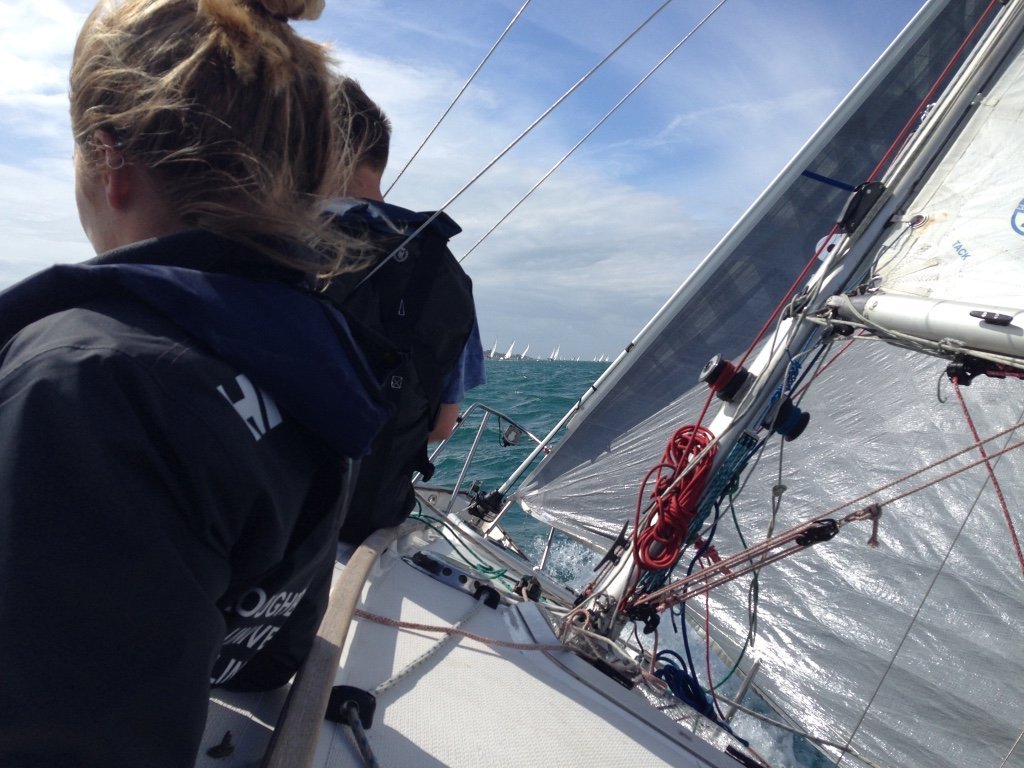
Ask the crew member why they may be feeling anxious at sea and what triggers their feelings of anxiety. When the boat heels over, do they feel a sudden sense of alarm, that the boat is going to keep on heeling and then capsize? Knowing the facts here is key. It will help if you remind them that a sailing boat is designed to heel over. The keel beneath the hull acts as a counterbalance and this stops the boat from rolling over. Understanding what is happening will help control this particular anxiety and others like it. 

Help the crew member to stop feeling anxious at sea

Are they afraid of losing their balance and falling overboard? In this case, there is nothing wrong in staying safe in the cockpit while the yacht is underway. If someone feels unsteady on their feet, then don’t expect them to venture up to the foredeck at sea until they are ready to do so. Encourage them to practice walking up to the foredeck when the boat is moored up. Make sure they learn where the handholds are around the deck and try to help them dispel negative thoughts.

Is the boat safe?

A good skipper will invariably have a deep respect for the sea. They will ensure the safety of their yacht and crew is their top priority. A good skipper will also reassure their crew that they won’t go to sea unless it is safe to do so. This means they will make sure that their boat is properly maintained and will carry out regular checks of all the gear, rigging, sails and engine. One of the reasons they do this is that they have learnt to leave nothing to chance. A good skipper gets to know about all the boat’s systems, inside and out. Should something go wrong then they will more than likely be able to fix it themselves.

Tips for crew members who feel anxious at sea:

  • Do not beat yourself up if you feel anxious. These are natural feelings when dealing with the unknown. Think back to the feelings you had when you learned to ride a bike or drive a car.
  • Allow yourself time to face your fears and get over them. 
  • Being in the know helps as knowledge dispels fear.
  • Be aware of the capabilities of the boat.
  • Practise safety drills.
  • Feel a sense of achievement in mastering a new skill. 
  • Make the very best of the beautiful sunsets, the sense of freedom that sailing brings and the company of the others, literally, in the same boat as you are.

Boat electrics

All boat owners should have a basic knowledge of electrics, both to avoid encountering electrical problems at sea and to stand a chance of solving them should they occur.

Seized fixings and fastenings

Maintaining a boat can be a rewarding experience but at times it can also be frustrating. A prime example of this is when you come across a seized fixing or fastening that refuses to budge. Read our tips on how to release and fix them:

Boat plumbing maintenance & troubleshooting

A boat’s fresh water system needs annual maintenance to keep it in good condition. Some boats have far more complex systems than others, with pressurised hot and cold water, associated pumps, an accumulator, calorifier and pressure valves, all to keep a boat owner busy.

How to read nautical charts

Whilst most sailors today rely on GPS to find their way at sea, nautical charts are a crucial tool for any sailor to navigate safely and effectively. Here is a reminder of some of the basic steps involved in reading a nautical chart:

Man Overboard Drill

How to respond to crew overboard under sail • Keep the MOB in sight • Tack into the heave-to position, do not adjust the...

Sail care and maintenance – Part 1

When thinking about the care, maintenance and repair of sails it helps to have some understanding of the properties of the ever growing range of modern sailcloth and the fibres they are made from, as opposed to the traditional canvas sails of the past.

Common marine electrical problems

Most problems with marine electrical systems arise from four possible sources, a lack of maintenance, a poor standard of initial installation, insufficient battery capacity, or ineffective charging systems.
Water ingress is a frequent issue – salt water can corrode contacts very quickly. If connections are not scrupulously clean – or are loose – resistance will be increased, resulting in progressively reduced power.

Jester Challenge 2022 – Sailing single handed from Plymouth UK to the Azores: Part 7 – Motivation

Jester Challenge – A modern experiment in old-fashioned self-reliance, self sufficiency, and personal responsibility. This is the seventh of a 10-part post where solo sailor, Bernie Branfield, shares his first-hand account of his single-handed, 2022 Jester Challenge, from Plymouth, UK to the Azores, in his 26′ Invicta Mk2, Louisa.

The dangers of running aground in a motor boat

The peril of grounding a motor boat is not only an inconvenience; it can lead to substantial risks for both the vessel and its passengers. . In this article, we’ll explore the potential dangers of running aground and highlight the importance of proper navigation and preparedness to avoid these hazards!

Boat Security: Protecting your vessel from theft & vandalism

Boats are susceptible to theft and vandalism. Protecting your vessel from these risks requires a proactive approach to boat security. In this comprehensive guide, we’ll explore the various threats to boat security and provide practical strategies and technologies to safeguard your investment and enjoy peace of mind on the water.

Sailing at the touch of a button

Easier and more controlled sail handling can also be achieved by powering up a furling mast. I came across some interesting solutions at the Southampton Boat Show this week on the Selden Mast stand, where they were running demos of their E40i electric winch and SMF furling system.

Essential Knots: Bowline

Essential Knots: Bowline Use: Making a secure eye or loop in the end of a rope. Bowlines have many uses on a boat, for example to make a...

Dripless shaft seals

Dripless shaft seals are designed to completely stop water from entering a boat’s hull via the stern tube. There are two main types of dripless seals known as face seals and lip seals which many boat manufacturers now fit to production boats.

Electric motors and hybrid systems

In recent years there have been considerable advances with the development of electrically powered propulsion in the leisure marine sector. This includes developments with inboard and outboard electric motors, hybrid systems, lithium-ion battery technology as well as solar, wind and hydro powered generators.

Essential Boat Buying Tips for First-Time Boat Owners

The first question that comes to mind when thinking about buying a boat is: what type of boat? There are more than 20 different kinds, of different sizes, for different purposes, and different pockets. So, your first step is to decide your boat type.

Essential Knots: Round turn and two half hitches

Essential Knots: Round turn and two half hitches Use: Tying a rope to a pole or a ring. Step 1. Pass the end around the object. Step 2....

How a propeller works

Have a look around any boatyard and you will notice quite a variety of propellers – some have two blades, some have three and others have four or more. While most propellers are completely rigid some have blades that fold.

Understanding your boat’s compass

Article submitted by Mike Rossiter, Certificated Compass Adjuster. Since the magnetic compass was first used by the Chinese...

Antifouling for leisure boats – Part 1

Boats that are kept afloat can very quickly become a home for small marine organisms such as barnacles, weed and slime. Applying an antifouling paint to your hull is necessary to protect it from these micro-organisms, as a fouled hull can cause problems and will slow down a boat’s maximum speed considerably if left unchecked.

Steel and Aluminium Hulls

The two metals used for hull construction are steel and aluminium. These are both very strong materials and will last a long time as long as they are cared for, which primarily means protecting steel boats from rust and aluminium boats from electrolytic action.

2023 Rolex Fastnet Race – Part 3

This is our third and final article about the 2023 Rolex Fastnet Race. It is a first hand account by Simon Jollands who was one of the crew of Lancelot II, a Beneteau First 40 skippered by John Gillard.

Know your Navlights & Shapes – essential for all skippers

Know your Navlights & Shapes International Regulations for Preventing Collisions at Sea (ColRegs) Anyone who is...

Propeller care and maintenance

Propellers are complicated and repairs should be done by specialists but owners can carry out checks and some routine maintenance themselves when the boat is in the boatyard. A propeller is critical to a boat’s performance, fuel consumption and ride, so it makes sense to keep a propeller in good working order.

First aid at sea – four common emergencies

In this blog we look at what to do in the event of a crew member choking, drowning, or suffering from hypothermia or fatigue. Knowing how to cope with them could well save a life, while not knowing could result in an avoidable tragedy.

Cleaning & polishing painted topsides

The gelcoat topsides of a GRP boat can be pampered and restored to their former glory relatively easily when it is ashore. Gelcoat is only a very thin outer layer of the hull, often less than 1mm thick, so you should avoid cleaning it with highly abrasive cleaners, or an-ything that could potentially damage its surface.