Select Page

Marine toilets – care and maintenance

There are a number of different types of marine toilet, or heads. They fall into one of three categories – manual, electric and vacuum, the most common being the manual, hand pumped type. These have double acting piston-pumps which both discharge the waste and flush the toilet with sea water.

Essential Knots: Sheet bend

Essential Knots: Sheet bend Use: Joining two ropes together. A sheet bend is particularly useful for joining two ropes of different...

Boat Improvements

My Boat - practical improvements Author - Mike Rossiter Most boat owners who have had their craft for any length of time will have made what they...

Safety Briefings – leave nothing to chance

Before giving your crew a safety briefing, it is worth considering the specific circumstances of the planned trip, the...

First Aid Afloat – Jellyfish Stings

Jellyfish stings are a common occurrence when boating or swimming in many parts of the world. While most stings are not serious, some can cause...

ColRegs Rule 14 – Head-on Situation

  ColRegs Rule 14: Head-on Situation (a) When two power-driven vessels are meeting on reciprocal or nearly reciprocal...

Navigation safety: a quick-reference mobile app to learn the ColRegs NavLights and Shapes

 Safety at SeaSafety at sea will always remains a topical and important subject that will no doubt dominate the syllabuses of nautical...

Liferafts

Liferafts should be stowed where they are ready for immediate launching. All crew should know the location of the liferaft and know how to launch, inflate and board it. They should also know what equipment it contains.

Dag Pike’s Boat Survey

We're really pleased to be working with Dag Pike on some great new apps for iPhone & Android. Here'a a bit more about the first app: Dag Pike's...

First aid at sea – four common emergencies

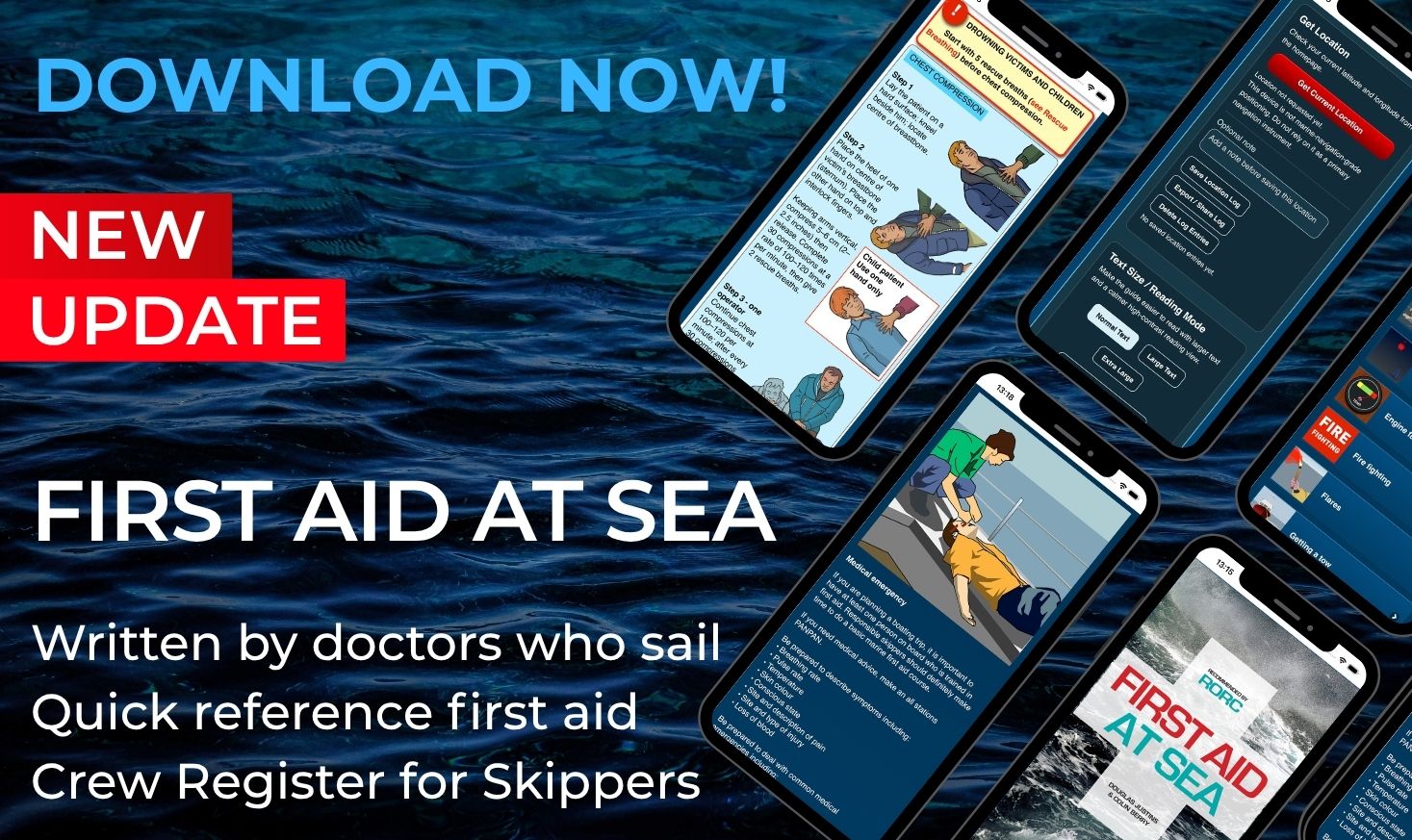
In this blog we look at what to do in the event of a crew member choking, drowning, or suffering from hypothermia or fatigue. Knowing how to cope with them could well save a life, while not knowing could result in an avoidable tragedy.

You Need To Understand The IRPCS ColRegs To Pass Your Yachtmaster, Master of Yachts and Coxswain Certificate of Competence

IRPCS ColRegs Rules of the Road at Sea and Yachtmaster Learning, understanding and remembering the International Regulations...

Boat maintenance log

Keeping a boat maintenance log is an ideal way of reminding owners what needs to be done to a boat and when. Read on for some tips,...

Medical Emergency at Sea

How to deal with a medical emergency afloat   If you are planning a boating trip, it is important to have at least one...

Boat interior inspection and checks

While a boat is ashore, the most critical interior checks to carry out are those that concern the safety of the boat. This entails the integrity of all through-hull fittings and seacocks, the gas system and the electrical system.

Keel maintenance and Repair – Part 2

If you have ever witnessed a boat colliding with a rock or other submerged obstacle you will know that there is an almighty thump and the whole boat shakes and judders. While such hard groundings seldom result in catastrophic keel failure, something has to give and even the sturdiest keels can easily be damaged by such an impact.

Jester Challenge 2022 – Sailing single handed from Plymouth UK to the Azores: Part 9 – Around the Azores

Jester Challenge – A modern experiment in old-fashioned self-reliance, self sufficiency, and personal responsibility. This is the ninth of a 10-part post where solo sailor, Bernie Branfield, shares his first-hand account of his single-handed, 2022 Jester Challenge, from Plymouth, UK to the Azores, in his 26′ Invicta Mk2, Louisa.

Sailing Safely at Night – Best Practice

Sailing at night can be a magical experience – the peaceful solitude, starry skies, and gentle lapping of waves create an unforgettable atmosphere. However, nighttime sailing also presents unique challenges and risks that require careful preparation and vigilance. This comprehensive guide will cover essential safety practices to ensure your nocturnal nautical adventures are both enjoyable and secure.

Pleasure craft safety equipment recommendations

Safety equipment is an important part of boat preparation and it is advisable for all pleasure craft skippers to check their vessel is...

Seized fixings and fastenings

Maintaining a boat can be a rewarding experience but at times it can also be frustrating. A prime example of this is when you come across a seized fixing or fastening that refuses to budge. Read our tips on how to release and fix them:

Stern gear maintenance

The stern gear of a boat needs to be checked carefully when the boat is ashore as this is something that can only be done when it is out of the water. The same applies for any maintenance and repairs that may need doing, so it is best to check it all over as soon after an end of season lift out as possible.

Rudders and steering systems – Part 3

In the third of our three blog articles on rudders and steering systems, we look at how to replace rudder bearings and repair a water-saturated core.

Keeping boat records and doing checks

A boat’s records should provide information about maintenance schedules, when major work was done and when equipment was replaced or added to the boat. Without this information you are left guessing when things are likely to need replacing in the future and also what the costs are likely to be.

Essential Boat Spares for Safety

  Boats Spares Tool kit What you carry in the boats tool kit will be useful for many boat repairs, but you might want...

Avoiding personal dangers at sea

In order to stay safe at sea, we need to know the risks we are facing and to be aware of any personal dangers we could possibly encounter. Here are six of the most common potential dangers individual crew members should be aware of.

Always have an emergency ditch bag ready to go…

An emergency ditch bag (also known as a grab bag, abandon ship bag, or go-bag) is a crucial piece of safety equipment for any vessel venturing out...

Welcome to the Safe Skipper website.


Safe Skipper is run by boating enthusiasts who also have a background in publishing and TV production, design and app development. As well as creating great content for the website, we’ve developed a range of popular boating apps that allow you to get safely out on the water whilst having essential information to hand, covering International ColRegs: Nav Lights & Shapes, Rules of the Road, Buoyage & Lights to knot tying, nautical chart symbols and first aid at sea – all information available to you when on the water, on your phone or tablet, when you need it.

We’re regularly adding new articles to the site, hope you’ll bookmark us and visit again soon.

Before you go, scroll down to our boating quizzes and check your boating knowledge!

Jester Challenge 2022 – Sailing single handed from Plymouth UK to the Azores: Part 6 – Communications

Jester Challenge – A modern experiment in old-fashioned self-reliance, self sufficiency, and personal responsibility. This is the sixth of a 10-part post where solo sailor, Bernie Branfield, shares his first-hand account of his single-handed, 2022 Jester Challenge, from Plymouth, UK to the Azores, in his 26′ Invicta Mk2, Louisa.

Boatyard Health and Safety

Boat storage facilities are potentially hazardous environments and it is the responsibility of both boat owners and boatyards to ensure that the...

First aid at sea basics

At least one person on board should be trained in first aid and know how to administer the contents of the first aid kit, ensuring there are adequate supplies for the planned duration of the trip.

Rudders and steering systems – Part 1

Rudders and steering systems. A rudder is one of the most critical parts of a boat. Rudder failure is a common occurrence on neglected or overworked boats and a very unpleasant and potentially dangerous thing to happen when you are out at sea.

Boating emergency – how to broadcast a MAYDAY emergency call

How to broadcast a MAYDAY emergency call   How to broadcast a MAYDAY emergency call if a vessel or person is in grave...

How to cope with an emergency at sea

A safe skipper will be mentally prepared for all kinds of potential emergencies happening at sea, including medical emergencies, engine failure, fire, a holed hull, capsize and dismasting.

Essential Yachting + Power Boat Safety Briefing

Yachting Safety Briefing   Down below Lifejackets and harnesses - fitting, when to wear, clipping on Gas - risks, precautions, gas bottles and...

Safety at sea principles

Safety at sea is not as simple as just spending money adding shiny new emergency equipment such as liferafts, danbuoys, distress flares, EPIRBs and so on.

Understanding your boat’s compass

Article submitted by Mike Rossiter, Certificated Compass Adjuster. Since the magnetic compass was first used by the Chinese...

Tidal heights and the rule of twelfths

For those skippers who need to make a quick calculation or don’t have access to specific tidal curves for their location, it is possible to make an approximation using a system called the Rule of Twelfths. This is a simple method used to estimate the height of tide at any given time during the tidal cycle. It is based on the idea that the rise and fall of the tide is not constant, but follows a predictable pattern than can be divided into twelve parts.

I have just downloaded and am using ColRegs Nav Lights & Shapes app, a brilliant training and reference device

Verified user

Instructor

Beautifully produced and very simple to use, a cool learning tool

Charlie

Sailor

Nav Lights & Shapes app – downloaded by 1000s of seafarers worldwide. Just one of our popular boating apps to download from the appstores for Apple and Android devices.

The give-way hierarchy at sea – who gives way to whom?

Whatever their size or type, all skippers have a responsibility to avoid collisions with other boats at sea.  It is...

Boat plumbing maintenance & troubleshooting

A boat’s fresh water system needs annual maintenance to keep it in good condition. Some boats have far more complex systems than others, with pressurised hot and cold water, associated pumps, an accumulator, calorifier and pressure valves, all to keep a boat owner busy.

The dangers of running aground in a motor boat

The peril of grounding a motor boat is not only an inconvenience; it can lead to substantial risks for both the vessel and its passengers. . In this article, we’ll explore the potential dangers of running aground and highlight the importance of proper navigation and preparedness to avoid these hazards!

Boat Engine Safety Checks

  Boat Engine Safety Checks Every skipper needs to make regular essential boat engine safety checks. Below you will...

Gybing a sailing boat

Gybing is the sailing manoeuvre used to change a boat's direction through a following wind. As with the tacking manoeuvre,...

Boat engine basics

Boat engines come in all shapes and sizes and include inboards, outboards, petrol, diesel, electric and hybrid systems. Some engines are...

Essential Knots: Round turn and two half hitches

Essential Knots: Round turn and two half hitches Use: Tying a rope to a pole or a ring. Step 1. Pass the end around the object. Step 2....

Navigating narrow channels

Navigating narrow channels can present challenges for boat operators due to limited space, restricted manoeuvrability, and potential hazards such as shallows, rocks, or other vessels. To ensure safe passage through narrow channels, it’s essential to follow specific strategies and techniques.

Essential Knots: Sheet bend

Essential Knots: Sheet bend Use: Joining two ropes together. A sheet bend is particularly useful for joining two ropes of different...

How to tackle osmosis

Many owners of old GRP boats live in fear of osmosis, but what exactly is osmosis and what can be done about it? Osmosis comes about...

Estimating your position at sea

Navigators use a combination of techniques to estimate their position at sea. The primary method used today is GPS (Global Positioning System), a network of 24 satellites that became fully operational in the 1990s and was originally restricted for use by the United States military.

Essential yacht tender safety for skippers and crew

Essential yacht tender safety - the dangers inherent in using a dinghy to get ashore from a moored or anchored yacht are all too easily...

Keeping boat records and doing checks

A boat’s records should provide information about maintenance schedules, when major work was done and when equipment was replaced or added to the boat. Without this information you are left guessing when things are likely to need replacing in the future and also what the costs are likely to be.

Essential Boat Spares for Safety

  Boats Spares Tool kit What you carry in the boats tool kit will be useful for many boat repairs, but you might want...

Cleaning & polishing gelcoat topsides

The gelcoat topsides of a GRP boat can be pampered and restored to their former glory relatively easily when it is ashore. Gelcoat is only a very thin outer layer of the hull, often less than 1mm thick, so you should avoid cleaning it with highly abrasive cleaners, or an-ything that could potentially damage its surface.

Boatyard Health and Safety

Boat storage facilities are potentially hazardous environments and it is the responsibility of both boat owners and boatyards to ensure that the...

First aid at sea – four common emergencies

In this blog we look at what to do in the event of a crew member choking, drowning, or suffering from hypothermia or fatigue. Knowing how to cope with them could well save a life, while not knowing could result in an avoidable tragedy.

Medical Emergency at Sea

How to deal with a medical emergency afloat   If you are planning a boating trip, it is important to have at least one...

Top Tips For Learning The ColRegs Boating Rules Of The Road

Colregs Boating Rules Of The Road
The International Regulations for Preventing Collisions at Sea (COLREGs) are a set of rules designed to prevent collisions between vessels. They are essentially the “rules of the road” for boats. Some key concepts within the COLREGs include:

Preparing for sailboat cruising

Preparing for a sailing trip entails a lot of planning. In this blog, we take a look at some of the many safety aspects that a skipper needs to consider before heading off on a cruise.

2026