Select Page

A five day sailing cruise of the Solent, UK

Welcome to our virtual Solent sailing cruise – a five day sail in the south of England from Bosham Quay in Chichester...

First aid at sea – four common emergencies

In this blog we look at what to do in the event of a crew member choking, drowning, or suffering from hypothermia or fatigue. Knowing how to cope with them could well save a life, while not knowing could result in an avoidable tragedy.

Rewiring a boat – overcoming the challenges involved

Skippers need to have a basic knowledge of boat electrics, to avoid potential problems and to be able to solve them when they happen.

Boat electrics inspection checklist

With the boat ashore, here are some recommendations for carrying out a boat owner electrics inspection. Safety is always paramount so remember to do the checks with the batteries off. Wearing a head torch helps, make notes as you go and only tackle a repair if you are 100% sure you know what you are doing:

First aid at sea basics

At least one person on board should be trained in first aid and know how to administer the contents of the first aid kit, ensuring there are adequate supplies for the planned duration of the trip.

Wooden Hulls – Part 1

Traditional wooden boats have a plank on frame construction, a centuries old boat building method that is still in use today. Variations of the traditional method include carvel, clinker and strip planking, which all relate to the way the planking is attached to the frame.

The dangers of running aground in a motor boat

The peril of grounding a motor boat is not only an inconvenience; it can lead to substantial risks for both the vessel and its passengers. . In this article, we’ll explore the potential dangers of running aground and highlight the importance of proper navigation and preparedness to avoid these hazards!

Tools and spares for your boat

Tools and Spares to take to sea!

You won’t regret taking a look at our essential tips and checklist to make sure you’re prepared for routine maintenance and those unexpected jobs that come up whilst you’re afloat!

Boat ownership – some fundamentals

Owning a boat is a big commitment that should bring no end of satisfaction, but the costs of maintaining and keeping a boat are significant and should never be underestimated.

Sailing & Motoring in Fog

Sailing & Motoring in Fog You can only measure the visibility accurately if sailing & motoring in fog when you have...

Right boat vs Wrong boat – Over 30 Ways to Cut the Cost of Your Sailing and Cruising

Sailing and cruising offer unparalleled freedom and adventure, but they can quickly become costly. Fortunately, there are numerous strategies to help you enjoy the open water without breaking the bank. Here are over 30 practical ways to cut your sailing and cruising costs.

Diesel engine winterisation

An inactive boat engine needs to be protected from corrosion during the winter, caused by the rising humidity levels through the cold months and the salty coastal air. This applies whether the boat is left afloat or hauled out over the winter. Read here about the two important stages of winterisaton for a diesel boat engine.

ColRegs Nav Lights & Shapes, Rules Of The Road and IALA Buoys Apps

ColRegs Nav Lights & Shapes, Rules Of The Road and IALA Buoys Apps Make Learning Rules on iPhone, iPad, iPod and Android...

Finding your way at sea: waypoints

Any sea voyage needs a certain amount of planning before it is undertaken. It makes sense to think about where you are going, how you will get there and what factors might influence your plan. Planning the route itself is also critical. One of the essential parts of modern navigation is the use of waypoints.

Boat interior inspection and checks

While a boat is ashore, the most critical interior checks to carry out are those that concern the safety of the boat. This entails the integrity of all through-hull fittings and seacocks, the gas system and the electrical system.

Jester Challenge 2022 – Sailing single handed from Plymouth UK to the Azores: Part 7 – Motivation

Jester Challenge – A modern experiment in old-fashioned self-reliance, self sufficiency, and personal responsibility. This is the seventh of a 10-part post where solo sailor, Bernie Branfield, shares his first-hand account of his single-handed, 2022 Jester Challenge, from Plymouth, UK to the Azores, in his 26′ Invicta Mk2, Louisa.

Fire prevention on boats

  Fire prevention on boats - common causes of fire: • Smoking below decks • Galley cookers • Build-up of butane or...

Essential boat engine checklist

Boat engine checklist Engine oil level check Even if you have checked it previously, confirming the engine oil level is up...

Jester Challenge 2022 – Sailing single handed from Plymouth UK to the Azores: Part 2 – Weather

Jester Challenge – A modern experiment in old-fashioned self-reliance, self sufficiency, and personal responsibility. This is the second of a 10-part post where solo sailor, Bernie Branfield, shares his first hand account of his single-handed, 2022 Jester Challenge, from Plymouth, UK to the Azores, in his 26′ Invicta Mk2, Louisa.

The VHF DSC Radio jargon buster

AIS - Automatic Identification System This system is used by shipping. It allows another vessel or coast station to use...

Feeling anxious at sea

  Some people feel anxious at sea. Will they be seasick? What if they get caught in a violent storm? Could the boat...

Cutless bearing replacement

Cutless bearings can last for many years but if the propeller shaft is out of alignment they will wear through more quickly. If you have noticed a clunking sound when motoring then it could be a worn cutless bearing that is causing the problem.

The give-way hierarchy – sail boats and power boats

Who gives way to who at sea? Even seasoned sailors sometimes get this wrong and in a crowded harbour this can easily lead to a collision or at best considerable embarrassment for a boat that mistakenly thinks it has right of way over another.

Stress cracks on GRP boats

It is quite common to find cracks in the gelcoat when inspecting the deck and superstructure of a GRP boat. It is important to differentiate between a gelcoat crack and a scratch.

How to cope with an emergency at sea

A safe skipper will be mentally prepared for all kinds of potential emergencies happening at sea, including medical emergencies, engine failure, fire, a holed hull, capsize and dismasting.

Welcome to the Safe Skipper website.


Safe Skipper is run by boating enthusiasts who also have a background in publishing and TV production, design and app development. As well as creating great content for the website, we’ve developed a range of popular boating apps that allow you to get safely out on the water whilst having essential information to hand, covering International ColRegs: Nav Lights & Shapes, Rules of the Road, Buoyage & Lights to knot tying, nautical chart symbols and first aid at sea – all information available to you when on the water, on your phone or tablet, when you need it.

We’re regularly adding new articles to the site, hope you’ll bookmark us and visit again soon.

Before you go, scroll down to our boating quizzes and check your boating knowledge!

Galvanic and electrolytic corrosion

Galvanic corrosion is an electrochemical reaction between two or more different metals, in the presence of an electrolyte (note salt water is a good electrolyte).

Narrowboating on the Kennet and Avon Canal

A recently cancelled sailing event I was due to take part in left us with a free weekend in the diary. Given that my wife and I were celebrating a bumper wedding anniversary and the weather forecast was for fine weather, we decided to hunt around for a last minute canal holiday.

Sending distress signals

In an emergency situation at sea, it is a top priority is to know how to send and receive emergency radio calls and alert others of your predicament. Likewise, if you receive a distress signal, you must be ready to go to the help of others.

Engine failure at sea – keeping the boat safe

If the engine stops when you are underway, or your have to shut it down when a warning buzzer sounds, you also need to make sure the boat remains safe. It’s important therefore to recognise situations in which the boat would be immediately put in danger if the engine were to fail.

Leaking decks

Leaking decks are perceived as a nuisance by some boat owners, but if leaks are ignored a much more serious situation may well be developing, especially in the case of boats with balsa or plywood deck cores. So deck leaks do need to be investigated and dealt with.

Seacock maintenance

If seacocks are always left open and neglected they can eventually seize which will prove a serious threat to boat safety should a connecting hose fail and the seacock refuses to close. There are three main types of seacock – ball valves, cone valves and gate valves.

Jester Challenge 2022 – Sailing single handed from Plymouth UK to the Azores: Part 5 – Boat Management

Jester Challenge – A modern experiment in old-fashioned self-reliance, self sufficiency, and personal responsibility. This is the fifth of a 10-part post where solo sailor, Bernie Branfield, shares his first hand account of his single-handed, 2022 Jester Challenge, from Plymouth, UK to the Azores, in his 26′ Invicta Mk2, Louisa.

Stress cracks on GRP boats

It is quite common to find cracks in the gelcoat when inspecting the deck and superstructure of a GRP boat. It is important to differentiate between a gelcoat crack and a scratch.

Liferafts

Liferafts should be stowed where they are ready for immediate launching. All crew should know the location of the liferaft and know how to launch, inflate and board it. They should also know what equipment it contains.

Essential Knots: Bowline

Essential Knots: Bowline Use: Making a secure eye or loop in the end of a rope. Bowlines have many uses on a boat, for example to make a...

I have just downloaded and am using ColRegs Nav Lights & Shapes app, a brilliant training and reference device

Verified user

Instructor

Beautifully produced and very simple to use, a cool learning tool

Charlie

Sailor

Nav Lights & Shapes app – downloaded by 1000s of seafarers worldwide. Just one of our popular boating apps to download from the appstores for Apple and Android devices.

Understanding tide tables and tidal curves

There are many factors that influence local tidal patterns and it’s essential for every sailor to have a good understanding of tide tables and tidal charts to ensure they can calculate the level of tide at any given time.

Light characteristics – how do navigators identify lights at night?

How do navigators identify the different types of light around our coasts at night and what are their characteristics?Navigating at...

Sailing Boat Rig Care

The rig of a sailing boat is put under huge stresses and strains so it is important for inspections of a yacht’s spars and rigging to be carried out at regular intervals.

Boat ownership

Owning a boat is a big commitment that should bring no end of satisfaction for the owner as well as the owner's family and friends. In...

Boat Engine Failure – what to check

Engine failure If your engine fails or is overheating there are a number of things to check immediately: • Air filter...

Competent crew skills: mooring lines

Mooring lines are used when arriving or leaving a berth. One of the most important competent crew skills is to know how to...

Seacock maintenance

If seacocks are always left open and neglected they can eventually seize which will prove a serious threat to boat safety should a connecting hose fail and the seacock refuses to close. There are three main types of seacock – ball valves, cone valves and gate valves.

Common marine electrical problems

Most problems with marine electrical systems arise from four possible sources, a lack of maintenance, a poor standard of initial installation, insufficient battery capacity, or ineffective charging systems.
Water ingress is a frequent issue – salt water can corrode contacts very quickly. If connections are not scrupulously clean – or are loose – resistance will be increased, resulting in progressively reduced power.

Jester Challenge 2022 – Sailing single handed from Plymouth UK to the Azores: Part 10 – The Return Trip

Jester Challenge – A modern experiment in old-fashioned self-reliance, self sufficiency, and personal responsibility. This is the final instalment of a 10-part post where solo sailor, Bernie Branfield, shares his first-hand account of his single-handed, 2022 Jester Challenge, from Plymouth, UK to the Azores, in his 26′ Invicta Mk2, Louisa.

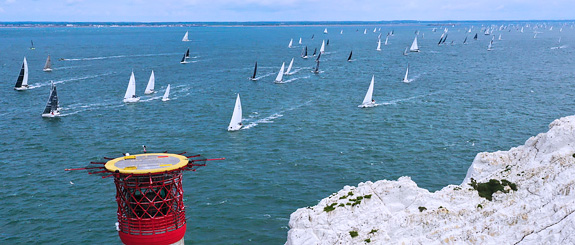
The Round The Island Race 2023

This year’s Round the Island Race turned out to be a really thrilling and competitive event. 1100 boats entered the race, which took place on Saturday 1st July. The race started from the world famous Royal Yacht Squadron line in Cowes UK, with the largest and fastest boats starting first, leaving the rest of us to wait our turn.

Keel maintenance and Repair – Part 2

If you have ever witnessed a boat colliding with a rock or other submerged obstacle you will know that there is an almighty thump and the whole boat shakes and judders. While such hard groundings seldom result in catastrophic keel failure, something has to give and even the sturdiest keels can easily be damaged by such an impact.

Boat Improvements

My Boat - practical improvements Author - Mike Rossiter Most boat owners who have had their craft for any length of time will have made what they...

Understanding tides

If you are used to sailing in tidal waters, you will know that tides can be both a benefit and a hindrance to the sailor. In many ways,...

ColRegs when sailing single handed

  Don’t neglect the Colregs when sailing single handed Sailing single-handed represents several challenges for skippers, not least how to...

Wooden Hull Repairs

While wooden boat hull maintenance is mostly straightforward, it is always a good idea to take expert advice on any repair job needed doing to a wooden boat, unless you have done the job before and know what you are doing.

Antifouling for leisure boats – Part 1

Boats that are kept afloat can very quickly become a home for small marine organisms such as barnacles, weed and slime. Applying an antifouling paint to your hull is necessary to protect it from these micro-organisms, as a fouled hull can cause problems and will slow down a boat’s maximum speed considerably if left unchecked.

Jester Challenge 2022 – Sailing single handed from Plymouth UK to the Azores: Part 8 – Arriving at the Azores

Jester Challenge – A modern experiment in old-fashioned self-reliance, self sufficiency, and personal responsibility. This is the eighth of a 10-part post where solo sailor, Bernie Branfield, shares his first-hand account of his single-handed, 2022 Jester Challenge, from Plymouth, UK to the Azores, in his 26′ Invicta Mk2, Louisa.

How to read nautical charts

Whilst most sailors today rely on GPS to find their way at sea, nautical charts are a crucial tool for any sailor to navigate safely and effectively. Here is a reminder of some of the basic steps involved in reading a nautical chart:

Passage planning and pilotage

Passage planning and pilotage help skippers navigate safely from one port to another. A passage plan takes into account all...

Rudders and steering systems – Part 2

One thing all rudders have in common is that they have three main parts that need to be checked: the rudder, or a steerable drive leg in the case of many power boats; the system that joins the rudder to the steering; the steering control itself.

2026