Sailing Safely at Night – Best Practice
by Safe Skipper | Boat Handling, Communications, Crewing skills, Emergencies, Navigation, Yacht ownership
Sailing at night can be a magical experience – the peaceful solitude, starry skies, and gentle lapping of waves create an unforgettable atmosphere. However, nighttime sailing also presents unique challenges and risks that require careful preparation and vigilance. This comprehensive guide will cover essential safety practices to ensure your nocturnal nautical adventures are both enjoyable and secure.
Fixing position at sea using traditional methods
by Simon Jollands | Communications, Crewing skills, Navigation, Preparation
This post looks at some traditional methods used for fixing a vessel’s position at sea, within sight of land. Electronic fixes using chart plotters are very straightforward to record, but if for some reason a vessel’s electronics are faulty it is essential that a skipper knows how to use traditional methods.
ESSENTIAL BOATING APPS >>
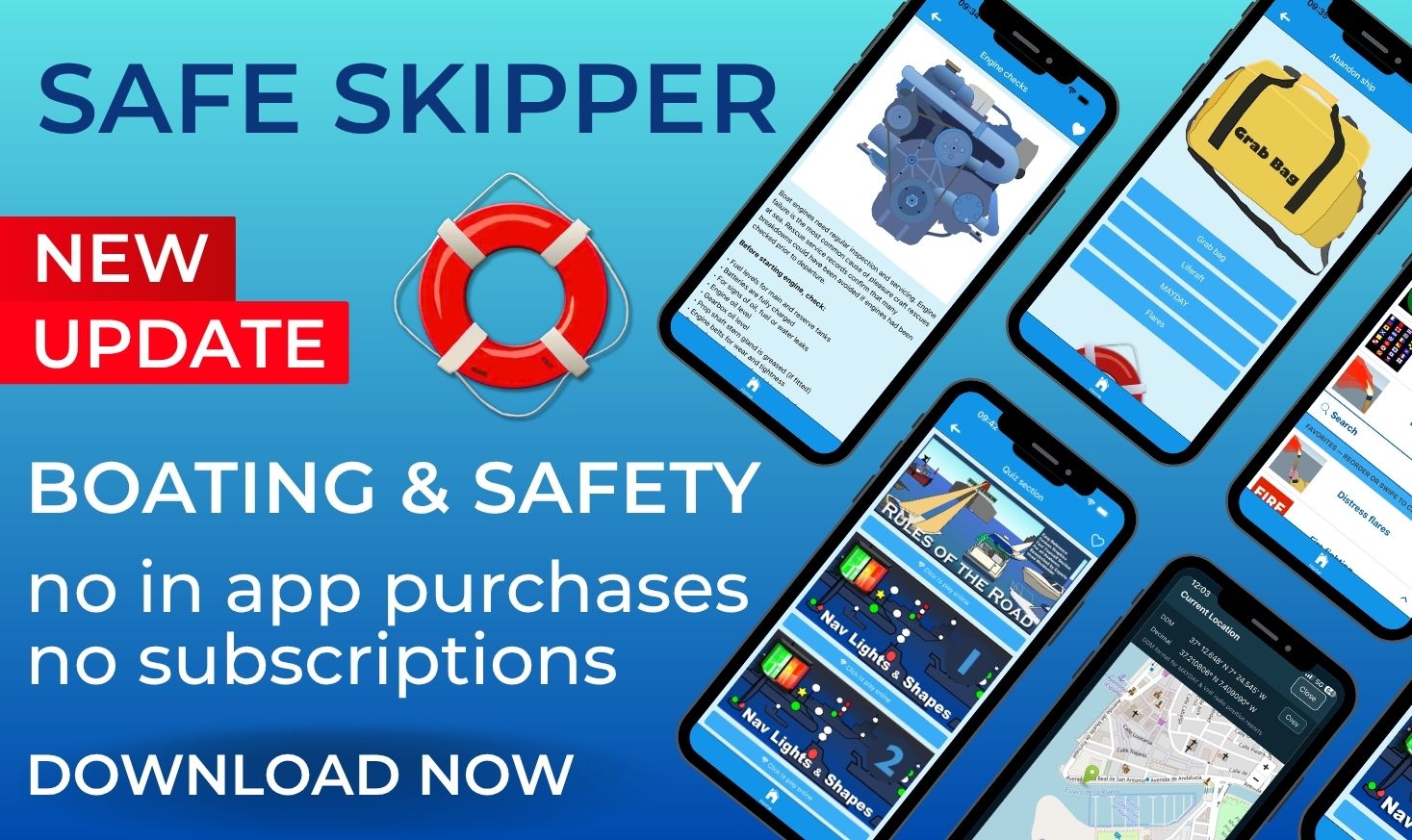
Safe Skipper App – a practical guide to managing risk at sea
Fast access to essential boating tips, emergency guidance & MAYDAY call support. Record vessel details & crew information. Save favourites & location. Be better prepared!

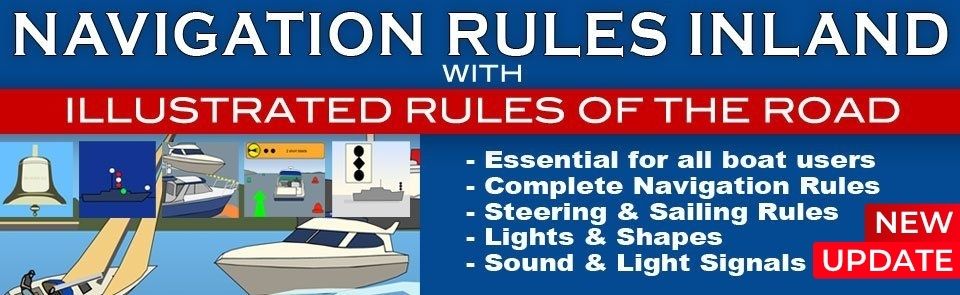
US Inland Navigation Rules App
Complete Inland Navigation Rules for all U.S. inland waters and the Great Lakes.
With 100+ specially produced explanatory illustrations and captions, for all recreational and commmercial vessels navigating US intracoastal waterways and the Great Lakes.

ColRegs: Navigation Lights & Shapes App
Provides skippers and crew of sailboats, power boats and commercial vessels worldwide with a quick reference tool to identify vessels in their vicinity and the activities they are engaged in.

Knot Bible - Knots Made Easy
Learn the 50 essential boating knots for mooring, anchoring and rigging, with step-by-step photos, save favourites, search, clear instructions and practical Knot Scores.

ColRegs: Buoys & Lights App
All the essential quick reference knowledge you need to quickly recognise and interpret the buoys and the light markers and improve your overall boating skills and safety on the water.
As specified by the International Association of Lighthouse Authorities (IALA) Systems A & B.

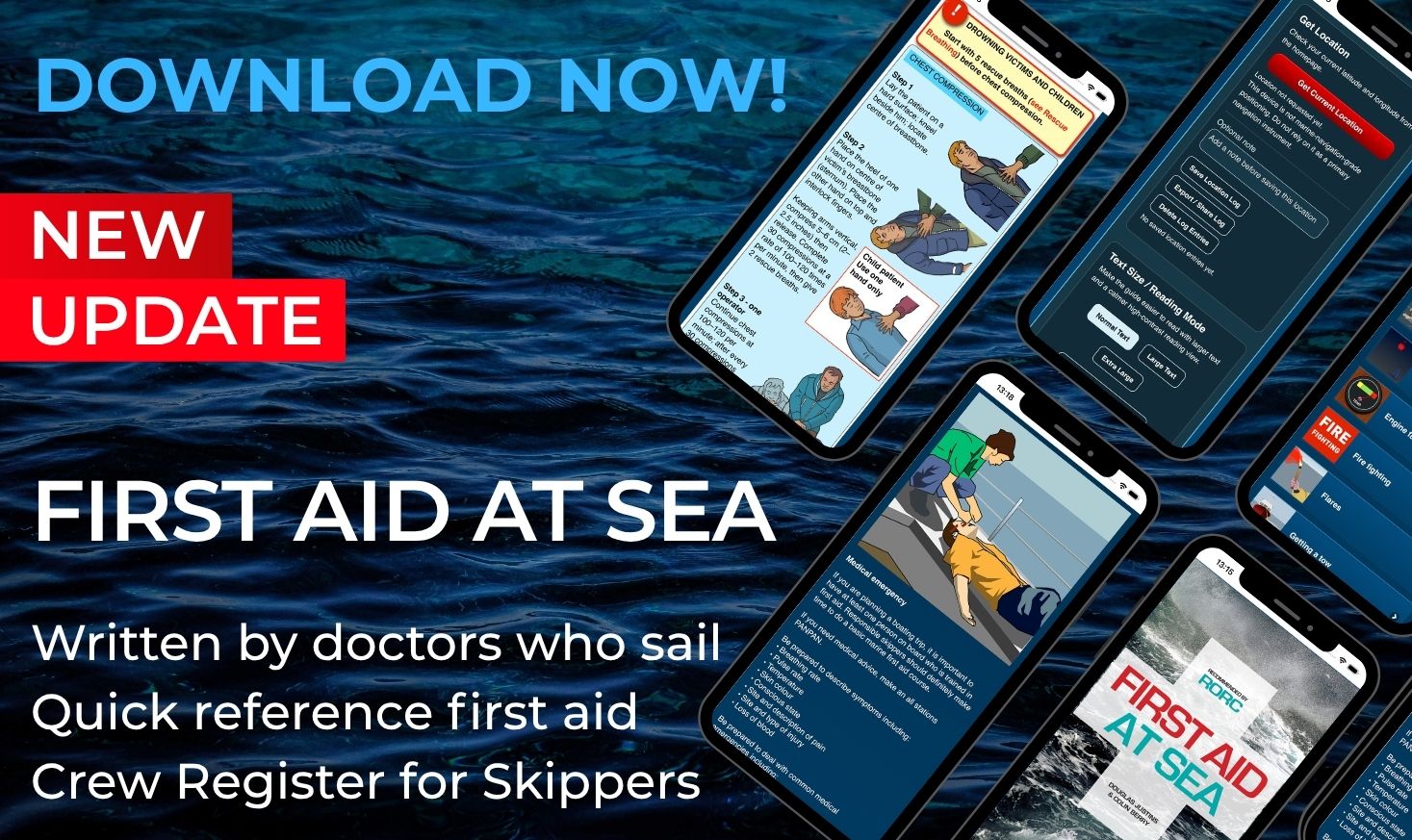
Boating First Aid at Sea
This app provides rapidly accessible guidelines for dealing with medical emergencies in a small boat or yacht at sea.
As well as detailing medical procedures the app also provides information on emergency communications.
Take a look at the new features!

ColRegs: Rules of the Road App
A quick reference tool and educational app that enables the user to quickly interpret what other vessels are doing, who has right of way and what action they should take to prevent a possible collision, as defined by the ColRegs.
Leaking decks
Leaking decks are perceived as a nuisance by some boat owners, but if leaks are ignored a much more serious situation may well be developing, especially in the case of boats with balsa or plywood deck cores. So deck leaks do need to be investigated and dealt with.
Wooden Hulls – Part 1
Traditional wooden boats have a plank on frame construction, a centuries old boat building method that is still in use today. Variations of the traditional method include carvel, clinker and strip planking, which all relate to the way the planking is attached to the frame.
Boat decks and superstructure
The deck of a boat is constantly exposed to the elements and should be inspected on an annual basis. Particular attention needs to be given to the overall condition of deck fittings such as the stanchions, cleats and chainplates.
Steel and Aluminium Hulls
The two metals used for hull construction are steel and aluminium. These are both very strong materials and will last a long time as long as they are cared for, which primarily means protecting steel boats from rust and aluminium boats from electrolytic action.
Winch Servicing
Understanding your boat’s compass
Jester Challenge 2022 – Sailing single handed from Plymouth UK to the Azores: Part 7 – Motivation
Jester Challenge – A modern experiment in old-fashioned self-reliance, self sufficiency, and personal responsibility. This is the seventh of a 10-part post where solo sailor, Bernie Branfield, shares his first-hand account of his single-handed, 2022 Jester Challenge, from Plymouth, UK to the Azores, in his 26′ Invicta Mk2, Louisa.
Keeping boat records and doing checks
A boat’s records should provide information about maintenance schedules, when major work was done and when equipment was replaced or added to the boat. Without this information you are left guessing when things are likely to need replacing in the future and also what the costs are likely to be.
Jester Challenge 2022 – Sailing single handed from Plymouth UK to the Azores: Part 6 – Communications
Jester Challenge – A modern experiment in old-fashioned self-reliance, self sufficiency, and personal responsibility. This is the sixth of a 10-part post where solo sailor, Bernie Branfield, shares his first-hand account of his single-handed, 2022 Jester Challenge, from Plymouth, UK to the Azores, in his 26′ Invicta Mk2, Louisa.
How to Avoid Collisions At Sea With The ColRegs
Boatyard Health and Safety
Understanding boat engines
Irrespective of what kind of engine a boat is equipped with and who does the work, the regular care and maintenance of a marine engine is essential. The most common cause of marine engine failure is widely known to be lack of maintenance.
Navigating the Unknown: Boating in Limited Visibility
Sailing or Motor Boating in limited visibility, whether due to darkness, fog, or other adverse weather conditions, presents unique challenges for mariners. It requires a combination of skill, experience, and adherence to safety protocols to ensure a safe and enjoyable journey. In this article we will delve into the intricacies of sailing in such conditions, providing insights into preparation, navigation, and collision avoidance.
Rudders and steering systems – Part 2
One thing all rudders have in common is that they have three main parts that need to be checked: the rudder, or a steerable drive leg in the case of many power boats; the system that joins the rudder to the steering; the steering control itself.
Pre-start engine checks
According to the Royal National Lifeboat Institution (RNLI) almost one third of emergency call outs at sea are caused by mechanical failure. Many engine breakdowns are avoidable. The best way to avoid a breakdown is to carry out pre-start checks before heading out to sea.
Galvanic and electrolytic corrosion
Galvanic corrosion is an electrochemical reaction between two or more different metals, in the presence of an electrolyte (note salt water is a good electrolyte).
Essential Boat Safety Briefing
Going aground – what to do if it happens to you
When a yacht runs aground, it can be a stressful situation, especially on a falling tide in an exposed position with a swell running. There are several steps you can take to address the situation in order to ensure the safety of your vessel and its occupants. Here are some tips should this happen to you.
Common medical emergencies at sea
A medical emergency aboard a boat at sea requires immediate attention to ensure the safety of the casualty and the crew in general. The skipper needs to know which crew members, if any, have had medical training or have a first aid qualification. All boats should carry first aid handbooks to help an untrained crew cope with a medical emergency.
Seacock maintenance
If seacocks are always left open and neglected they can eventually seize which will prove a serious threat to boat safety should a connecting hose fail and the seacock refuses to close. There are three main types of seacock – ball valves, cone valves and gate valves.
Jester Challenge 2022 – Sailing single handed from Plymouth UK to the Azores: Part 3 – Preparations
Jester Challenge – A modern experiment in old-fashioned self-reliance, self sufficiency, and personal responsibility. This is the third of a 10-part post where solo sailor, Bernie Branfield, shares his first hand account of his single-handed, 2022 Jester Challenge, from Plymouth, UK to the Azores, in his 26′ Invicta Mk2, Louisa.
Essential Boat Spares for Safety
Tidal terms and definitions
Getting to grips with tidal terms and definitions can seem a little daunting, even to the most experienced sailors! Here we look at some of the key terms and definitions associated with the language of tides.
Boat maintenance below decks
While most interior maintenance work can be done when a boat is afloat, some jobs such as servicing the seacocks have to be done ashore. It makes sense to do any major interior repairs and improvements with the boat hauled out in the boatyard.
Welcome to the Safe Skipper website.
Safe Skipper is run by boating enthusiasts who also have a background in publishing and TV production, design and app development. As well as creating great content for the website, we’ve developed a range of popular boating apps that allow you to get safely out on the water whilst having essential information to hand, covering International ColRegs: Nav Lights & Shapes, Rules of the Road, Buoyage & Lights to knot tying, nautical chart symbols and first aid at sea – all information available to you when on the water, on your phone or tablet, when you need it.
We’re regularly adding new articles to the site, hope you’ll bookmark us and visit again soon.
Before you go, scroll down to our boating quizzes and check your boating knowledge!
Estimating your position at sea
Navigators use a combination of techniques to estimate their position at sea. The primary method used today is GPS (Global Positioning System), a network of 24 satellites that became fully operational in the 1990s and was originally restricted for use by the United States military.
Cutless bearing replacement
Cutless bearings can last for many years but if the propeller shaft is out of alignment they will wear through more quickly. If you have noticed a clunking sound when motoring then it could be a worn cutless bearing that is causing the problem.
Jester Challenge 2022 – Sailing single handed from Plymouth UK to the Azores: Part 3 – Preparations
Jester Challenge – A modern experiment in old-fashioned self-reliance, self sufficiency, and personal responsibility. This is the third of a 10-part post where solo sailor, Bernie Branfield, shares his first hand account of his single-handed, 2022 Jester Challenge, from Plymouth, UK to the Azores, in his 26′ Invicta Mk2, Louisa.
Finding your way at sea: waypoints
Any sea voyage needs a certain amount of planning before it is undertaken. It makes sense to think about where you are going, how you will get there and what factors might influence your plan. Planning the route itself is also critical. One of the essential parts of modern navigation is the use of waypoints.
Rudders and steering systems – Part 1
Rudders and steering systems. A rudder is one of the most critical parts of a boat. Rudder failure is a common occurrence on neglected or overworked boats and a very unpleasant and potentially dangerous thing to happen when you are out at sea.
Sector lights, directional lights, leading lights – how do they differ?
Boating Etiquette: Do’s and Don’ts on the Water
Boating etiquette is essential for ensuring the safety, enjoyment, and harmony of everyone on the water. Whether you’re a seasoned boater or new to the boating community, it’s important to be aware of the do’s and don’ts of boating etiquette. Take a look at our guidelines:
Sailboat rig checks – Part 2
In part two of Sail boat rig checks we run through some useful rig maintenance tips and then finish with a brief look at what a professional rig check involves.
2023 Rolex Fastnet Race – Part 2
Simon Jollands took part in the 2023 Rolex Fastnet Race. This is the second of his articles on the race aboard Lancelot II, a Beneteau First 40.
Essential Boat Safety Briefing
I have just downloaded and am using ColRegs Nav Lights & Shapes app, a brilliant training and reference device
Instructor
Beautifully produced and very simple to use, a cool learning tool
Sailor
Nav Lights & Shapes app – downloaded by 1000s of seafarers worldwide. Just one of our popular boating apps to download from the appstores for Apple and Android devices.
Anchoring – getting it right
Passage planning and pilotage
Gybing a sailing boat
The dangers of running aground in a motor boat
The peril of grounding a motor boat is not only an inconvenience; it can lead to substantial risks for both the vessel and its passengers. . In this article, we’ll explore the potential dangers of running aground and highlight the importance of proper navigation and preparedness to avoid these hazards!
Going aground – what to do if it happens to you
When a yacht runs aground, it can be a stressful situation, especially on a falling tide in an exposed position with a swell running. There are several steps you can take to address the situation in order to ensure the safety of your vessel and its occupants. Here are some tips should this happen to you.
Weather forecasting resources and tips
All competent sailors need to have a good basic understanding of how to interpret a weather forecast. They also need to be able to interpret the actual conditions they are experiencing.
The give-way hierarchy – sail boats and power boats
Who gives way to who at sea? Even seasoned sailors sometimes get this wrong and in a crowded harbour this can easily lead to a collision or at best considerable embarrassment for a boat that mistakenly thinks it has right of way over another.
Competent crew skills: arriving and leaving a berth
How to trim a genoa sail
I recently had two new sails made by Sanders Sails, based in Lymington UK. The first to arrive was the new genoa and it took me a little while to get to know it and learn how to adjust it correctly. Here is an aide memoire for getting to know how to trim a genoa so that it will deliver the best performance.
Essential Knots: Sheet bend
ColRegs – avoiding collisions at sea
Saildrive maintenance
There are less maintenance tasks to carry out on a saildrive transmission than on a traditional inboard shaft drive system with its associated stern gear. However, there are a few critical things that require maintenance, as recommended in detail by the engine manufacturers, and should be adhered to.
The give-way hierarchy at sea – who gives way to whom?
Marine engine oil system maintenance
The regular maintenance of a marine diesel is key to preventing engine failure at sea. This means doing regular checks of the fuel, cooling, electrical and oil systems.
Avoiding collisions at sea – how to stay safe on the water
ColRegs Rule 14 – Head-on Situation
Boat plumbing maintenance & troubleshooting
A boat’s fresh water system needs annual maintenance to keep it in good condition. Some boats have far more complex systems than others, with pressurised hot and cold water, associated pumps, an accumulator, calorifier and pressure valves, all to keep a boat owner busy.
Seasickness – how can you prevent it?
Safety Briefings – leave nothing to chance
Sterndrive maintenance
Sterndrives are a popular form of propulsion in the powerboat market, but require a fair amount of care and maintenance. The main factors to be aware of are salt water corrosion, lubrication and regular inspection of the bellows, the condition of which is vital to prevent water from entering into the hull.