Select Page

Avoiding personal dangers at sea

In order to stay safe at sea, we need to know the risks we are facing and to be aware of any personal dangers we could possibly encounter. Here are six of the most common potential dangers individual crew members should be aware of.

First Aid Afloat – Jellyfish Stings

Jellyfish stings are a common occurrence when boating or swimming in many parts of the world. While most stings are not serious, some can cause...

Tools and spares for your boat

Tools and Spares to take to sea!

You won’t regret taking a look at our essential tips and checklist to make sure you’re prepared for routine maintenance and those unexpected jobs that come up whilst you’re afloat!

Keel design – options to consider when choosing a yacht

Keel design is constantly evolving and nowhere is this more apparent than in modern racing yachts such as the Imoca Open 60...

Boat batteries

Under-sized battery banks are one of the key factors behind power failure at sea, as well as the premature failure of batteries, so make sure that your boat battery measures up to the use you want to put it to.

Tidal terms and definitions

Getting to grips with tidal terms and definitions can seem a little daunting, even to the most experienced sailors! Here we look at some of the key terms and definitions associated with the language of tides.

Sail care and maintenance – Part 1

When thinking about the care, maintenance and repair of sails it helps to have some understanding of the properties of the ever growing range of modern sailcloth and the fibres they are made from, as opposed to the traditional canvas sails of the past.

Rig check – how to prevent failure at sea

Regular rig checks prevent the risk of mast and rigging failure at sea. This includes regular rig inspections of the spars, ...

Common marine electrical problems

Most problems with marine electrical systems arise from four possible sources, a lack of maintenance, a poor standard of initial installation, insufficient battery capacity, or ineffective charging systems.
Water ingress is a frequent issue – salt water can corrode contacts very quickly. If connections are not scrupulously clean – or are loose – resistance will be increased, resulting in progressively reduced power.

Top Tips For Learning The ColRegs Boating Rules Of The Road

Colregs Boating Rules Of The Road
The International Regulations for Preventing Collisions at Sea (COLREGs) are a set of rules designed to prevent collisions between vessels. They are essentially the “rules of the road” for boats. Some key concepts within the COLREGs include:

Propeller care and maintenance

Propellers are complicated and repairs should be done by specialists but owners can carry out checks and some routine maintenance themselves when the boat is in the boatyard. A propeller is critical to a boat’s performance, fuel consumption and ride, so it makes sense to keep a propeller in good working order.

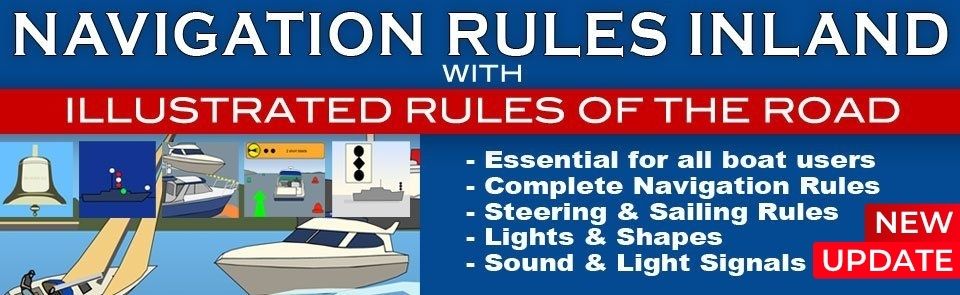
Navigation safety: a quick-reference mobile app to learn the ColRegs NavLights and Shapes

 Safety at SeaSafety at sea will always remains a topical and important subject that will no doubt dominate the syllabuses of nautical...

Jester Challenge 2022 – Sailing single handed from Plymouth UK to the Azores: Part 7 – Motivation

Jester Challenge – A modern experiment in old-fashioned self-reliance, self sufficiency, and personal responsibility. This is the seventh of a 10-part post where solo sailor, Bernie Branfield, shares his first-hand account of his single-handed, 2022 Jester Challenge, from Plymouth, UK to the Azores, in his 26′ Invicta Mk2, Louisa.

Antifouling for leisure boats – Part 2

To prepare for antifouling, as soon as your boat has been lifted out and pressure washed, you need to check all the surfaces of the hull below the waterline, remove any remaining barnacles and check for blisters.

Right boat vs Wrong boat – Over 30 Ways to Cut the Cost of Your Sailing and Cruising

Sailing and cruising offer unparalleled freedom and adventure, but they can quickly become costly. Fortunately, there are numerous strategies to help you enjoy the open water without breaking the bank. Here are over 30 practical ways to cut your sailing and cruising costs.

Top 5 Reasons Why an Inflatable SUP Should Be Your Next Yacht Accessory

In this article, inflatable paddle board expert Jason Paul gives the top 5 reasons why an inflatable SUP should be your next...

Essential Knots: Round turn and two half hitches

Essential Knots: Round turn and two half hitches Use: Tying a rope to a pole or a ring. Step 1. Pass the end around the object. Step 2....

Sailboat rig checks – Part 1

Sailing boat rigs need to be checked regularly to reduce the risk of rig failure at sea. In part one of Sail boat rig checks we run through a series of useful checks that owners and skippers can carry out.

2023 Rolex Fastnet Race – Part 2

Simon Jollands took part in the 2023 Rolex Fastnet Race. This is the second of his articles on the race aboard Lancelot II, a Beneteau First 40.

Navigating narrow channels

Navigating narrow channels can present challenges for boat operators due to limited space, restricted manoeuvrability, and potential hazards such as shallows, rocks, or other vessels. To ensure safe passage through narrow channels, it’s essential to follow specific strategies and techniques.

Essential Boat Safety Briefing

Skippers Responsibilities Skippers are obliged to give a safety briefing to the crew even if they are a regular crew. At...

Top five windvane self steering installation questions

Top five windvane self steering installation questions answered by Sarah Curry of Hydrovane International Marine, courtesy of Viki Moore from Island Cruising NZ

Weather forecasting resources and tips

All competent sailors need to have a good basic understanding of how to interpret a weather forecast. They also need to be able to interpret the actual conditions they are experiencing.

Antifouling for leisure boats – Part 1

Boats that are kept afloat can very quickly become a home for small marine organisms such as barnacles, weed and slime. Applying an antifouling paint to your hull is necessary to protect it from these micro-organisms, as a fouled hull can cause problems and will slow down a boat’s maximum speed considerably if left unchecked.

Liferafts

Liferafts should be stowed where they are ready for immediate launching. All crew should know the location of the liferaft and know how to launch, inflate and board it. They should also know what equipment it contains.

Welcome to the Safe Skipper website.


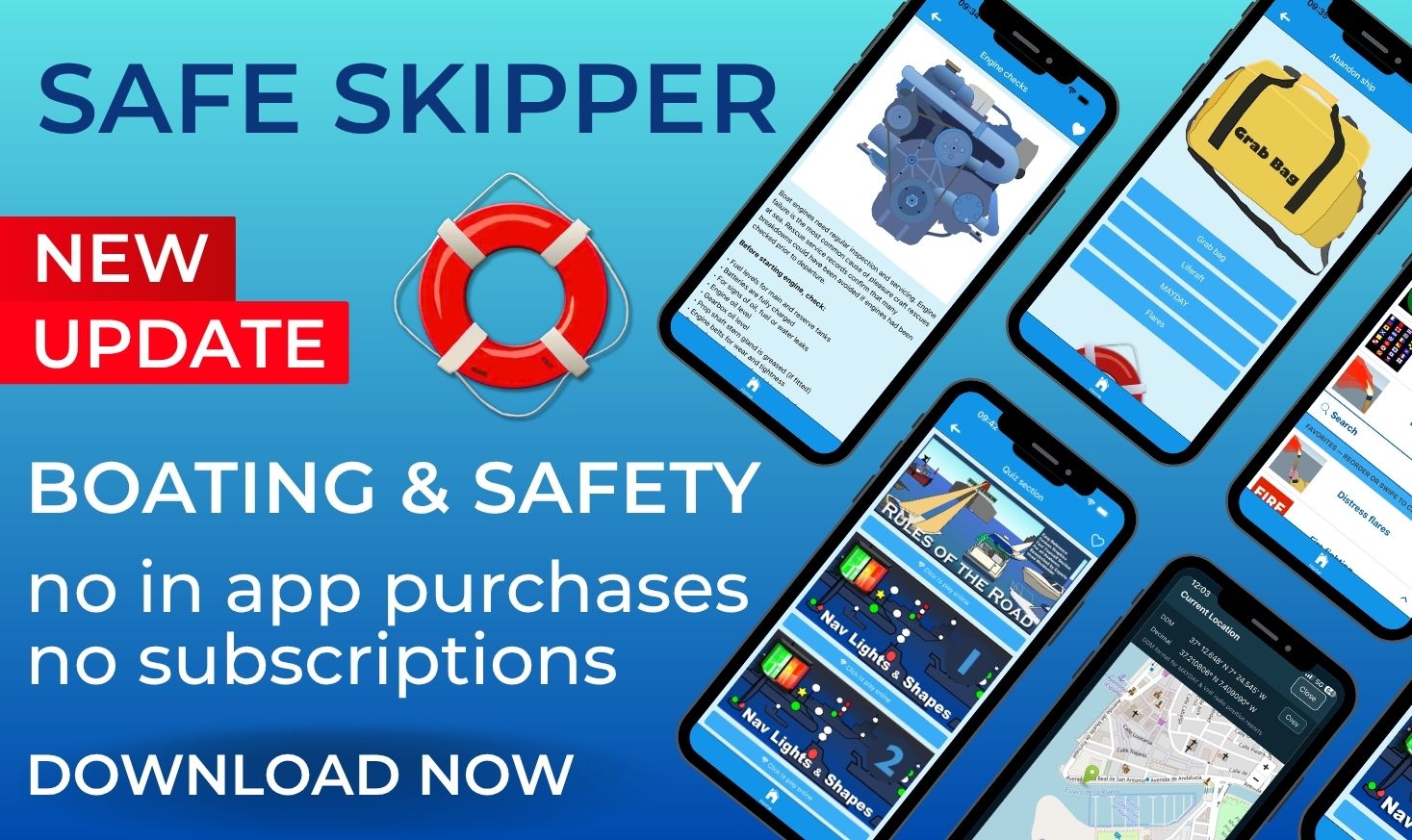
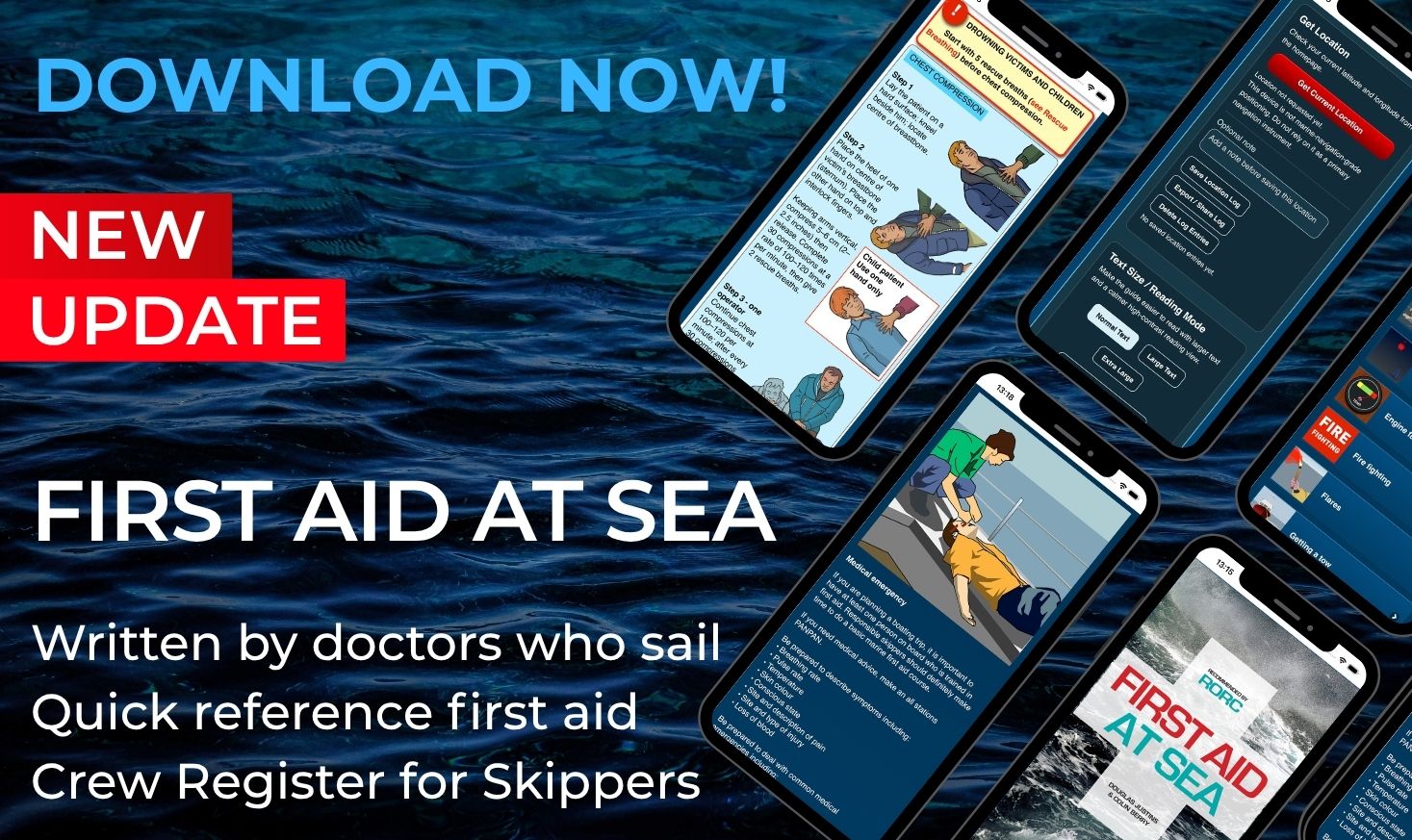
Safe Skipper is run by boating enthusiasts who also have a background in publishing and TV production, design and app development. As well as creating great content for the website, we’ve developed a range of popular boating apps that allow you to get safely out on the water whilst having essential information to hand, covering International ColRegs: Nav Lights & Shapes, Rules of the Road, Buoyage & Lights to knot tying, nautical chart symbols and first aid at sea – all information available to you when on the water, on your phone or tablet, when you need it.

We’re regularly adding new articles to the site, hope you’ll bookmark us and visit again soon.

Before you go, scroll down to our boating quizzes and check your boating knowledge!

Boat surveys

A full boat survey assesses the condition of the hull, mechanical gear and means of propulsion. The survey is carried out with the boat...

Tidal heights and the rule of twelfths

For those skippers who need to make a quick calculation or don’t have access to specific tidal curves for their location, it is possible to make an approximation using a system called the Rule of Twelfths. This is a simple method used to estimate the height of tide at any given time during the tidal cycle. It is based on the idea that the rise and fall of the tide is not constant, but follows a predictable pattern than can be divided into twelve parts.

Essential Yachting + Power Boat Safety Briefing

Yachting Safety Briefing   Down below Lifejackets and harnesses - fitting, when to wear, clipping on Gas - risks, precautions, gas bottles and...

Going aground – what to do if it happens to you

When a yacht runs aground, it can be a stressful situation, especially on a falling tide in an exposed position with a swell running. There are several steps you can take to address the situation in order to ensure the safety of your vessel and its occupants. Here are some tips should this happen to you.

Boat electrics

All boat owners should have a basic knowledge of electrics, both to avoid encountering electrical problems at sea and to stand a chance of solving them should they occur.

The give-way hierarchy – sail boats and power boats

Who gives way to who at sea? Even seasoned sailors sometimes get this wrong and in a crowded harbour this can easily lead to a collision or at best considerable embarrassment for a boat that mistakenly thinks it has right of way over another.

How to use tides and currents to your advantage

If you are contemplating a cruise through tidal waters and strong currents, then planning your trip carefully in advance is essential to enable you to take advantage of favourable tides rather than constantly fighting against them.

Sail care and maintenance – Part 1

When thinking about the care, maintenance and repair of sails it helps to have some understanding of the properties of the ever growing range of modern sailcloth and the fibres they are made from, as opposed to the traditional canvas sails of the past.

Essential Boat Safety Briefing

Skippers Responsibilities Skippers are obliged to give a safety briefing to the crew even if they are a regular crew. At...

Sail care and maintenance – Part 2

At the end of the sailing season sails should be washed and inspected carefully for damage, including small tears, stitching failure, ultraviolet damage, stains and mildew.

I have just downloaded and am using ColRegs Nav Lights & Shapes app, a brilliant training and reference device

Verified user

Instructor

Beautifully produced and very simple to use, a cool learning tool

Charlie

Sailor

Nav Lights & Shapes app – downloaded by 1000s of seafarers worldwide. Just one of our popular boating apps to download from the appstores for Apple and Android devices.

Understanding your boat’s compass

Article submitted by Mike Rossiter, Certificated Compass Adjuster. Since the magnetic compass was first used by the Chinese...

Boat gas system maintenance

There are correct types of hose for marine plumbing, sewerage, exhaust, cooling and gas and all hoses should be checked regularly for wear and deterioration.

Stress cracks on GRP boats

It is quite common to find cracks in the gelcoat when inspecting the deck and superstructure of a GRP boat. It is important to differentiate between a gelcoat crack and a scratch.

Avoiding collisions at sea – how to stay safe on the water

Boats have many blind spots, including the headsails of sailing boats. Always keep a lookout, stay safe and remember that...

Boat decks and superstructure

The deck of a boat is constantly exposed to the elements and should be inspected on an annual basis. Particular attention needs to be given to the overall condition of deck fittings such as the stanchions, cleats and chainplates.

Boat surveys

A full boat survey assesses the condition of the hull, mechanical gear and means of propulsion. The survey is carried out with the boat...

The Boatyard Book – a boat owner’s guide to yacht maintenance, repair and refitting

The Boatyard Book is a fully illustrated 224 page practical reference manual that provides advice for boat owners on planning and carrying out annual maintenance, repairs, upgrades and refits of sailing yachts and motorboats, up to 20 metres in length.

Jester Challenge 2022 – Sailing single handed from Plymouth UK to the Azores: Getting to the Start

Jester Challenge – A modern experiment in old-fashioned self-reliance, self sufficiency, and personal responsibility. This is the start of a 10-part post where solo sailor, Bernie Branfield, shares his first hand account of his single-handed, 2022 Jester Challenge, from Plymouth, UK to the Azores, in his 26′ Invicta Mk2, Louisa.

Feeling anxious at sea

  Some people feel anxious at sea. Will they be seasick? What if they get caught in a violent storm? Could the boat...

Fractures, sprains and dislocations at sea

Moving about a boat at sea often results in a few knocks and bruises, but if a crew member has a fall or major bump and is in serious pain, they should be examined and treated accordingly.

Engine failure at sea – common causes and how to avoid them

Many engine failures are caused by lack of maintenance, resulting in fuel filter blockages, water pump failures, overheating and other breakdowns. Indeed, one of the most common reasons for marine rescue service call outs is for one of the most basic reasons possible – boats that have run out of fuel.

Marine engine oil system maintenance

The regular maintenance of a marine diesel is key to preventing engine failure at sea. This means doing regular checks of the fuel, cooling, electrical and oil systems.

Competent crew skills: arriving and leaving a berth

Skilled boat handling is needed when entering or leaving harbour. Crew tasks include preparing the mooring lines and fenders before docking and...

How to cope with an emergency at sea

A safe skipper will be mentally prepared for all kinds of potential emergencies happening at sea, including medical emergencies, engine failure, fire, a holed hull, capsize and dismasting.

Sailing Boat Rig Care

The rig of a sailing boat is put under huge stresses and strains so it is important for inspections of a yacht’s spars and rigging to be carried out at regular intervals.

Fire safety advice at sea from the Marine & Coastguard Agency

Fire safety advice for boaters Top fire safety advice at sea: 1. Fit smoke alarms, carbon monoxide and gas detectors 2. Turn...

Boat interior varnishing

Most boat interiors have a combination of varnished and painted surfaces including solid wooden joinery, plywood laminates with thin hardwood veneers and glass reinforced plastic. When making your assessment of what you are going to do, bear in mind that the varnishing process consumes a lot of time, especially if the existing surfaces are in poor shape.

Wooden Hulls – Part 2

It is important to ensure the essential hull maintenance of a wooden boat is done, even if you are paying others to look after your boat for you. The priority is to prevent rot from taking hold. The protective layers of paint and varnish over wood are far more critical than on GRP boats, where the topsides are painted more for cosmetic reasons.

The dangers of running aground in a motor boat

The peril of grounding a motor boat is not only an inconvenience; it can lead to substantial risks for both the vessel and its passengers. . In this article, we’ll explore the potential dangers of running aground and highlight the importance of proper navigation and preparedness to avoid these hazards!

Liferafts

Liferafts should be stowed where they are ready for immediate launching. All crew should know the location of the liferaft and know how to launch, inflate and board it. They should also know what equipment it contains.

2026