Select Page

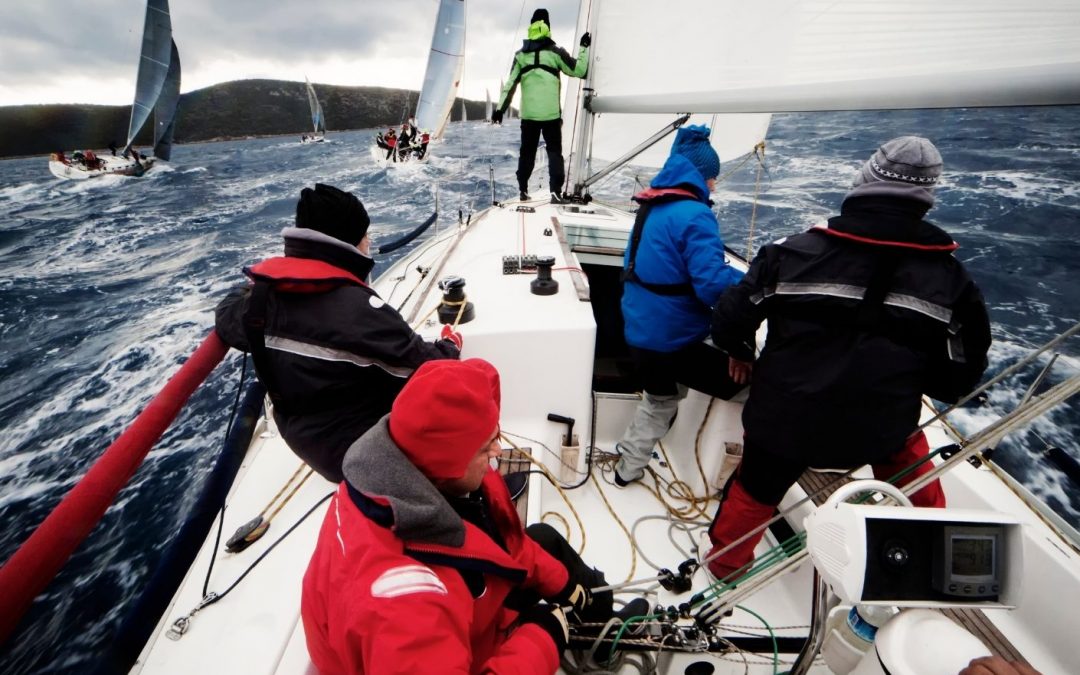
In order to stay safe at sea, we need to know the risks we are facing and to be aware of any personal dangers we could possibly encounter. Here are six of the most common potential dangers individual crew members should be aware of.

safety at sea sea sickness sea-sickness seasickness

1. Fatigue, seasickness and hypothermia

Fatigue, seasickness and hypothermia may be encountered individually, but they can also frequently occur together, often with each element helping to feed the others. Each can be debilitating on their own, impairing decision-making ability and eliminating any enthusiasm for deck work.

Fatigue is easily avoided by getting ample sleep before sailing and through taking ample periods of time off watch on a longer passage. It’s also important to have adequate hydration and nutrition, both of which are all too frequently neglected when under way. The latter is doubly important for those who normally live a sedate desk-bound life – on a yacht by mid afternoon you may already have used as many calories as during the whole of a normal day, which can result in blood sugar low unless you’re eating more than usual.

Safety at Sea sunburn

 2. Sunburn and sunstroke

It always feels colder afloat than onshore so sunburn and sunstroke are easily underestimated on the water, especially in breezy conditions. Also, there’s more glare and reflection when on the water. You therefore need to take these risks seriously, making sure you use plenty of sunscreen and remain well hydrated. Watch out for potential problems among fellow crew – the initial signs are much easier for someone else to see than to self diagnose.

3. Dinghies

The dangers inherent in using a dinghy to get ashore from a mooring or anchorage are all too easily underestimated. Many more sailors are lost from their tenders, or when transferring between dinghy and yacht, than are lost at sea.

Lifejackets should be worn and you also need a bullet-proof means of signalling distress in the event of problems. When getting in and out of a dinghy tie it to the yacht or dock with both bow and stern lines – this will prevent the tender swinging away from the yacht, which is the most common reason for people falling between the two.

As always, try to predict changing conditions. An apparently benign trip ashore on a sunny evening may turn into a completely different situation if the wind is forecast to strengthen and the tide will be ebbing fast when you return to the boat.

4. Head injuries from the boom or mainsheet

Head injuries from an accidental gybe have the potential to be one of the most serious dangers of all, and is capable of inflicting life changing injury. It’s important that everyone on board is aware of the danger, especially the hazard zone for boats with cockpit mounted mainsheet systems. As well as pointing this out in initial briefings, the skipper must also ensure everyone’s safety is assured during a planned gybe.

However, it’s accidental gybes that lead to the majority of incidents. Given that by definition an accidental gybe is an unplanned event, at first sight it might appear difficult to guard against this danger. However it’s possible to ensure that accidental gybes never happen when sailing downwind if the helm is properly trained, fully in control and the crew remain alert.

5. Falling overboard

Falling overboard has the potential to be one of the most frightening and life-threatening experiences that can be encountered at sea. The old cliché that prevention is better than cure is particularly apt for MOB situations and it’s crucial to give thought to making certain everyone stays on board. Harness discipline is vital and crew members should be encouraged to build up a constant awareness of potential dangers, as well as looking out for other people, especially those who are less experienced. If the worst happens, wearing a properly-fitted lifejacket with a crotch strap can multiply survival times 10-15 fold, especially if it’s fitted with a spray hood and light.

6. Crushing fingers in a winch

The loads encountered on modern yachts are all too easily under estimated. For instance the genoa sheets of a 10 metre cruising boat may carry well in excess of half a tonne – a level that must be handled with care. Therefore all crew members should be briefed in good line-handling discipline, including how to add and remove turns from the winch drum, how to safely ease or release the sheet and so on. Anchor windlasses also need to be treated with similar respect.

Sending distress signals

In an emergency situation at sea, it is a top priority is to know how to send and receive emergency radio calls and alert others of your predicament. Likewise, if you receive a distress signal, you must be ready to go to the help of others.

Boat maintenance log

Keeping a boat maintenance log is an ideal way of reminding owners what needs to be done to a boat and when. Read on for some tips,...

How to tackle osmosis

Many owners of old GRP boats live in fear of osmosis, but what exactly is osmosis and what can be done about it? Osmosis comes about...

Narrowboating on the Kennet and Avon Canal

A recently cancelled sailing event I was due to take part in left us with a free weekend in the diary. Given that my wife and I were celebrating a bumper wedding anniversary and the weather forecast was for fine weather, we decided to hunt around for a last minute canal holiday.

Common marine electrical problems

Most problems with marine electrical systems arise from four possible sources, a lack of maintenance, a poor standard of initial installation, insufficient battery capacity, or ineffective charging systems.
Water ingress is a frequent issue – salt water can corrode contacts very quickly. If connections are not scrupulously clean – or are loose – resistance will be increased, resulting in progressively reduced power.

Competent crew skills: arriving and leaving a berth

Skilled boat handling is needed when entering or leaving harbour. Crew tasks include preparing the mooring lines and fenders before docking and...

Boat ownership

Owning a boat is a big commitment that should bring no end of satisfaction for the owner as well as the owner's family and friends. In...

Antifouling for leisure boats – Part 4

Applying antifouling. Antifouling is best applied on a dry, calm day. It is best to apply the antifouling in the middle of the day to ensure the hull is dry and as warm as possible.

Tacking a sailing boat

Tacking is the sailing manoeuvre used to change a boat's direction through an oncoming wind. Tacking a sailing boat calls for the crew to work as a...

Preparing for sailboat cruising

Preparing for a sailing trip entails a lot of planning. In this blog, we take a look at some of the many safety aspects that a skipper needs to consider before heading off on a cruise.

Boatyard Health and Safety

Boat storage facilities are potentially hazardous environments and it is the responsibility of both boat owners and boatyards to ensure that the...

Navigating the Unknown: Boating in Limited Visibility

Sailing or Motor Boating in limited visibility, whether due to darkness, fog, or other adverse weather conditions, presents unique challenges for mariners. It requires a combination of skill, experience, and adherence to safety protocols to ensure a safe and enjoyable journey. In this article we will delve into the intricacies of sailing in such conditions, providing insights into preparation, navigation, and collision avoidance.

Seacock maintenance

If seacocks are always left open and neglected they can eventually seize which will prove a serious threat to boat safety should a connecting hose fail and the seacock refuses to close. There are three main types of seacock – ball valves, cone valves and gate valves.

ColRegs Rule 14 – Head-on Situation

  ColRegs Rule 14: Head-on Situation (a) When two power-driven vessels are meeting on reciprocal or nearly reciprocal...

How to use tides and currents to your advantage

If you are contemplating a cruise through tidal waters and strong currents, then planning your trip carefully in advance is essential to enable you to take advantage of favourable tides rather than constantly fighting against them.

Navigating Through Rough Waters: Tips for Handling Adverse Weather Conditions in a Sailboat

Navigating through rough waters in a sailboat requires skill, preparation, and a good understanding of both your vessel and the environment. Here are some tips for handling adverse weather conditions including Preparation, Techniques, Safety and much more..

Crew Overboard Drill – Updated

How to respond to crew overboard A Man Overboard (MOB) drill is a crucial safety procedure that every boater should practice regularly. It simulates...

Estimating your position at sea

Navigators use a combination of techniques to estimate their position at sea. The primary method used today is GPS (Global Positioning System), a network of 24 satellites that became fully operational in the 1990s and was originally restricted for use by the United States military.

Points of Sailing

The course on which a boat is sailing can be described by its angle to the wind, not to be confused with its compass...

Keeping boat records and doing checks

A boat’s records should provide information about maintenance schedules, when major work was done and when equipment was replaced or added to the boat. Without this information you are left guessing when things are likely to need replacing in the future and also what the costs are likely to be.

Learn ColRegs: Traffic Separation Schemes

Learn ColRegs Rule 10: Traffic Separation Schemes. (c) A vessel shall, so far as practicable, avoid crossing traffic lanes...

How to Avoid Collisions At Sea with ColRegs

      Every Skipper Needs Accurate Knowledge of the IRPCS ColRegs As a responsible skipper it is every skipper’s duty to learn and apply the IRPCS...

Rig check – how to prevent failure at sea

Regular rig checks prevent the risk of mast and rigging failure at sea. This includes regular rig inspections of the spars,  rigging and fittings,...

How a propeller works

Have a look around any boatyard and you will notice quite a variety of propellers – some have two blades, some have three and others have four or more. While most propellers are completely rigid some have blades that fold.

Boat engine basics

Boat engines come in all shapes and sizes and include inboards, outboards, petrol, diesel, electric and hybrid systems. Some engines are...